Heart Double Valve Replacement in India

Sharda Hospital, Noida, India
Hospital Price
USD 9000Our Price
USD 8500
Fortis Hospital, Shalimar Bagh, Delhi, India
Hospital Price
USD 10500Our Price
USD 10000
Yatharth hospital, Delhi / NCR, India
Hospital Price
USD 9500Our Price
USD 9000
Artemis Health Institute, Gurgaon, India
Hospital Price
USD 14500Our Price
USD 13500
Aakash Healthcare Super Speciality Hospital, Delhi, India
Hospital Price
USD 10800Our Price
USD 9000| Value Added Benefits | By Hospital | By MediGence | |
|---|---|---|---|
Guaranteed Treatment Confirmation | |||
Airport Transfers | |||
Exclusive Benefits and Savings | |||
Free Teleconsultation | |||
End-to-End Medical Travel Assistance | |||
Priority Appointments | |||
Care Packages for Recovery | |||
24/7 Patient Care and Medical Assistance | |||
Transparency & Clear Pricing |
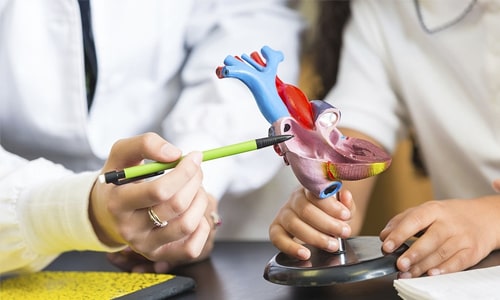
A. A dual valve replacement involves replacing the entire left heart or only the aortic and mitral valves. While less common than other surgical techniques, this method is selected for complicated conditions. The four valves of our heart are the pulmonary, aortic, tricuspid, and mitral valves. Four valves are present.
The four coronary valves regulate blood flow through the heart and prevent blood clots, which is essential to the organ's function. Two upper atria and two lower ventricles constitute the four chambers that make up the heart. A one-way inlet valve and a one-way exit valve are located in each ventricle or lower heart chamber. The right ventricle's tricuspid valve is the entrance valve that allows blood to flow from the pulmonary arteries to the lungs. The aortic valve, which opens to the aorta and draws oxygenated blood from the lung's right atrium, is the conduit that connects to the mitral valve, which controls the left ventricle.
A. You will likely spend five to seven days in the hospital. Machines attached to you will monitor your heart rate and blood pressure. Tubes may have been inserted into your chest to remove fluid from your body. Within hours of the surgery, your doctor will instruct you to begin eating drinking and walking as soon as appropriate for you.
A. The aortic and mitral valves are removed during double valve replacement surgery, and prosthetic valves are put in their stead. There are two procedures used in India to carry out the procedure:
Traditional Open Heart Surgery
During traditional open-heart surgery, the patient is anesthetized. To get to the heart, a large incision must be made in the chest. The surgeon will connect you to a heart-lung machine and remove your damaged mitral and aortic valves to replace them with artificial ones.
Minimally Invasive Double Valve Surgery
A minimally invasive double valve replacement reduces the severity of trauma during surgery, improves overall recovery, and enhances cosmetic outcomes. Smaller incisions, specialized instruments, and improved imaging are used during the surgery.
Robotic-assisted surgery is one method in which the surgeon uses robotic arms to make small cuts. Thoracoscopic Surgery: This is an additional method of accessing the heart. Benefits from these two methods include less blood loss, shorter hospital stays, and faster recovery.
A. Commonly, recovery management for international patients shall encompass:
Pre-arrival coordination: This includes contacting healthcare providers regarding what the patient might need in terms of treatment and recovery. International coordinators can also assist with travel and accommodations.
Medical Records and Information: Patients should be compelled to provide as much medical history and relevant records as possible before their arrival to better inform an informed healthcare team who can tailor the recovery plan.
Personalized care plans are designed at admission, taking into account each patient's condition, type of treatment, and cultural considerations.
Follow-up after treatment: After treatment, follow-ups are important. Treatment follow-ups can be virtual online consultations, telephone calls, or direct visits to the facility, depending on the requirements of the patient and the nature of the treatment.
Most facilities provide support services that include interpretation in one of the many languages, means of transport, and accommodation. Psychological support and rehabilitation services may also be provided to the patient.
Cultural Sensitivity: Healthcare service providers are trained in the aspect of being culturally sensitive. Care is delivered based on a patient's valued expectations.
Patient Education: Educates patients on self-care, drug management, and symptoms to observe while recovering.
A clear plan of emergency is provided so that any arising emergency during the period of recovery is taken care of, ensuring that a patient knows where to seek any help in case of an emergency.
Proper communication and coordination between healthcare providers and the patient are very important roles in a smooth recovery process.
A. Your heart surgeon can use valve surgery in conjunction with other heart surgeries. Examples include;
Heart surgeries involving more than one valve procedure and combining heart valve surgery with: