Your Notifications
All done, no notifications

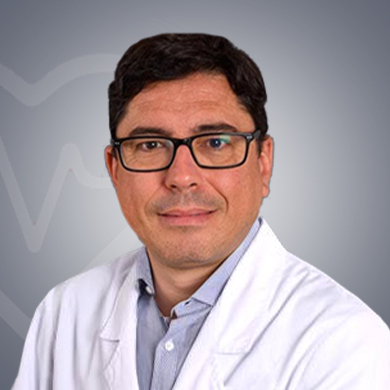
Dr. Gorka Knorr

Pediatric Orthopedician

, Barcelona, Spain

20 Years of experience

Speaks: Spanish , English


Dr. Gorka Knorr is a specialized Pediatric Orthopedic Surgeon in Spain. And one of the most sought after medical specialists in Barcelona, Spain. The doctor has over 20 Years of experience and is associated with Centro Medico Teknon.

Association and Memberships Dr. Gorka Knorr is part of:

  • SOFOP: Societe Francoise d Orthopedie Pediatrique
  • SEOP:Spanish Society of Pediatric Orthopedics
  • AEA:Spanish Association of Arthroscopy
  • SEFEx-CR:Spanish Society for External Fixation and Reconstructive Surgery of the Locomotive Device
  • EPOS:European Pediatric Orthopedic Society
  • AOTRAUMA:Association of the Study of Internal Fixation
  • SECOT: Secretary of SECOT cooperation group

Qualifications :

  • Qualification degree in Paediatric Surgery. 2006. Toulouse. FranceClinical Head of Universities, Assistant of Toulouse Hospitals. 2005. France.
  • Specialist via MIR in Orthopedic Surgery and Traumatology. 2001. San Millan-San Pedro Hospital Complex. Logrono. Spain.
  • Research Sufficiency. 1997. Health Sciences. University of the Basque Country. Spain.
  • Degree in Medicine and Surgery. 1993. University of the Basque Country. Spain.

Hospital Address :

Centro M

Medical Expertise of Dr. Gorka Knorr

  • Dr. Gorka Knörr holds an expertise in Pediatric Traumatology and Orthopedic Surgery.
  • About 5,000 surgical interventions in Pediatric COT, Arthroscopic procedures (120 per year), and Minimally invasive procedures (120 per year).
  • He is trained in pediatric orthopedics and traumatology, in the Pediatric Orthopedics Service of the Toulouse Children's Hospital, France (till 2014).
  • In recent years, he has directed the child traumatology areas of the Barcelona hospitals of Sant Joan de Déu and Vall d'Hebron.
  • He has coupled his healthcare work with vital educational activity, and he has been invited to give keynote talks at numerous international conferences.
  • Dr. Knorr also made more than 70 appearances and published 57 scholarly papers.
  • In recent years, Knörr has spent time in Burkina Faso, Vietnam, Benin, and Bolivia, completing more than twenty cooperative missions.
Frequently Asked Questions
Who are the top Pediatric Orthopedic Surgeons from other cities?

Listed below are some of the top Pediatric Orthopedic Surgeons in other cities:

Which are some of the best hospitals Pediatric Orthopedic Surgeons in Barcelona, Spain are associated with?

Given below are some of the most popular hospitals in Barcelona, Spain where Pediatric Orthopedic Surgeons work:

Which are some of the procedures performed by Pediatric Orthopedic Surgeons in Barcelona, Spain?

Check out the procedures performed by pediatric orthopedic surgeons in Barcelona:

Which are some of the conditions treated by Pediatric Orthopedic Surgeon in Barcelona, Spain?

Check out the conditions performed by pediatric orthopedic surgeons in Barcelona, Spain:

  • Knee Pain
  • Damaged joint
  • Blount's Disease
  • Knee Injury
  • Bow Legs
  • Shorten or lengthen a deformed bone
  • Hip Dysplasia
Who is a Pediatric Orthopedic Surgeon?

Pediatric orthopaedic surgeons are trained in diagnosing, treating and managing the musculoskeletal problems in children. They are best-trained to properly evaluate and treat musculoskeletal (muscle, bone, joint) problems in children who are still growing.

A pediatric orthopedic surgeon treats children from the newborn stage through teenage years. They choose to make pediatric care the main focus of their medical practice. The unique nature of medical as well as surgical care of children is learned from advanced training.

Pediatric orthopedic surgeons diagnose and treat children’s musculoskeletal problems including:

  • Limb and spine deformities
  • Gait abnormalities
  • Bone and joint infection
  • Broken bone
What are the qualifications of a Pediatric Orthopedic Surgeon?

Aspiring orthopedic specialists need to obtain a 5½ years MBBS degree and then 2- 3 years MS (orthopedics). Interested candidates have to follow the below-given steps to become an orthopedic specialist:

Science students who have appeared in +2 (with Chemistry, physics, and biology as main subjects) need to appear in a medical entrance test. After completing the four and half years of MBBS course and one year and six months of mandatory training, one has to pursue MS (Ortho) to work as an Orthopaedic Surgeon. After completing two to three years of MS (Ortho) course, an Orthopaedist can get jobs in government hospitals and can also open their own clinic to provide services to patients.

What conditions do Pediatric Orthopedic Surgeons treat?

Pediatric Orthopedic Surgeons can treat a wide variety of conditions, including:

  • Knee Injury
  • Bow Legs
  • Knee Pain
  • Damaged joint
  • Blount's Disease
  • Hip Dysplasia
  • Shorten or lengthen a deformed bone
  • Limb and spine deformities
  • Bone and joint infections
  • Gait abnormalities
  • Broken bones
What diagnostic tests are required by Pediatric Orthopedic Surgeon?

Some diagnostic tests to detect orthopedic conditions are as follows:

  • Ultrasound
  • X-ray
  • Arthrography
  • Bone scan
  • Bone density scan
  • Computerized axial tomography scan
  • Fluoroscopy
  • Magnetic resonance imaging
  • Electromyography
  • Peripheral Bone Density Testing
  • Radiographs
  • Computed Tomography
  • Discography
  • Doppler Ultrasound
  • Dual-Photon Absorptiometry
When should you visit a Pediatric Orthopedic Surgeon?

If your child experiences the below given signs and symptoms, he/she should see an pediatric orthopedic surgeon:

  • Ligaments
  • Bones problem
  • Tendons
  • Joints problem
  • Injury-Related Pain
  • Morning Stiffness
  • Bruising
  • Persisting Pain
What can you expect from your first visit with a Pediatric Orthopedic Surgeon?

When a patient visits a clinic for the first consultation, the Pediatric Orthopedic Surgeonwill do a thorough examination. Then, the Pediatric Orthopedic Surgeon will ask some questions and review the patient’s detailed health history. This will include an assessment of the tests and scans the patient might have had beforehand. The Pediatric Orthopedic Surgeon can then develop a treatment strategy that suits the patient.

At the first appointment, the cancer specialist will talk to the patient about treatment options. The Pediatric Orthopedic Surgeon will tell which ones are available at present, what the side effects may be, and how effective they are. Then the specialist will recommend a course and then suggest when the treatments should start.

Which are the most common procedures performed by a Pediatric Orthopedic Surgeon?
  • Debridement
  • Bone Fusion
  • Minimally Invasive Surgery
  • Joint Replacement Procedures
  • Internal fixation of bones
  • Osteotomy
  • Bone fracture repair
  • Revision Joint Surgery
  • Spinal Fusion
  • Soft tissue repair

FAQs related to Spain