3 Specialists
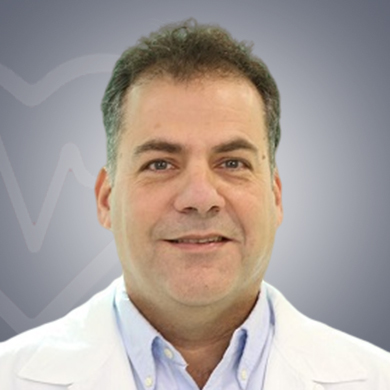
Cardiologist
Sheba Medical Center , Ramat Gan, Israel
25 Years of experience
Speaks: English, Hebrew
Dr. Amit Seghev is a specialized Interventional Cardiologist in Israel. And one of the most sought after medical specialists in Tel Hashomer, Israel. The doctor has over 25 Years of experience and is associated with Sheba Medical Center.
Association and Memberships Dr. Amit Seghev is part of:
- European Society of Cardiology
- American College of Cardiology
- French Society of Cardiology
Certifications :
- Fellowship in Interventional Cardiology, University of Toronto, Canada
- Board Certification, Internal Medicine and Cardiology
- Board Certification, Interventional Cardiology
Qualifications :
- MD, Technion School of Medicine, Haifa, Israel
- Residency in Internal Medicine and Cardiology, Meir Hospital, Israel
Hospital Address :
Sheba Medical Center, Derech Sheba, Ramat Gan, Israel
What is the medical expertise of Dr Amit Segev?
- Dr Amit Segev has more than 25 years of experience as an interventional cardiologist. Over the years, he has treated several patients suffering from a range of illnesses including heart valve diseases, acute pulmonary embolism, and pulmonary hypertension. He can perform transcatheter aortic valve implantation, coronary assessment, catheterization, coronary intervention, carotid interventions, and structural heart interventions.
- An acclaimed interventional cardiologist, Dr Amit Segev has published more than 160 peer-reviewed research articles in reputed scientific journals. Some of his publications include:
- Orvin K, Zekry SB, Morelli O, Barabash IM, Segev A, Danenberg H, Assali A, Guetta V, Assa HV, Zeniou V, Lotan C, Sagie A, Gilon D, Feinberg MS, Shapira Y, Kornowski R. Long-Term Functional and Structural Durability of Bioprosthetic Valves Placed in the Aortic Valve Position via Percutaneous Rout in Israel. Am J Cardiol. 2019 Dec 1;124(11):1748-1756.
- Elian D, Guetta V, Alcalai R, Lotan C, Segev A. Early mobilization after diagnostic cardiac catheterization with the use of a hemostatic bandage containing thrombin. Cardiovasc Revasc Med. 2006 Apr-Jun;7(2):61-3.
- Segev A, Elian D, Marai I, Matetzky S, Agranat O, Har-Zahav Y, Guetta V. Thrombus aspiration during primary percutaneous coronary intervention in acute ST-elevation myocardial infarction. Cardiovasc Revasc Med. 2008 Jul-Sep;9(3):140-3.
- Dr Amit Segev is a member of many leading cardiac organizations such as the European Society of Cardiology and the American College of Cardiology.
- Dr Segev completed his Fellowship in Interventional Cardiology at the University of Toronto in Canada. He has given over 82 lectures at several international cardiology conferences such as ESC, TCT, AHA, EuroPCR and ICI.
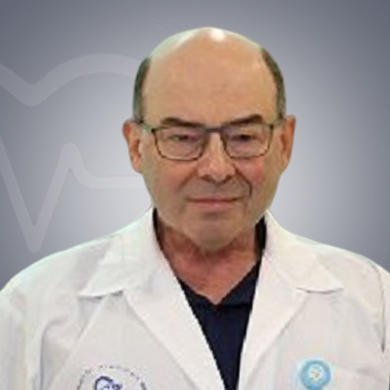
Cardiologist
Sheba Medical Center , Ramat Gan, Israel
25 Years of experience
Speaks: English, Hebrew
Dr. Michael Arad is a specialized Interventional Cardiologist in Israel. And one of the most sought after medical specialists in Tel Hashomer, Israel. The doctor has over 25 Years of experience and is associated with Sheba Medical Center.
Certifications :
- Advanced Training in Genetics of Heart Disease and Heart Failure, Harvard Medical School, Boston, USA
Qualifications :
- MD, Hadassah School of Medicine. the Hebrew University, Jerusalem, Israel
- Internship in Internal Medicine, Rabin Medical Center, Israel
- Residency in Cardiology, Sheba Medical Center
Hospital Address :
Sheba Medical Center, Derech Sheba, Ramat Gan, Israel
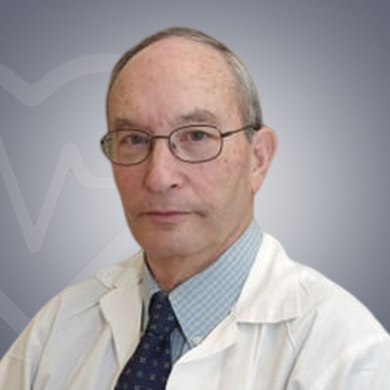
Cardiologist
Sheba Medical Center , Ramat Gan, Israel
30 Years of experience
Speaks: English, Hebrew
Dr. Michael Eldar is a specialized Interventional Cardiologist in Israel. And one of the most sought after medical specialists in Tel Hashomer, Israel. The doctor has over 30 Years of experience and is associated with Sheba Medical Center.
Certifications :
- Interventional Cardiology Training, Maymonides Medical Center, New York
Qualifications :
- MD graduate, Technion, Israel
- Advanced Course in Electrophysiology and Pacemakers, University of California, San Francisco
- Cardiology specialization at the Leviev Heart Center in Sheba
Hospital Address :
Sheba Medical Center, Derech Sheba, Ramat Gan, Israel
Do you know?
Using MediGence’s Telemedicine Platform, you can book a personalized video consultation with renowned doctors around the world

How it Works
- Choose the doctor/doctor type
- Book a Slot based on availability
- Fill in your personal details (Name, Phone Number, Symptoms)
- Make online payment via payment gateway
- Our patient care team will assist you in getting in touch with the doctor in the meeting room
What do we recommend?
Please make sure to see your doctor using Telemedicine before you even board a flight