Browse verified doctors or let our care team help you find the doctor best suited to your condition, treatment goals, and budget.

Delhi, India
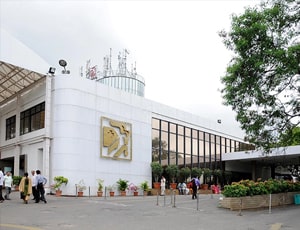
BLK-Max Super Speciality Hospital is a trusted healthcare provider for Ileal Conduit, offering advanced urinary reconstruction supported by experienced urologists, uro-oncologists, reconstructive surgeons, stoma therapists, anesthesiologists, and multidisciplinary care teams. Established in 1959, the JCI, NABH accredited hospital is situated in Delhi, India and has 650 beds.
Ileal Conduit works by creating a low-pressure pathway that allows urine to bypass the bladder and drain continuously through a stoma. A carefully selected segment of the small intestine is separated from the digestive tract and used as the conduit. The ureters are connected to this segment, while the remaining intestine is reconnected to maintain normal digestive continuity. The stoma is then positioned on the abdominal wall for attachment of an external urine collection system.
Ghaziabad, India
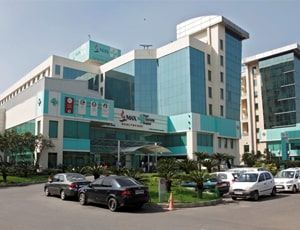
Max Super Specialty Hospital, Vaishali provides specialised Ileal Conduit with a focus on safe urinary diversion, preservation of kidney function, appropriate stoma placement, and individualized postoperative urological and stoma care. Established in 2008, the NABL, NABH accredited hospital is located in Ghaziabad, India and operates 370 beds, with modern uro-oncology, reconstructive surgery, imaging, intensive-care, and rehabilitation infrastructure.
Ileal Conduit can provide a reliable urinary diversion option for appropriately selected patients who require removal or bypass of the bladder. Treatment planning considers the underlying condition, kidney function, ureteral anatomy, previous abdominal or pelvic surgery, nutritional status, and overall health. A multidisciplinary assessment helps determine whether an ileal conduit is appropriate and supports planning for stoma location, postoperative recovery, long-term appliance management, and follow-up care.
Choosing Max Hospital, Gurgaon for Ileal Conduit gives patients access to experienced urological surgeons, advanced urinary imaging, modern reconstructive surgical facilities, specialized stoma-care teams, and structured postoperative monitoring. Established in 2007, the ISO, NABH, NABL accredited hospital in Gurgaon, India has 104 beds and provides specialized urinary diversion and uro-oncology care.
Ileal Conduit is performed under general anaesthesia, often as part of a larger operation such as radical cystectomy. After the bladder is removed or bypassed when clinically indicated, a segment of the ileum is prepared as a conduit and connected to the ureters. The opposite end is brought through the abdominal wall to create a stoma. After surgery, patients receive guidance on stoma care and urine collection, while monitoring focuses on infection, bleeding, bowel complications, urinary leakage, kidney function, and stoma-related problems.
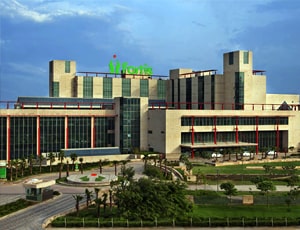
Indraprastha Apollo Hospital is a trusted healthcare provider for Ileal Conduit, offering advanced urinary reconstruction supported by experienced urologists, uro-oncologists, reconstructive surgeons, stoma therapists, anesthesiologists, and multidisciplinary care teams. Established in 1996, the JCI accredited hospital is situated in Delhi, India and has 710 beds.
Ileal Conduit works by creating a low-pressure pathway that allows urine to bypass the bladder and drain continuously through a stoma. A carefully selected segment of the small intestine is separated from the digestive tract and used as the conduit. The ureters are connected to this segment, while the remaining intestine is reconnected to maintain normal digestive continuity. The stoma is then positioned on the abdominal wall for attachment of an external urine collection system.
Apollo Hospitals offers advanced Ileal Conduit using modern urinary diversion and reconstructive urological techniques and individualized care plans. Established in 1988, the JCI accredited hospital is located in Hyderabad, India and has 550 beds, providing comprehensive urological, oncological, and reconstructive care for local and international patients.
Ileal Conduit is a form of urinary diversion in which a short segment of the small intestine is used to create a passage for urine from the ureters to an opening, or stoma, on the abdominal wall. It is commonly performed after removal of the bladder, particularly in selected patients undergoing treatment for bladder cancer. Urine drains continuously through the stoma into an external collection bag.
nanavati Super Speciality Hospital provides specialised Ileal Conduit with a focus on safe urinary diversion, preservation of kidney function, appropriate stoma placement, and individualized postoperative urological and stoma care. Established in 1950, the NABH accredited hospital is located in Mumbai, India and operates 350 beds, with modern uro-oncology, reconstructive surgery, imaging, intensive-care, and rehabilitation infrastructure.
Ileal Conduit can provide a reliable urinary diversion option for appropriately selected patients who require removal or bypass of the bladder. Treatment planning considers the underlying condition, kidney function, ureteral anatomy, previous abdominal or pelvic surgery, nutritional status, and overall health. A multidisciplinary assessment helps determine whether an ileal conduit is appropriate and supports planning for stoma location, postoperative recovery, long-term appliance management, and follow-up care.
Delhi, India
Max Super Speciality Hospital, Patparganj offers advanced Ileal Conduit using modern urinary diversion and reconstructive urological techniques and individualized care plans. Established in 2005, the NABH, NABL, AACI accredited hospital is located in Delhi, India and has 400 beds, providing comprehensive urological, oncological, and reconstructive care for local and international patients.
Ileal Conduit is a form of urinary diversion in which a short segment of the small intestine is used to create a passage for urine from the ureters to an opening, or stoma, on the abdominal wall. It is commonly performed after removal of the bladder, particularly in selected patients undergoing treatment for bladder cancer. Urine drains continuously through the stoma into an external collection bag.
At Primus Super Speciality Hospital, Ileal Conduit is performed using specialized urinary diversion and reconstructive surgical techniques with comprehensive assessment of the urinary tract. Established in 2001, this NABH accredited hospital in Delhi, India has 250 beds and offers advanced urology, uro-oncology, reconstructive surgery, and stoma-care services.
Ileal Conduit may be considered for patients who require urinary diversion because of bladder cancer, severe bladder dysfunction, radiation-related damage, congenital urinary abnormalities, or other conditions in which normal urine storage or passage cannot be maintained. Before surgery, the specialist evaluates kidney function, urinary anatomy, overall health, and the patient's ability to manage a stoma. During the procedure, a segment of ileum is isolated, the ureters are connected to it, and the other end is brought through the abdominal wall to form a stoma.
Manipal Hospital, Hebbal provides specialised Ileal Conduit with a focus on safe urinary diversion, preservation of kidney function, appropriate stoma placement, and individualized postoperative urological and stoma care. Established in 1991, the NABL, NABH accredited hospital is located in Bangalore, India and operates 280 beds, with modern uro-oncology, reconstructive surgery, imaging, intensive-care, and rehabilitation infrastructure.
Ileal Conduit can provide a reliable urinary diversion option for appropriately selected patients who require removal or bypass of the bladder. Treatment planning considers the underlying condition, kidney function, ureteral anatomy, previous abdominal or pelvic surgery, nutritional status, and overall health. A multidisciplinary assessment helps determine whether an ileal conduit is appropriate and supports planning for stoma location, postoperative recovery, long-term appliance management, and follow-up care.
Max Super Speciality Hospital, Saket is a trusted healthcare provider for Ileal Conduit, offering advanced urinary reconstruction supported by experienced urologists, uro-oncologists, reconstructive surgeons, stoma therapists, anesthesiologists, and multidisciplinary care teams. Established in 2006, the JCI, NABH accredited hospital is situated in Delhi, India and has 539 beds.
Ileal Conduit works by creating a low-pressure pathway that allows urine to bypass the bladder and drain continuously through a stoma. A carefully selected segment of the small intestine is separated from the digestive tract and used as the conduit. The ureters are connected to this segment, while the remaining intestine is reconnected to maintain normal digestive continuity. The stoma is then positioned on the abdominal wall for attachment of an external urine collection system.
Gurgaon, India
At Fortis Memorial Research Institute, Ileal Conduit is performed using specialized urinary diversion and reconstructive surgical techniques with comprehensive assessment of the urinary tract. Established in 2013, this JCI, NABH, NABL accredited hospital in Gurgaon, India has 311 beds and offers advanced urology, uro-oncology, reconstructive surgery, and stoma-care services.
Ileal Conduit may be considered for patients who require urinary diversion because of bladder cancer, severe bladder dysfunction, radiation-related damage, congenital urinary abnormalities, or other conditions in which normal urine storage or passage cannot be maintained. Before surgery, the specialist evaluates kidney function, urinary anatomy, overall health, and the patient's ability to manage a stoma. During the procedure, a segment of ileum is isolated, the ureters are connected to it, and the other end is brought through the abdominal wall to form a stoma.
At VPS Rockland Hospital, Ileal Conduit is performed using specialized urinary diversion and reconstructive surgical techniques with comprehensive assessment of the urinary tract. Established in 2013, this NABH, NABL accredited hospital in Gurgaon, India has 345 beds and offers advanced urology, uro-oncology, reconstructive surgery, and stoma-care services.
Ileal Conduit may be considered for patients who require urinary diversion because of bladder cancer, severe bladder dysfunction, radiation-related damage, congenital urinary abnormalities, or other conditions in which normal urine storage or passage cannot be maintained. Before surgery, the specialist evaluates kidney function, urinary anatomy, overall health, and the patient's ability to manage a stoma. During the procedure, a segment of ileum is isolated, the ureters are connected to it, and the other end is brought through the abdominal wall to form a stoma.
Asian Institute of Medical Sciences is a trusted healthcare provider for Ileal Conduit, offering advanced urinary reconstruction supported by experienced urologists, uro-oncologists, reconstructive surgeons, stoma therapists, anesthesiologists, and multidisciplinary care teams. Established in 2010, the NABL, NABH accredited hospital is situated in Faridabad, India and has 425 beds.
Ileal Conduit works by creating a low-pressure pathway that allows urine to bypass the bladder and drain continuously through a stoma. A carefully selected segment of the small intestine is separated from the digestive tract and used as the conduit. The ureters are connected to this segment, while the remaining intestine is reconnected to maintain normal digestive continuity. The stoma is then positioned on the abdominal wall for attachment of an external urine collection system.
Apollo Hospital International Limited is a trusted healthcare provider for Ileal Conduit, offering advanced urinary reconstruction supported by experienced urologists, uro-oncologists, reconstructive surgeons, stoma therapists, anesthesiologists, and multidisciplinary care teams. Established in 2003, the NABH, JCI accredited hospital is situated in Ahmedabad, India and has 300 beds.
Ileal Conduit works by creating a low-pressure pathway that allows urine to bypass the bladder and drain continuously through a stoma. A carefully selected segment of the small intestine is separated from the digestive tract and used as the conduit. The ureters are connected to this segment, while the remaining intestine is reconnected to maintain normal digestive continuity. The stoma is then positioned on the abdominal wall for attachment of an external urine collection system.
Manipal Hospital, Gurugram is a trusted healthcare provider for Ileal Conduit, offering advanced urinary reconstruction supported by experienced urologists, uro-oncologists, reconstructive surgeons, stoma therapists, anesthesiologists, and multidisciplinary care teams. Established in 2008, the NABL, NABH accredited hospital is situated in Gurgaon, India and has 380 beds.
Ileal Conduit works by creating a low-pressure pathway that allows urine to bypass the bladder and drain continuously through a stoma. A carefully selected segment of the small intestine is separated from the digestive tract and used as the conduit. The ureters are connected to this segment, while the remaining intestine is reconnected to maintain normal digestive continuity. The stoma is then positioned on the abdominal wall for attachment of an external urine collection system.

Nigerian national Mrs. Saadatu Muhammad, 48, suffered from severe abdominal pain that affected her quality of life.

Abdullah's story highlights how modern regenerative treatments can offer new hope for men dealing with erectile dysfunction. With expert medical care, advanced technology,