Browse verified doctors or let our care team help you find the doctor best suited to your condition, treatment goals, and budget.

Sharda Hospital provides specialized Cervical Fusion with an emphasis on precise spinal stabilization, appropriate fusion planning, and personalized recovery support. Established in 2005, the NABH accredited hospital is based in Noida, India and has 1200 beds supported by modern neurosurgical and orthopedic facilities.
Cervical Fusion involves joining adjacent vertebrae in the neck so they eventually form one stable segment. The procedure may be performed alone or combined with decompression when nerves or the spinal cord are being compressed. Surgeons use bone grafts, interbody devices, and, when needed, plates or screws to maintain stability and promote bone growth. Recovery varies according to the number of spinal levels treated and the underlying condition, with follow-up visits used to monitor healing and fusion.
Choosing Clear Medi Hospital, Karkardooma for Cervical Fusion gives patients access to specialist-led cervical spine surgery, modern fixation systems, and coordinated postoperative rehabilitation. Established in 2017, the NABH, NABL accredited hospital is located in Delhi, India and operates 100 beds with advanced spinal care infrastructure.
Cervical Fusion can help stabilize the spine when damaged discs, abnormal movement, trauma, or degenerative changes affect cervical vertebral segments. The surgical approach depends on the underlying condition and may involve removing a damaged disc or decompressing neural structures before placing graft material and an implant. Plates, screws, or rods may be used to hold the vertebrae in position during healing. Postoperative care may include pain management, activity modification, physiotherapy, and follow-up imaging.
American Oncology Institute offers dedicated Cervical Fusion supported by experienced spine surgeons, advanced imaging, and modern operating facilities. Established in 2013, the NABH accredited hospital is situated in Hyderabad, India and has 150 beds supporting specialized cervical spine treatment.
Cervical Fusion is designed to permanently stabilize selected levels of the neck by encouraging adjacent vertebrae to grow together. It may form part of procedures used to treat cervical disc problems, spinal instability, deformity, or nerve and spinal cord compression. Bone graft material and an interbody cage or other implant may be placed between the vertebrae, with additional fixation when required. Preoperative X-rays, MRI, or CT scans help determine the affected levels and guide surgical planning.
At Sanar International Hospital, Cervical Fusion is performed using advanced cervical spine techniques and individualized surgical planning. Established in 2018, the NABH, JCI, AACI accredited hospital in Gurugram, India has 150 beds and provides comprehensive neurosurgical and orthopedic spine care.
Cervical Fusion may be considered when abnormal movement or degeneration between cervical vertebrae causes persistent pain, instability, or neurological symptoms. Depending on the condition, the surgeon may access the spine from the front or back and remove damaged tissue before inserting a bone graft or fusion device. Instrumentation such as plates and screws may be used to maintain alignment. Over time, new bone grows across the treated segment to create a solid fusion.
Chennai, India
The Madras Institute of Orthopedics and Traumatology provides specialized Cervical Fusion with an emphasis on precise spinal stabilization, appropriate fusion planning, and personalized recovery support. Established in 1999, the JCI, NABH accredited hospital is based in Chennai, India and has 1000 beds supported by modern neurosurgical and orthopedic facilities.
Cervical Fusion involves joining adjacent vertebrae in the neck so they eventually form one stable segment. The procedure may be performed alone or combined with decompression when nerves or the spinal cord are being compressed. Surgeons use bone grafts, interbody devices, and, when needed, plates or screws to maintain stability and promote bone growth. Recovery varies according to the number of spinal levels treated and the underlying condition, with follow-up visits used to monitor healing and fusion.
Choosing Manipal Hospital, Ghaziabad for Cervical Fusion gives patients access to specialist-led cervical spine surgery, modern fixation systems, and coordinated postoperative rehabilitation. Established in 2010, the NABH, NABL accredited hospital is located in Ghaziabad, India and operates 9500 beds with advanced spinal care infrastructure.
Cervical Fusion can help stabilize the spine when damaged discs, abnormal movement, trauma, or degenerative changes affect cervical vertebral segments. The surgical approach depends on the underlying condition and may involve removing a damaged disc or decompressing neural structures before placing graft material and an implant. Plates, screws, or rods may be used to hold the vertebrae in position during healing. Postoperative care may include pain management, activity modification, physiotherapy, and follow-up imaging.
Cure My Knee offers dedicated Cervical Fusion supported by experienced spine surgeons, advanced imaging, and modern operating facilities. Established in 2020, the JCI, NABH accredited hospital is situated in Delhi, India and it has adequate bed capacity supporting specialized cervical spine treatment.
Cervical Fusion is designed to permanently stabilize selected levels of the neck by encouraging adjacent vertebrae to grow together. It may form part of procedures used to treat cervical disc problems, spinal instability, deformity, or nerve and spinal cord compression. Bone graft material and an interbody cage or other implant may be placed between the vertebrae, with additional fixation when required. Preoperative X-rays, MRI, or CT scans help determine the affected levels and guide surgical planning.
Shanti Mukand Hospital provides specialized Cervical Fusion with a focus on stabilizing the cervical spine, relieving nerve or spinal cord compression, and improving spinal alignment. Established in 1995, the NABH, NABL accredited hospital is located in Delhi, India and operates 200 beds with modern neurosurgical and orthopedic spine facilities.
Cervical Fusion is a surgical procedure that joins two or more cervical vertebrae to create a stable spinal segment. It may be recommended for conditions such as cervical instability, degenerative disc disease, spinal deformity, or certain cases of spinal cord or nerve compression. The surgeon may remove a damaged disc or other structures before placing a bone graft or interbody implant between the vertebrae. Plates, screws, or rods may provide additional stability while the bones fuse.
Choosing VPS Lakeshore Hospital for Cervical Fusion gives patients access to specialist-led cervical spine surgery, modern fixation systems, and coordinated postoperative rehabilitation. Established in 2003, the NABH, ISO accredited hospital is located in Kochi, India and operates 350 beds with advanced spinal care infrastructure.
Cervical Fusion can help stabilize the spine when damaged discs, abnormal movement, trauma, or degenerative changes affect cervical vertebral segments. The surgical approach depends on the underlying condition and may involve removing a damaged disc or decompressing neural structures before placing graft material and an implant. Plates, screws, or rods may be used to hold the vertebrae in position during healing. Postoperative care may include pain management, activity modification, physiotherapy, and follow-up imaging.
The Medical Park provides specialized Cervical Fusion with a focus on stabilizing the cervical spine, relieving nerve or spinal cord compression, and improving spinal alignment. Established in 1987, the accredited hospital is located in Chennai, India and operates 300 beds with modern neurosurgical and orthopedic spine facilities.
Cervical Fusion is a surgical procedure that joins two or more cervical vertebrae to create a stable spinal segment. It may be recommended for conditions such as cervical instability, degenerative disc disease, spinal deformity, or certain cases of spinal cord or nerve compression. The surgeon may remove a damaged disc or other structures before placing a bone graft or interbody implant between the vertebrae. Plates, screws, or rods may provide additional stability while the bones fuse.
NeuroGen Brain and Spine Institute provides specialized Cervical Fusion with a focus on stabilizing the cervical spine, relieving nerve or spinal cord compression, and improving spinal alignment. Established in 2008, the ISO accredited hospital is located in Mumbai, India and operates 40 beds with modern neurosurgical and orthopedic spine facilities.
Cervical Fusion is a surgical procedure that joins two or more cervical vertebrae to create a stable spinal segment. It may be recommended for conditions such as cervical instability, degenerative disc disease, spinal deformity, or certain cases of spinal cord or nerve compression. The surgeon may remove a damaged disc or other structures before placing a bone graft or interbody implant between the vertebrae. Plates, screws, or rods may provide additional stability while the bones fuse.
Apollo Multispecialty Hospitals offers dedicated Cervical Fusion supported by experienced spine surgeons, advanced imaging, and modern operating facilities. Established in 2003, the JCI, ISO accredited hospital is situated in Kolkata, India and has 700 beds supporting specialized cervical spine treatment.
Cervical Fusion is designed to permanently stabilize selected levels of the neck by encouraging adjacent vertebrae to grow together. It may form part of procedures used to treat cervical disc problems, spinal instability, deformity, or nerve and spinal cord compression. Bone graft material and an interbody cage or other implant may be placed between the vertebrae, with additional fixation when required. Preoperative X-rays, MRI, or CT scans help determine the affected levels and guide surgical planning.
At Apollo Hospital, Cervical Fusion is performed using advanced cervical spine techniques and individualized surgical planning. Established in 1983, the JCI accredited hospital in Chennai, India has 550 beds and provides comprehensive neurosurgical and orthopedic spine care.
Cervical Fusion may be considered when abnormal movement or degeneration between cervical vertebrae causes persistent pain, instability, or neurological symptoms. Depending on the condition, the surgeon may access the spine from the front or back and remove damaged tissue before inserting a bone graft or fusion device. Instrumentation such as plates and screws may be used to maintain alignment. Over time, new bone grows across the treated segment to create a solid fusion.
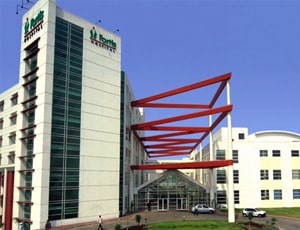
Fortis Hospital provides specialized Cervical Fusion with an emphasis on precise spinal stabilization, appropriate fusion planning, and personalized recovery support. Established in 2004, the NABH, NABL accredited hospital is based in Noida, India and has 400 beds supported by modern neurosurgical and orthopedic facilities.
Cervical Fusion involves joining adjacent vertebrae in the neck so they eventually form one stable segment. The procedure may be performed alone or combined with decompression when nerves or the spinal cord are being compressed. Surgeons use bone grafts, interbody devices, and, when needed, plates or screws to maintain stability and promote bone growth. Recovery varies according to the number of spinal levels treated and the underlying condition, with follow-up visits used to monitor healing and fusion.
At Manipal Hospital, Yeshwantpur, Cervical Fusion is performed using advanced cervical spine techniques and individualized surgical planning. Established in 2022, the JCI, NABH, NABL accredited hospital in Bangalore, India has 250 beds and provides comprehensive neurosurgical and orthopedic spine care.
Cervical Fusion may be considered when abnormal movement or degeneration between cervical vertebrae causes persistent pain, instability, or neurological symptoms. Depending on the condition, the surgeon may access the spine from the front or back and remove damaged tissue before inserting a bone graft or fusion device. Instrumentation such as plates and screws may be used to maintain alignment. Over time, new bone grows across the treated segment to create a solid fusion.

Ms Patience from Uganda travelled to India for cosmetic surgery in May 2017. She got her treatment done in Asian Institute of Medical Sciences in…

Lobna (from Sudan) was diagnosed with meningioma, a form of non-cancerous brain tumor. Her family members decided to take her to one of the most…