Browse verified doctors or let our care team help you find the doctor best suited to your condition, treatment goals, and budget.

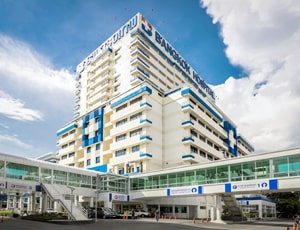
Bangkok Hospital provides specialized Brachial Plexus Injuries/Stereotactic Procedures with a focus on accurate diagnosis, precise treatment, and functional recovery. Established in 1972, the JCI accredited hospital is located in Bangkok, Thailand and operates 580 beds with modern neurosurgical infrastructure.
Brachial Plexus Injuries / Stereotactic Procedures require individualized treatment based on the underlying neurological problem. For brachial plexus injuries, specialists assess the affected nerves and may recommend observation, rehabilitation, nerve repair, nerve grafting, or nerve transfer depending on the injury. Stereotactic procedures use detailed imaging, computerized planning, and specialized navigation to accurately target selected areas of the nervous system when clinically indicated. Comprehensive neurological assessment and appropriate imaging help the medical team determine the most suitable treatment strategy.
Choosing Vejthani Hospital for Brachial Plexus Injuries/Stereotactic Procedures gives patients access to experienced neurosurgeons, peripheral nerve specialists, advanced technology, and comprehensive rehabilitation support. Established in 1994, the JCI accredited hospital in Bangkok, Thailand has 263 beds and provides specialized neurological care.
Brachial Plexus Injury treatment aims to restore or improve nerve function and upper-limb movement when possible. Depending on the injury, surgery may involve repairing a damaged nerve, connecting a nerve graft, or transferring a functioning nerve to restore signals to affected muscles. Treatment decisions are based on neurological examination, imaging, electrodiagnostic testing, and the severity and duration of the injury. For appropriate neurological conditions, Stereotactic Procedures can provide highly targeted treatment using image-guided surgical navigation.
Bangpakok 9 International Hospital offers advanced treatment for Brachial Plexus Injuries / Stereotactic Procedures using modern neurosurgical and nerve-treatment techniques. Established in 2003, the JCI, GHA accredited hospital is located in Bangkok, Thailand and has 300 beds, providing comprehensive care for local and international patients.
Brachial Plexus Injuries affect the network of nerves that carries signals between the spinal cord and the shoulder, arm, and hand. Treatment depends on the severity and location of the nerve injury and may include observation, physiotherapy, nerve repair, nerve grafting, nerve transfer, or other reconstructive procedures. Stereotactic Procedures use advanced imaging and precise navigation to target specific areas when indicated for selected neurological conditions. Detailed neurological examination and imaging are generally performed to guide treatment planning.
Phyathai 2 International Hospital is a trusted healthcare provider for Brachial Plexus Injuries/Stereotactic Procedures, offering specialized management of complex nerve and neurological conditions supported by experienced specialists and advanced medical infrastructure. Established in 1987, the JCI accredited hospital is situated in Bangkok, Thailand and has 550 beds.
Brachial Plexus Injuries may result from trauma, stretching, compression, or other damage to the nerves supplying the upper limb. Depending on the type and severity of injury, treatment may involve nerve repair, nerve grafting, nerve transfer, tendon or muscle procedures, and rehabilitation. Stereotactic Procedures may be used for selected neurological conditions where highly precise, image-guided intervention is required. Specialists evaluate neurological function and relevant imaging findings before recommending the most suitable treatment.
Sikarin Hospital offers advanced treatment for Brachial Plexus Injuries / Stereotactic Procedures using modern neurosurgical and nerve-treatment techniques. Established in 1979, the JCI accredited hospital is located in Bangkok, Thailand and has 354 beds, providing comprehensive care for local and international patients.
Brachial Plexus Injuries affect the network of nerves that carries signals between the spinal cord and the shoulder, arm, and hand. Treatment depends on the severity and location of the nerve injury and may include observation, physiotherapy, nerve repair, nerve grafting, nerve transfer, or other reconstructive procedures. Stereotactic Procedures use advanced imaging and precise navigation to target specific areas when indicated for selected neurological conditions. Detailed neurological examination and imaging are generally performed to guide treatment planning.
Choosing Kasemrad Ramkhamhaeng Hospital for Brachial Plexus Injuries/Stereotactic Procedures gives patients access to experienced neurosurgeons, peripheral nerve specialists, advanced technology, and comprehensive rehabilitation support. Established in 1992, the JCI accredited hospital in Bangkok, Thailand has 120 beds and provides specialized neurological care.
Brachial Plexus Injury treatment aims to restore or improve nerve function and upper-limb movement when possible. Depending on the injury, surgery may involve repairing a damaged nerve, connecting a nerve graft, or transferring a functioning nerve to restore signals to affected muscles. Treatment decisions are based on neurological examination, imaging, electrodiagnostic testing, and the severity and duration of the injury. For appropriate neurological conditions, Stereotactic Procedures can provide highly targeted treatment using image-guided surgical navigation.
Choosing MALI Interdisciplinary Hospital for Brachial Plexus Injuries/Stereotactic Procedures gives patients access to experienced neurosurgeons, peripheral nerve specialists, advanced technology, and comprehensive rehabilitation support. Established in 2021, the NABH, JCI, CBAHI, AACI accredited hospital in Bangkok, Thailand has 100 beds and provides specialized neurological care.
Brachial Plexus Injury treatment aims to restore or improve nerve function and upper-limb movement when possible. Depending on the injury, surgery may involve repairing a damaged nerve, connecting a nerve graft, or transferring a functioning nerve to restore signals to affected muscles. Treatment decisions are based on neurological examination, imaging, electrodiagnostic testing, and the severity and duration of the injury. For appropriate neurological conditions, Stereotactic Procedures can provide highly targeted treatment using image-guided surgical navigation.

MediGence took care of everything from helping in choosing the best hospital to booking hospital appointments. I strongly recommend MediGence to all those who are…
| Speciality | Neurology |
| Procedure | Brachial Plexus Injuries/Stereotactic Procedures |
| Success Rate | Varies by condition |
| Recovery Time | Varies by condition |
| Treatment Time | Varies by condition |
| Chances of Recurrence | Varies by condition |
A brachial plexus injury, also known as brachial plexopathy, is a medical condition that occurs in the brachial plexus group of nerves. These nerves are responsible for sending signals from your spine to your shoulder, arm, and hand. A brachial plexus injury occurs when these nerves are compressed, stretched, or, in the most severe cases, ripped apart from the spinal cord. The Stereotactic procedures involve precise imaging and mapping of the affected area to guide the surgeon in delivering the best course of treatment.
Brachial plexus injuries Stereotactic procedures can be used to treat various conditions such as nerve compression, nerve entrapment, or nerve injuries resulting from trauma or accidents.
The recovery process after a stereotactic procedure performed on a brachial plexus injury depends on the specific condition being treated and the extent of the injury. Patients may need post-procedure physical therapy and rehabilitation to regain strength and function in the affected limb. The patient is recommended to avoid strenuous activities, lifting heavy weights or arm movements that can cause stress in the muscles. The overall recovery may take 4 to 8 weeks
It's a fact that while ranking a hospital, certain factors need to be considered. The following criteria can be used to classify hospitals for Brachial Plexus Injuries/Stereotactic Proceduress in Thailand- Infrastructure, procedure accessibility, procedure popularity, Technology, Cost-effectiveness, Experienced Doctors, Patient-care Facilities, and Success Rate
MediGence puts forth a lot of effort to make your medical travel of the finest quality, convenient, and affordable for you. While travelling for treatment abroad, MediGence makes sure that your healthcare journey should be smooth and hassle-free. Some of our notable services include Hotel stays or accommodation, Video consultation, dedicated case manager, round-the-clock help, airport transfers, and customized prebundled treatment packages with discount of up to a 30%. Along with all these, MediGence offers many other unmatched services for giving you the most stress-free healthcare experience.
Yes, you can avail a video consultation with the specialist before travelling to Thailand. When our patient advisors connect with you regarding your query, you can place your request of having an online consultation with the specialist. They will check the doctor's availability, send the payment link to you, and finalize your appointment.
Many people around the world consider Brachial Plexus Injuries/Stereotactic Procedures in Thailand to be trustworthy due to the high success rate and excellent hospital infrastructure. When it comes to Thailand, many factors contribute to make Brachial Plexus Injuries/Stereotactic Procedures the ideal choice. This includes:
Recovery times for various procedures vary depending on the patient's health and the complexity of the treatment. Other factors, such as the patient's continued participation in rehabilitation sessions and postoperative care appointments, have a significant impact on the length of their recovery. Following surgery, patients must return for follow-up appointments to ensure proper healing and hasten the healing process.