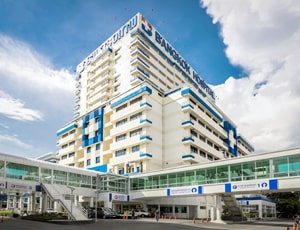
Kuala Lumpur, Malaysia
Number of Beds: 277
Year of Establishment: 2007
Medical Tourism Hospital of the Year 2024
Clinical Service Initiative of the Year 2024
Best in Community Involvement of the Year 2023
Brand of the Year in Healthcare of the Year 2023
Orthopaedic Service Provider of the Year 2023
Clinical Service Initiative of the Year 2023
Medical Tourism Hospital of the Year of the Year 2023
Top Children’s Hospital of the Year 2022
MRO Service Star of the Year 2022


Awarded by: Confederation of Indian Industry (CII)
Awarded by: Quality Council of India, in association with the Ministry of Health & Family Welfare
Awarded by: Federation of Indian Chambers of Commerce & Industry (FICCI)
Awarded by: Indian Excellence Awards
Awarded by: World Health Organization (WHO)


Istanbul, Turkey
Number of Beds: 441
Year of Establishment: 2022


Ask your healthcare adviser for the best multiple options and choose the one that meets your expectations

| Speciality | General Surgery |
| Procedure | Kasai Procedure |
| Success Rate | 80-95% |
| Recovery Time | 2-6 weeks |
| Treatment Time | 4-6 hours |
| Chances of Recurrence | 10-20% |
A Kasai procedure is also known as a hepatoportoenterostomy. It is a surgical intervention primarily used to treat a condition called biliary atresia in infants. Biliary atresia is a rare condition where the bile ducts that carry bile from the liver to the small intestine are either absent or blocked. This procedure is performed to bypass the drainage pathway for bile from the liver directly into the intestine. The procedure helps prevent the buildup of bile in the liver and reduces the risk of liver damage and cirrhosis.
The primary medical condition treated through a Kasai procedure is biliary atresia in infants. It is performed in cases where the condition is detected early, typically within the first few months of life.
Infants are closely monitored in the hospital following the procedure for complications, infection, and bile flow effectiveness. If the procedure is successful, the infant's jaundice may improve over time. Regular check-ups are required to monitor the liver's function and overall health. The Kasai procedure does not provide a cure for biliary atresia, but it can improve the quality of life and potentially delay the need for a transplant.