Browse verified doctors or let our care team help you find the doctor best suited to your condition, treatment goals, and budget.

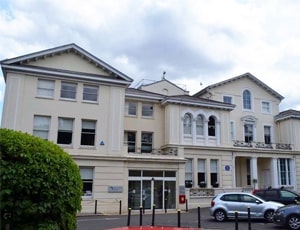
Choosing Rutherford Cancer Centre South Wales for Partial Colectomy gives patients access to experienced colorectal surgeons, advanced abdominal imaging, laparoscopic and robotic surgical systems, specialized anesthesia services, and structured postoperative care. Established in 1956, the accredited hospital in Wales, United Kingdom has 89 beds and provides specialized treatment for complex colorectal conditions.
Partial Colectomy is performed under general anaesthesia, with the surgical approach selected according to the underlying disease, location of the affected colon, and patient's overall health. The surgeon removes the diseased section while carefully preserving healthy bowel and surrounding structures. The remaining sections may then be reconnected, while a stoma may be created when healing or the patient's clinical condition makes immediate reconnection unsuitable. Postoperative monitoring focuses on bowel function, infection, bleeding, anastomotic leakage, obstruction, and other potential complications.
The London Clinic provides specialised Partial Colectomy with a focus on precise bowel resection, preservation of healthy colon, minimally invasive techniques, and individualized postoperative management. Established in , the JCI accredited hospital is located in London, United Kingdom and operates 234 beds, with modern colorectal surgery, gastrointestinal imaging, laparoscopic, robotic, oncology, and postoperative care infrastructure.
Partial Colectomy can provide an effective surgical treatment option for appropriately selected patients with localized diseases of the colon. Treatment planning considers the underlying diagnosis, location and extent of disease, bowel function, nutritional status, previous abdominal procedures, and overall health. For colon cancer, multidisciplinary assessment helps determine the appropriate extent of resection and whether additional treatments such as chemotherapy may be required before or after surgery.
Woodlands Hospital is a trusted healthcare provider for Partial Colectomy, offering advanced colon surgery supported by experienced colorectal surgeons, gastroenterologists, surgical oncologists, radiologists, anesthesiologists, and multidisciplinary gastrointestinal teams. Established in 2001, the accredited hospital is situated in Darlington, United Kingdom and has 38 beds.
Partial Colectomy involves removing the affected portion of the colon along with an appropriate margin of healthy tissue. When performed for colon cancer, nearby lymph nodes may also be removed for pathological examination and disease staging. The remaining bowel is generally joined through an anastomosis to restore intestinal continuity. In selected cases, a temporary or permanent stoma may be required depending on the patient's condition and surgical findings.
Circle Reading Hospital provides specialised Partial Colectomy with a focus on precise bowel resection, preservation of healthy colon, minimally invasive techniques, and individualized postoperative management. Established in 2012, the accredited hospital is located in Reading, United Kingdom and operates beds, with modern colorectal surgery, gastrointestinal imaging, laparoscopic, robotic, oncology, and postoperative care infrastructure.
Partial Colectomy can provide an effective surgical treatment option for appropriately selected patients with localized diseases of the colon. Treatment planning considers the underlying diagnosis, location and extent of disease, bowel function, nutritional status, previous abdominal procedures, and overall health. For colon cancer, multidisciplinary assessment helps determine the appropriate extent of resection and whether additional treatments such as chemotherapy may be required before or after surgery.
Choosing Shirley Oaks Hospital for Partial Colectomy gives patients access to experienced colorectal surgeons, advanced abdominal imaging, laparoscopic and robotic surgical systems, specialized anesthesia services, and structured postoperative care. Established in 1986, the accredited hospital in London, United Kingdom it has adequate bed capacity and provides specialized treatment for complex colorectal conditions.
Partial Colectomy is performed under general anaesthesia, with the surgical approach selected according to the underlying disease, location of the affected colon, and patient's overall health. The surgeon removes the diseased section while carefully preserving healthy bowel and surrounding structures. The remaining sections may then be reconnected, while a stoma may be created when healing or the patient's clinical condition makes immediate reconnection unsuitable. Postoperative monitoring focuses on bowel function, infection, bleeding, anastomotic leakage, obstruction, and other potential complications.
St Edmunds Hospital is a trusted healthcare provider for Partial Colectomy, offering advanced colon surgery supported by experienced colorectal surgeons, gastroenterologists, surgical oncologists, radiologists, anesthesiologists, and multidisciplinary gastrointestinal teams. Established in 1988, the accredited hospital is situated in Bury Saint Edmunds, United Kingdom and it has adequate bed capacity.
Partial Colectomy involves removing the affected portion of the colon along with an appropriate margin of healthy tissue. When performed for colon cancer, nearby lymph nodes may also be removed for pathological examination and disease staging. The remaining bowel is generally joined through an anastomosis to restore intestinal continuity. In selected cases, a temporary or permanent stoma may be required depending on the patient's condition and surgical findings.
At Parkside Private Hospital, Partial Colectomy is performed using specialized colorectal surgical techniques and comprehensive diagnostic assessment. Established in 1983, this accredited hospital in London, United Kingdom has 82 beds and offers advanced colorectal surgery, minimally invasive procedures, gastrointestinal care, and surgical oncology services.
Partial Colectomy may be considered when a localized section of the colon requires surgical removal because of cancer, persistent inflammation, diverticular disease, obstruction, perforation, or other significant conditions. Before surgery, investigations such as colonoscopy, CT or MRI imaging, blood tests, and other evaluations may be performed to determine the location and extent of disease. During the procedure, the affected segment is removed and the remaining ends of the colon are usually reconnected when it is clinically safe to do so.
Cancer Centre London provides specialised Partial Colectomy with a focus on precise bowel resection, preservation of healthy colon, minimally invasive techniques, and individualized postoperative management. Established in 2005, the accredited hospital is located in London, United Kingdom and operates beds, with modern colorectal surgery, gastrointestinal imaging, laparoscopic, robotic, oncology, and postoperative care infrastructure.
Partial Colectomy can provide an effective surgical treatment option for appropriately selected patients with localized diseases of the colon. Treatment planning considers the underlying diagnosis, location and extent of disease, bowel function, nutritional status, previous abdominal procedures, and overall health. For colon cancer, multidisciplinary assessment helps determine the appropriate extent of resection and whether additional treatments such as chemotherapy may be required before or after surgery.
The Alexandra Hospital offers advanced Partial Colectomy using modern colorectal and minimally invasive surgical techniques and individualized gastrointestinal care plans. Established in 1981, the NABH accredited hospital is located in Cheadle, United Kingdom and it has adequate bed capacity, providing comprehensive colorectal, gastrointestinal, and surgical oncology care for local and international patients.
Partial Colectomy is a surgical procedure used to remove a diseased or damaged portion of the colon while preserving the remaining healthy bowel. It may be performed for conditions such as colon cancer, diverticular disease, inflammatory bowel disease, bowel obstruction, perforation, or certain large or complex polyps. Depending on the condition and extent of disease, the procedure may be performed using open, laparoscopic, or robotic-assisted techniques.