Sciatic Nerve Pain Treatment in India
- Top Accredited Hospitals
- Global Medical Standards
- Cutting-Edge Technology
- Proven Treatment Options
- High Success Rate
- Trusted by Millions

What is Rheumatoid Arthritis of the Spine?
Pain travelling through the hip and buttocks down to each leg is called sciatica. It is, in fact, a pain that travels up and down the course of the sciatic nerve- from the lower back through the hip and buttock, down the back of the thigh and lower leg. Generally, one side of the body is affected.
What is the Importance of Timely Treatment?
- Prevents the Symptoms from Worsening: Early treatment can prevent a condition such as sciatica from worsening, cutting back pain and preventing further damage. Early treatment helps fast recovery.
- Reduces the Risk of Permanent Nerve Damage: Early treatment can prevent permanent problems, such as numbness and muscle weakness due to compressed nerves. Delayed treatment usually results in irreversible nerve damage.
- Speeding Up Recovery: Early intervention through therapy or medication is the fastest way to restore mobility. Delayed treatment increases the time for recovery and complications.
- Improves Quality of Life: Prompt treatment reduces pain, allowing patients to return to their daily activities and improve their overall well-being. It hampers the long-term limitations.
- Prevention of Complications and Its Costs: Timely care would spare a patient's complications and the need for costly surgeries and more potent medications. It is also cost-effective in the long term.
What are the Common Symptoms of Sciatic Nerve Pain?
- Sharp or Shooting Pain
- Numbness or Tingling
- Weakness in the Affected Leg
- Pain That Worsens with Sitting
- Pain That Improves with Movement
Causes and Risk Factors of Sciatic Nerve Pain
Causes
- Herniated Disc
- Spinal Stenosis
- Degenerative Disc Disease
- Spondylolisthesis:
- Piriformis Syndrome
- Trauma or Injury
Risk Factors
- Age
- Sedentary Lifestyle
- Obesity
- Occupation
- Poor Posture
- Smoking
- Family History
- Diabetes
Connect with our advisor for a PRIORITY response
Latest Research and Technologies in the Treatment of Sciatic Nerve Pain in India
The medical treatment of Sciatic Nerve Pain in India adapts the newest research and technologies to meet worldwide clinical standards and healthcare capabilities.
- Stem Cell Therapy Applications: Stem cell therapy is currently being applied in India to repair damaged sciatic nerves and relieve pain as a promising alternative to orthodox treatments. Also, it promotes the regeneration of nerve tissues for healing.
- Spine Endoscopy: This spine endoscopic approach enhances minimally invasive intervention, offering timely treatment for sciatica with slight recovery and discomfort- it is starting to gain prominence in India due to its efficiency in pain management.
- Occupational Therapy: Some of the studies being carried out in India have proved that this therapy is effective for sciatica management. Occupational therapy can enable one to become mobile, achieving a higher quality of life with reduced pain through specific exercises and techniques.
- Epidural Steroid Injections: An epidural steroid injection sometimes helps in the treatment of sciatica pain. This service is offered at Max Healthcare to manage this sciatica pain, through which one will have temporary relief and freedom of movement. It helps in reducing inflammation around the nerve that produces the symptoms.
- Neurotherapy: The introduction of serotherapy has facilitated the non-invasive cure of sciatica by applying specific pressure techniques for relieving pain without medications and avoiding surgery for some patients.
Sciatic Nerve Pain Prevention Tips
- Lift Properly: Bend your knees to lift heavy objects and use your legs rather than your back. Never twist while lifting to eliminate strain on the back.
- Proper Weight Maintenance: Excess weight leads to a very wrong strain on the spine, and an individual is bound to face risks like sciatica. A balanced diet and exercise should be considered to keep weight at the necessary healthy ranges.
- Prolonged Sitting: Stretch or take a stroll after prolonged sitting. Prolonged sitting currents will increase pressure on the spine, finally compressing sciatic nerves.
- Maintain Proper Posture: Good posture should be observed while sitting, standing, and walking to lessen strain on the spine. Use ergonomic furniture that has back support to avoid slouching.
- Stay Active: Regular exercise, which involves stretching and strengthening, maintains the flexibility of muscles and the spine. Yoga, walking, and swimming would be great for preventing sciatica.
- Lift Properly: When lifting heavy items, bend your knees; use your legs rather than your back. Long, twisting movements should not be done during lifting to avoid straining your back.
- Maintain a Healthy Weight: Overweight people strain the spine, causing an individual to fall at a risk level with sciatica. Balanced food means doing regular exercises to keep weight at a healthy level.
- Avoid Prolonged Sitting: Take a break from habitual sitting to stretch or walk. For prolonged sitting, pressure on the spine increases to reach the end of sciatic nerve compression.
Treatment options for Sciatic Nerve Pain
The medical treatment for Rheumatoid Arthritis of the Spine requires evaluating the severity, neural involvement, and patient medical condition. The following are the treatment options:
Laminectomy: Removing all or part of a lamina (bony covering over the spinal canal) to relieve pressure on the sciatic nerve due to spinal stenosis or herniated discs.
Cost Start From USD 3000 - USD 5000Explore Options
Spinal Fusion: It is generally indicated if the symptoms continue refractory to other treatment (laminectomy, physical therapy) or if the pediatric spine fusion suppresses an instability to compress nerve tissue.
Cost Start From USD 6500 - USD 9500Explore Options
Microdiscectomy: This surgical procedure removes the portion of the disc pushing on the nerve, which will help reduce irritation and pain. This procedure works best for patients with a lumbar disc herniation that is causing sciatica and has not responded to nonoperative treatment.
Cost Start From USD 4500 - USD 6000Explore Options
These are the standard diagnostic methods for diagnosing Sciatic Nerve Pain :
- Clinical Evaluation:
- The Straight Leg Raise Test is performed while the patient is supine; the doctor raises the patient's leg to elicit pain. Pain or discomfort experienced below the knee suggests the sciatic nerve may be involved.
- Neurological Examination: The doctor examines for evidence of nerve compression by testing for muscle strength, reflexes, and sensation in the legs and lower back.
- Blood test:
- Blood tests do not cause sciatic pain; however, they may be used to rule out other conditions, such as infections or inflammatory disorders, that might be an aggravating factor for sciatic pain.
- Imaging Studies:
- X-rays are only limited to showing signs of degenerative changes of the spine, spinal stenosis or the alignment of the vertebrae that cause sciatica. However, X-rays cannot directly indicate soft tissue or nerve impairment.
- Magnetic Resonance Imaging (MRI): MRI produces quality images of the human spine and its soft tissues, enabling doctors to diagnose herniated discs, spinal stenosis, or other structural anomalies that may be pressing against the sciatic nerve.
- CT scan: CT scans generally provide cross-sectional images of the spine when viewed from above, demonstrating the presence of herniated discs, tumours, or anything else causing pressure on the sciatic nerve. Otherwise, it is used whenever an MRI cannot be performed or is contraindicated.
- Electromyography (EMG) and Nerve Conduction: Studies of electrical activity in muscles and nerve signal speeds. Nerve injury or compression can be suspected by studying muscles and the nerves controlling them. This is especially useful when the injury is thought to have occurred to the nerves that exit from the spinal column.
- Myelogram is a procedure wherein a special dye is injected into the spinal fluid to outline the spinal cord and nerve roots on an X-ray or CT scan. It is generally used when an MRI is inconclusive or not available.
MediRehab (a chain of Rehab centres, part of MediGence) provides comprehensive rehabilitation services designed to support patients in India. Additional services are as per the patient's requirement. These services include:
- Physical Therapy Exercises & Stretching: These exercises will help strengthen the back muscles, make the body flexible, and relieve pressure on the affected, compressed sciatic nerve. It will also teach a person to maintain proper posture so that further strain isn't caused.
- Chiropractic Treatment: These kinds of mobilisation techniques are applied to the spine, where chiropractic specialists work on joints to realign the spine, reduce nerve compression, or relieve sciatic pain.
- Massage Treatment: Trigger point therapy, together with deep tissue massage, works to relax tense muscles, improve blood circulation, and relieve sciatica.
- Heat and Cold Therapies: Cold packs may reduce inflammation, whereas heat therapy works to relax muscles and allow more blood flow into the affected region. This provides significant relief from pain and stiffness.
- Acupuncture and CBT: Acupuncture allows nerve functioning and restores healing throughout the body. Conversely, cognitive behavioural therapy helps with coping with the psychological dimensions of chronic pain.
NSAIDs are often used for the treatment of Sciatica. Pain relief is also achieved through muscle relaxants because they relieve muscle spasms. Many people use steroid injections, typically epidural or nerve root injections, to reduce severe inflammation and cause short-term relief.
Instantly Connect with our Specialists


Hospitals for Sciatic Nerve Pain in India
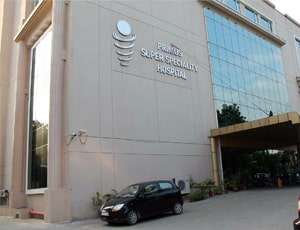
Primus Super Speciality Hospital
Delhi, India
Primus Super Speciality Hospital located in New Delhi, India is accredited by NABH. Also listed below are some of the most prominent infrastructural details:
- There are as many as 130 hospital beds.
- The total number of hospital beds is inclusive of the 18 ICU Beds in Primus Hospital.
- Operation theatres in the hospital have been equipped with the latest technologies.
- There is 24/7 hour emergency and trauma response and care.
- 64 slice spirals as well as Cardiac CT Scan are present.
- International patient care facilities are available such as accommodation, flight booking, airport transfer, and interpreters.

Medanta - The Medicity
Gurgaon, India
Medanta – The Medicity, Gurugram, founded by renowned cardiac surgeon Dr. Naresh Trehan, is a leading multi-super speciality hospital offering advanced yet affordable healthcare. Spread across a 43-acre campus, it houses 1,391 beds, 270 ICU beds, 40 operation theatres, and 900+ doctors across 30+ specialities. Accredited by JCI, NABH, and NABL, Medanta is designed per American Institute of Architects’ healthcare guidelines. Recognised as the Best Private Hospital in India (2020–2025) and among the World’s Top 250 Hospitals (Newsweek 2024), it excels in Cardiac Care, Cancer, Neurosciences, Gastro, Orthopaedics, and Renal Care, ensuring world-class, collaborative, and compassionate treatment.
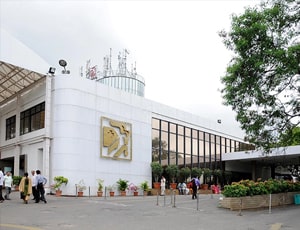
Apollo Hospitals
Hyderabad, India
Apollo Hospitals located in Hyderabad, India is accredited by JCI, NABH. Also listed below are some of the most prominent infrastructural details:
- A premier multi-specialty hospital with 477-bed capacity
- More than 50 specialties, super-specialties
- 12 Centers of Excellence
- The Institutes for Heart Diseases, Neurosciences, Cancer, Emergency, Orthopaedics, Renal Diseases, and Transplants
- Centers of Excellence are known for patient care, training and research
- Doctors with years of truly global experience in healthcare delivery
Our Services to better your experience
Opinion & Option
We submit the most accurate opinion and options from one or more countries for your review
Consult Privately
Consult with a certified specialist privately on our telemedicine platform even before you decide to travel
Logistics
We handle flights, visas, transfers, and accommodation—so you can focus on your health.
Recovery
Our In-house rehabilitation service packages to better your recovery and treatment outcome
Why Choose India for Sciatic Nerve Pain Treatment?
- Effective Cost: The cost of medical treatment in India proves more economical than Western pricing yet remains equivalent to high-end treatment standards. The treatment path covers operative steps and follows all post-surgical phases.
- World-Class Infrastructure: The healthcare system in India operates multiple facilities accredited at the international level, which combine highly experienced orthopaedic surgeons who receive patients with complicated spine injuries, including Sciatic Nerve Pain.
- Advanced Technology: Indian medical centres use state-of-the-art equipment and cutting-edge procedures for diagnosis and treatment, including minimally invasive surgical methods and robotic-assisted solutions.
- Skilled Specialists: Doctors specialising in orthopaedics and neurosurgery are in high numbers throughout India because Indian medical specialists possess international recognition for their outstanding spinal treatment capabilities.
- Language Support: Indian hospitals offer multilingual support to fulfil international patient needs by assisting in numerous country languages.
Frequently Asked Questions
Sciatica can be temporary or long-term. Mild sciatic symptoms may get away in a couple of weeks, while more intense symptoms could last many months and require more input.
Typically, many patients with sciatica benefit from conservative measures such as physical therapy, medications, heat/cold therapy, and lifestyle changes. Surgery is rarely the first option.
The pain becomes intolerable and persists more than a few weeks with some weakness in the legs or numbness accompanied by bowel or bladder control problems. Then, one has to see a doctor.
Yes, physical therapy and exercises such as stretching, strengthening, and postural correction will relieve pressure on the sciatic nerve and thus improve flexibility.
Effective treatment and management of sciatica can be possible, but recurrences may arise without treating the underlying conditions, such as a herniated disc or spinal stenosis. Preventive care and lifestyle changes help to reduce incidents of recurrence.
Lifestyle changes such as regular physical activity, stretching exercises, healthy weight maintenance, proper ergonomics, and avoiding constant seating can significantly minimise the risk of developing sciatica.
Sitting for an extended time strains the lower back and the sciatic nerve, leading to pain and discomfort. Breaks, stretching, and good posture may help in avoiding this.
In most instances, mild sciatica resolves spontaneously with conservative treatment, stretching, and over-the-counter medication. However, when it's severe or permanent, intervention by a doctor will be necessary.
Yes, sciatica is more prevalent in people over 40 years of age, as the anatomical changes in the spine which happen with ageing, such as age-related degenerative disc diseases or spinal stenosis, lead to nerve compression over time and thus can result in the development of sciatica.
It most likely occurs in the lower back, considering that the sciatic nerve originates from the lower back. A herniated disc, for example, or spinal stenosis in the lower part of the back could be responsible for sciatic pain.
Yes, stress may contribute to muscle tightness, especially in the back, worsening sciatic nerve pain. With deep breathing, yoga, or meditation, one can relieve stress.
Surgery is not typically the first line of treatment for sciatica, as most people will do well with physical therapy, medications, and injections. Most eventually achieve relief without surgery.
Author

Dr. Shagufta Parveen
Dr. Shagufta Parveen is a Clinical researcher and medical writer with expertise in clinical pharmacology and pharmacotherapeutics. She holds a B.Pharm and Doctor of Pharmacy (Post-Baccalaureate) degree from Teerthanker Mahaveer University, Moradabad.
During her clinical stint at BLK-Max Super Speciality Hospital and Indraprastha Apollo Hospital, she gained hands-on experience in the Clinical Pharmacology Department. Combining scientific knowledge with strong medical writing skills, Dr. Shagufta develops evidence-based healthcare content, treatment guides, and patient education resources.
Her work focuses on simplifying complex medical concepts while maintaining scientific accuracy, helping readers better understand healthcare advancements and treatment options.
In addition to her writing expertise, she is actively involved in scientific research and has contributed to peer-reviewed publications.
Her research work is accessible through the following links:
https://scholar.google.com/citations?user=lMVK1eIAAAAJ&hl=en
https://carcinogenesis.com/index.php/JOC/article/view/870
https://carcinogenesis.com/index.php/JOC/article/view/868
https://wjpsronline.com/abstract/0000000760
View MoreReviewer

Dr Sonal Gupta
Neurosurgeon
29 Years of Experience
Dr. Sonal Gupta has an experienced neurosurgeon with more than 29+ years of clinical expertise. She is currently the Director, Neuro & Spine Surgery at Fortis Hospital, Shalimar Bagh. Before joining Fortis, she has been associated with various organizations such as Maharaja Agrasen Hospital, Action Balaji Hospital, and Max Hospital. View More
Last Reviewed - January 2026