Infertility Treatment in India
- Top Accredited Hospitals
- Global Medical Standards
- Cutting-Edge Technology
- Proven Treatment Options
- High Success Rate
- Trusted by Millions

What is Infertility?
Infertility is a condition of the male or female reproductive system characterised by the failure to conceive following at least 12 months of frequent unprotected sexual intercourse. Infertility can result from male, female, or unexplained reasons.
A medical condition can cause infertility in either you or your partner or by a combination of conditions that impair pregnancy. However, several safe and effective treatments can improve your chances of becoming pregnant.
What is the Importance of Timely Treatment?
Early treatment of infertility is critical since it enhances the chances of successful pregnancy. Early intervention can assist in identifying and treating underlying reasons, such as hormone imbalances, obstructed fallopian tubes, or male reproductive disorders. Delaying therapy may aggravate diseases, diminish success chances with assisted reproductive technologies, and drastically limit treatment alternatives. Addressing infertility early on enhances the possibility of successful therapy and conception.
What are the Common Symptoms of Infertility?
The key indicator of infertility is the inability to conceive after six months or a year of regular, unprotected intercourse. You may not experience any additional symptoms. However, some women and men may experience physical symptoms such as:
- Pelvic or abdominal pain.
- Irregular vaginal bleeding, irregular periods, or no menstruation.
- Ejaculatory or penile disorders.
Types of infertility
There are various types of infertility, including:
- Primary infertility: This occurs when you have never been pregnant and are unable to conceive after a year of regular, unprotected sexual intercourse (or six months if you are 35 or older).
- Secondary infertility: This is the inability to conceive after at least one successful pregnancy.
- Unexplained infertility: Fertility testing has not identified a reason why a woman or couple is unable to conceive.
Causes and Risk Factors of Infertility
Causes
The causes of infertility might impact any partner.
The causes of infertility in women
Ovulation problems are the leading cause of infertility in women. Ovulation is when your ovary releases an egg to meet sperm and fertilise.
The following causes can contribute to female infertility:
- Polycystic Ovarian Syndrome (PCOS).
- Primary ovarian insufficiency or insufficient egg quality.
- Sickle-cell anaemia.
- Uterine fibroids and uterine polyps.
- Thyroid illness.
- Previous surgical sterilisation (tubal ligation or salpingectomy).
- Genetic or chromosomal problems.
- Sexual dysfunction.
- Your ovaries may be missing due to surgery or congenital defects.
- Menstrual cycles are infrequent or absent.
- Endometriosis.
- Your vagina, uterus, or fallopian tubes may be structurally abnormal.
- Autoimmune disorders such as celiac disease and lupus.
- Kidney disease.
- Pelvic inflammatory disease, or PID.
- Disorders affecting the hypothalamus and pituitary glands.
Causes of infertility among males
Male infertility is most commonly caused by issues with sperm shape, movement (motility), or quantity (low sperm count).
The causes of male infertility include:
- Enlarged veins (varicocele) in your scrotum
- Cystic fibrosis is a genetic condition.
- Chromosomal disorders, including Klinefelter syndrome.
- Injury to the scrotum or testicles.
- Hypogonadism (low testosterone).
- Misuse of anabolic steroids.
- Sexual dysfunction includes erectile dysfunction, anejaculation, premature ejaculation, and retrograde ejaculation.
- Undescended testicles.
- Previous chemotherapy or radiation treatment.
- The lack of testes might be surgical or congenital.
- Vasectomy
Risk Factors
The risk factors for infertility are:
- Age, particularly in your late thirties or forties. Men's fertility begins to decline at the age of 50.
- Eating disorders include anorexia nervosa and bulimia.
- Excessive alcohol use.
- Toxic environmental exposures include chemicals, lead, and pesticides.
- Over-exercising.
- Radiation treatment or chemotherapy.
- Sexually transmitted infections (STIs).
- Smoking and using tobacco products.
- Substance abuse.
- Being overweight or underweight.
- Abnormalities of the brain's hormone-producing areas (hypothalamus or pituitary).
- Chronic ailments and diseases
Connect with our advisor for a PRIORITY response
Latest Research and Technologies in the Treatment of Infertility
Recent advances in infertility treatment include genetic screening for embryos using Preimplantation Genetic Testing (PGT) and stem cell therapy to restore damaged reproductive tissue. Cryopreservation allows women to save their eggs for later use, while non-invasive hormonal treatments improve fertility control in disorders such as PCOS and endometriosis. These improvements increase success rates and provide more individualised, effective options for infertile couples.
Infertility Prevention Tips
You can take the following precautions to protect your fertility, especially while attempting to conceive:
- Eat a well-balanced diet and stay within a healthy weight range
- Do not smoke, abuse medicines, or consume alcohol
- Get treatment for STIs
- Limit your exposure to environmental contaminants.
- Stay physically active, but don't overdo it
- Don't wait till later in life to conceive
- Follow fertility preservation methods (freezing eggs or sperm)
Treatment options for Infertility
In vitro fertilisation (IVF): This involves removing eggs from your ovary and combining them with sperm in a lab dish. Sperm fertilises eggs. A provider places one to three fertilised eggs (embryos) in your uterus.
Cost Start From USD 3500 - USD 4500Explore Options
Intrauterine insemination (IUI): It is a procedure in which healthy sperm is injected directly into the uterus around the time the ovary produces one or more eggs to be fertilised. Depending on the cause of infertility, IUI can be timed with your menstrual cycle or with the use of fertility medications. Your partner or a donor supplies the sperm.
Cost Start From USD 1000 - USD 1500Explore Options
Tests for Men
- Semen analysis: Your healthcare staff may request one or more sperm samples. Then, a lab examines your sperm sample. In rare circumstances, urine may be analysed to determine whether it contains sperm.
- Hormonal testing: You may be given a blood test to determine your testosterone and other male hormone levels.
- Genetic testing: This can be done to determine whether a genetic abnormality is the cause of infertility.
- Testicular biopsy: This treatment involves removing a sample of testicular tissue so that a lab can examine it under a microscope. It may be used in rare cases to determine whether there is a blockage in the reproductive system that prevents sperm from exiting the body in semen.
Tests for Women
Ovulation tests: A blood test measures hormone levels to determine whether you are ovulating.
Thyroid function tests: If your doctor suspects that a thyroid condition causes your infertility, you can have this blood test. If the gland produces too much or too little thyroid hormone, it may cause problems with fertility.
Hysterosalpingography: Hysterosalpingography examines the status of the uterus and fallopian tubes. It also checks for obstructions in the fallopian tubes and other issues.
Ovarian reserve testing: This allows your care team to determine how many eggs you have for ovulation. The procedure frequently begins with hormone testing early in the menstrual cycle.
Hormone testing: These measure the levels of hormones that regulate ovulation. They also examine pituitary hormones, which regulate reproductive processes.
Infertility rehabilitation focuses on improving general health and managing fertility-related issues. This includes:
Lifestyle Changes: Eating a good diet, exercising regularly, and maintaining a healthy weight can all enhance reproductive health and increase the likelihood of conception.
- For ovulation-related infertility, your healthcare provider may prescribe substances to induce ovulation and enhance egg release.
- These medications can help regulate irregular ovulation or restart ovulation that has halted.
- Prescription medications may also boost ovarian function and increase the odds of pregnancy.
- Examining each fertility medicine's potential benefits and hazards with your doctor is critical to selecting the best treatment option.
Instantly Connect with our Specialists


Hospitals for Infertility in India

Sharda Hospital
Noida, India
Sharda Hospital located in Greater Noida, India is accredited by ISO, NABH. Also listed below are some of the most prominent infrastructural details:
- The hospital is equipped with the best of technologically advanced equipment.
- Sharda Hospital, Delhi has a bed capacity of 900.
- There are as many as 90 beds in the critical care section.
- The critical care facilities are present for general medicine, Pulmonology, Surgery, Paediatrics, Neonatology, Cardiology, Cardiothoracic surgery and Neurosciences.
- There are Centers of Excellence such as Institute of Child Care, Institute of Dental Sciences, Institute of Orthopedic & Spine,Institute of Neuro Sciences, Institute of Minimal Access Surgery etc.
- Virtual consultations in the form of Telemedicine and Teleradiology are a reality at an advanced hospital such as Sharda Hospital.
- There is also a Tele ICU facility that ensures that a virtual ICU is a functioning system. It is aided with audio visual communication systems, latest computers, a team which is networking and a physically present ICU team.
- 24/7 Emergency care available aided with buses as well as ambulances.
- Exceptional International patient care coordination is available throughout the system helping patients with transfer, travel, treatments.

Medicover Fertility, Panchsheel Park
Delhi, India
All Medicover Fertility centres are designed and equipped to exceed the international standards set by the WHO, ICMR, and ASRM and the Panchsheel branch is no different. The practices followed here are the same as the ones in Europe.
All of the latest technology pertaining to the field of infertility is available here alongside well-trained clinical embryologists, dedicated nurses, and a team of fertility experts. It comes as no surprise that there is a baby born every three hours in one of the Medicover Fertility clinics worldwide.
Medicover Fertility clinics also have a total transparency policy that keeps the expectant parents fully updated and informed about their diagnosis and treatment. They believe it is the right of the patients to know all the minute details of whatever situation they are facing and all possible remedies and treatments so that the couple can make all the tough decisions through knowledge.
The IVF treatment cost in the Medicover Fertility clinic in Panchsheel Park is quite affordable and comes with a 0% interest EMI option.
Internationally certified and acclaimed doctors are present in the Medicover Fertility Panchsheel Park branch. They meet all the national and international standards and yet manage to provide quality treatment that is both ethical and cost-effective. They have earned their patient's trust over the years and have won goodwill at an international level.
Medicover Fertility Panchsheel Park is known to have the best IVF treatment facility in all of Southern Delhi. This is only because of the expert fertility consultants and staff who are available at hand. They map out a proper, correct, and doable plan for all the couples who walk through the doors of the clinic after taking into consideration their medical history and reproductive issues.
The IVF clinic offers standardized, ethical, transparent, and advanced infertility treatments performed by a team of qualified and well-experienced IVF doctors, clinical embryologists, and support staff.
The Medicover Fertility centre in Panchsheel Park offers a wide variety of treatments for infertility. The most popular procedure there is IVF also known as In-Vitro Fertilization. The other services offered are:
- IUI (Intrauterine Insemination)
- ICSI (Intracytoplasmic Sperm Injection)
- Eggs and Sperm Freezing
- Embryo Freezing
- IVF with Donor Egg
- IVF with Donor Sperm
- IVF with Donor Embryo
- Surrogacy
- Assisted Hatching
- TESA, PESA, M-TESE
Drop by the Medicover Fertility Clinic in Panchsheel Park find your perfect treatment to make your dreams come true.

Medicover Fertility
Noida, India
With state-of-the-art infrastructure and a warm environment, Medicover Fertility has a well-managed infrastructure.
Reception - The waiting area and reception is designed in warm colors to make the patient feel welcome.
Embryology Labs - Well equipped with all the latest medical devices, the embryology labs are kept under strict observation of air quality and particle count to ensure high fertilization rates.
Operation Theater - Equipped with Laparoscopic imaging systems, here tissue recognition and tissue differentiation are carried out.
UltraSound Room - With the latest devices, doctors can receive a high-quality image and make a precise diagnosis.
Labour Room - Temperature and light inside the ward are controlled to provide maximum comfort to the birthing mothers.
Our Services to better your experience
Opinion & Option
We submit the most accurate opinion and options from one or more countries for your review
Consult Privately
Consult with a certified specialist privately on our telemedicine platform even before you decide to travel
Logistics
We handle flights, visas, transfers, and accommodation—so you can focus on your health.
Recovery
Our In-house rehabilitation service packages to better your recovery and treatment outcome
Why Choose India for Infertility Treatment?
Here are some of the reasons for choosing India:
- Due to advancements in medical facilities, such as minimally invasive surgical techniques.
- World-class experts include highly experienced doctors, JCI, and NABH-accredited healthcare institutions.
- Compared to other countries, treatment in Indian hospitals is cost-effective.
- Indian hospitals provide International patient services, including a multilingual support system.
- Improved treatment methods and biological therapies.
Frequently Asked Questions
Yes, however, it is dependent on the cause. In 85% to 90% of cases, lifestyle changes, medication, ART, or surgery can resolve infertility and allow a woman to conceive.
Endometriosis is associated with infertility. Approximately 30% to 50% of women with endometriosis will become infertile.
People under the age of 35 who are not pregnant after a year of trying should consult a healthcare provider. If you are 35 to 39 years old, get help sooner (after six months of trying). If you are 40 or older, you should seek evaluation after less than six months of attempting. Your chances of becoming pregnant decline with age.
The success rate of infertility treatments in India varies according to the type of treatment, age, underlying causes of infertility, and clinical skill. Success rates for procedures such as IVF (In Vitro Fertilization) usually vary from 30% to 50% every cycle, with more excellent rates reported in women under 35. However, success rates might vary greatly amongst clinics, therefore, tailored consultations are required to determine the likelihood of success for each specific instance.
Complications from infertility therapy include:
- Higher probability of multiples (twins, triplets, or more): Producing numerous eggs and transferring more than one embryo raises your chances of becoming pregnant with more than one fetus.
- Ovarian hyperstimulation syndrome (OHSS): It is a fertility medication-related illness that produces painful and enlarged ovaries.
- Ectopic pregnancy: IVF increases the risk of ectopic pregnancy.
- Failed cycles: It occurs when you undergo infertility therapy but do not become pregnant.
IVF is regarded as a safe and successful treatment option in India when carried out by competent and certified fertility specialists. However, like with any medical operation, there may be dangers and complications, so speaking with a respected clinic and healthcare provider who can give specialised care and assistance throughout the process is essential.
Gender selection through IVF for non-medical reasons is prohibited in India under the Pre-Conception and Pre-Natal Diagnostic Techniques (PCPNDT) Act. Gender selection is permitted only when there is a risk of severe genetic disorders associated with a particular gender. However, IVF can be used to screen embryos for genetic diseases through a process called Preimplantation Genetic Testing (PGT). Still, it cannot be used for gender selection unless medically necessary.

Reviewer
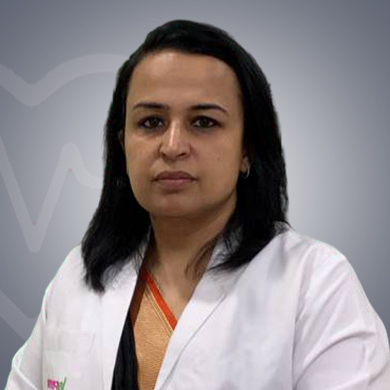
Dr. Nymphaea Walecha
Infertility & Laproscopy & Gynecologist
18 Years of Experience
Dr. Walecha, an M.D. Gynae from PGIMS Rohtak, Haryana, left her position as Assistant Professor of Obstetrics and Gynecology to train in Infertility Management and Assisted Reproductive Techniques at Fertility Clinic Mumbai under Dr. Sadhana Desai, who was instrumental in the country's second IVF baby. View More
Last Reviewed - January 2026