Baastrup's Disease (Kissing Spine) Treatment in Turkey
- Top Accredited Hospitals
- Global Medical Standards
- Cutting-Edge Technology
- Proven Treatment Options
- High Success Rate
- Trusted by Millions

What is Baastrup's Disease (Kissing Spine)?
Baastrup's Disease is more popularly known as Kissing Spine, which is a condition wherein two adjacent spinous processes (the bony protrusions at the back of the vertebrae) in the spine contact each other or "kiss" because of degenerative changes in the vertebrae.
It is commonly seen in the lower back (lumbar spine) but may also occur at other levels. It often manifests in the lumbar spine or lower back but may also be formed at different locations.
What is the Importance of Timely Treatment?
Prevention of Disease Progression
Early treatment can prevent the disease from further deterioration and additional degeneration. Early intervention would reduce complications, thus improving long-term outcomes.
Chronic Pain Reduction
Treating any spine-related problem early will decrease the chances of chronic pain developing. If symptoms are managed early, this will prevent long-term pain and enhance mobility.
Better Treatment Outcomes
Early treatment almost always results in better recovery and more effective management. It will prevent the need for more invasive and complex surgeries at a later stage.
Higher Quality of Life
The sooner the treatment is started, the longer patients can maintain an active lifestyle and lessen the interference with daily activities. In addition, reducing the stress of chronic pain enhances mental health.
Cost-Effective Care
Early intervention will minimise years of costly treatment options. There will be less risk of complications and the need for invasive options.
What are the Common Symptoms of Baastrup's Disease (Kissing Spine)?
- Localised Back Pain
- Pain When Pressing on the Spine
- Stiffness and Limited Range of Motion
- Radiating Pain (Radiculopathy)
- Muscle Spasms
Causes and Risk Factors of Baastrup's Disease (Kissing Spine)
Causes
- Degenerative Changes in the Spine
- Abnormal Spine Alignment
- Facet Joint Osteoarthritis
- Repetitive Stress or Overuse
- Post-Surgical Changes
Risk Factors
- Age
- Gender
- Spinal Deformities
- Occupation and Physical Activity
- Genetic Factors
- Previous Spinal Injury
Connect with our advisor for a PRIORITY response
Latest Research and Technologies in the Treatment of Baastrup's Disease (Kissing Spine) in Turkey
Minimally invasive procedures such as radiofrequency ablation are increasingly used to target the affected nerve to relieve pain. Platelet-rich plasma (PRP) therapy and stem cell injections are gaining favour to enhance tissue healing and reduce inflammation. State-of-the-art physiotherapy, including hydrotherapy and laser therapy, helps maintain spinal movement and relieve pain. Robotic spine surgery and image-guided interventions are increasingly being evaluated to promote surgical precision. Multidisciplinary pain management courses are available to help with chronic symptoms.
Baastrup's Disease (Kissing Spine) Prevention Tips
Keep Good Posture
Sitting, standing, and walking in the correct body position relieves the vertebrae from unnecessary stress. Use proper ergonomic furniture and avoid slumping to keep the lower back healthy.
Building Core and Back Muscles
Exercising the previous day makes today worth it. You have to target your abs and back through regular exercise, as these are the keys to stability and prevention against the misalignment possibilities of the spine.
Avoid Sitting or Standing for Long
It is advisable to break up and take some stretching or changing activity to completely relieve pressure on your spine by remaining in a static position for a long time without any positional changes.
Control Weight
Controlling healthy weight helps reduce the excess load on the spine and lower back. Proper diet and exercise reduce the stress placed along the line of vertebral structures.
Proper Lifting Techniques
When lifting a heavy object, bend with your knees rather than your waist to easily lift it. Wearing supportive shoes and lifting correctly can help reduce the stress on your spine.
Treatment options for Baastrup's Disease (Kissing Spine)
The medical treatment for Baastrup's Disease (Kissing Spine) requires evaluating the severity, neural involvement, and patient medical condition. The following are the treatment options:
Radiofrequency ablation is when radio waves pass through the skin into nerve tissues adjacent to the spine to relieve pain. It may be undertaken in those who suffer from chronic pain unrelieved by other treatment modalities.
Spinal Fusion Surgery may be performed in severe cases of decompression for the removal of spinous processes causing pain or impinging on a nerve with the aim of long-term relief. Spinal fusion may occur in conditions significantly destabilising the spine by fusing the affected vertebrae.
Cost Start From USD 10000 - USD 22000Explore Options
Laminectomy : A surgical procedure where a portion of the targeted bone is excised to relieve pressure on either the spinal cord or the surrounding nerves
Cost Start From USD 7965 - USD 9735Explore Options
These are the standard diagnostic methods for diagnosing Baastrup's Disease (Kissing Spine):
Clinical Evaluation
- History and Symptoms: During the assessment, the physician needs information about the previous surgical procedure and symptoms of back pain, numbness, and weakness to determine spinal cord involvement.
- Physical exam: The doctor will ask about the patient's medical history and symptoms, and the physical examination will show them. Tenderness and pain along the spinous processes can be key indicators.
Imaging Studies
- Plain Radiographs: X-rays are the first imaging modality to evaluate any evidence of Baastrup's Disease. The X-ray can show the closeness of the spinous processes and, to some extent, vertebral degenerative changes, such as disc degeneration or bony growth.
- Detailed Imaging for Soft Tissues: The MRI gives better images of soft tissue structures such as discs, ligaments, and muscles. It can also show any inflammatory condition of the interspinous ligaments, disc degeneration, or nerve compression by kissing spinous processes.
- A CT Scan provides detailed bone and spine views. The CT SCAN also produces three-dimensional images of vertebralspinal structures. This may help identify particular changes in vertebrae orientation and disclose relevant fractures or structural abnormalities.
- FDG PET/CT Advanced imaging: This imaging technique can detect scarring for inflammatory lesions in places where the kissing spinous processes occur. It can be helpful in complex cases that otherwise do not get sufficient information from conventional X-ray or MRI techniques.
- Bone Scintigraphy (Bone Scan) for Inflammation: Sometimes, a bone scan indicates inflammation in the spinous process. This is usually when other imaging techniques fail to demonstrate conclusively.
MediRehab (a chain of Rehab centres, part of MediGence) provides comprehensive rehabilitation services to support patients through Teleconsulations and online therapy sessions.
Physical Therapy
Training on posture, manual therapy, and stretching will enhance mobility and reduce pain. The exercises targeted will help to reduce stiffness and improve spinal flexibility.
Strengthening Exercises
The muscles surrounding the spine are strengthened through core and spinal stabilisation exercises. Swimming is a low-impact activity that builds strength without stressing the spine.
Management of Pain Techniques
Various treatments include heat or cold therapy, TENS, and massage therapy. These complementary therapies are fundamental in alleviating pain and improving the quality of life for the patient.
Occupational Physiotherapy Ergonomics
Adopting proper posture with workplace ergonomics reduces strain on the spine. An ergonomic chair and correct lifting techniques will help eliminate further stress on the spine.
Lifestyle and Activity Modification
Low-impact exercises, weight control, and avoiding protracted sitting or standing are vital for relieving the stress on the spine. Aquatic therapy offers a gentle exercise method while minimising stress on the lower back.
Instantly Connect with our Specialists


Hospitals for Baastrup's Disease (Kissing Spine) in Turkey

I.A.U VM Medical Park Florya Hospital
Istanbul, Turkey
I.A.U VM Medical Park Florya Hospital located in Istanbul, Turkey is accredited by JCI. Also listed below are some of the most prominent infrastructural details:
- Situated on an area of 51.000 m2
- Capacity of 300 beds
- 13 Operating rooms
- 92 Polyclinics
- Emergency Unit
- Intensive care Unit
- Parking lots
- Places of worship
- Rooms designed according to different needs offer the comfort of a 5-star hotel
- Special services are provided in all rooms, from television with domestic and foreign channels to internet service, from patient-specific diet menu to newspaper and magazine service
- Cafe/Restaurant with delicious menu

Medical Park Canakkale Hospital
Canakkale, Turkey
Apart from in-detail treatment procedures available, Medical Park Canakkale Hospital located in Canakkale, Turkey has a wide variety of facilities available for International Patients. Some of the facilities which are provided by them are Accommodation, Airport Transfer, Choice of Meals, Interpreter, SIM, TV inside room. Also listed below are some of the most prominent infrastructural details:
- 32 patient rooms
- 2 Operating rooms
- 75 bed capacity
- 24*7 Emergency Service
- Fully equipped Neonatal Care Unit (6 Incubators)
- In-house Pharmacy
- Luxurious rooms for patients designed in such a way that they will feel like at 5-star hotel
- Nurse-call system in rooms
- Cafeteria/Restaurant

Antalya Anadolu Hastanesi
Antalya, Turkey
Apart from in-detail treatment procedures available, Antalya Anadolu Hastanesi located in Antalya , Turkey has a wide variety of facilities available for International Patients. Some of the facilities which are provided by them are Accommodation, Airport Transfer, Choice of Meals, Interpreter, TV inside room. Also listed below are some of the most prominent infrastructural details:
- A technological powerhouse, it provides 24*7 trauma care.
- 4 suites and 54 luxurious rooms
- 3 exceptional operating theatres
- 3 Intensive Care Units
- Efficient and capable healthcare personnel
- Focus on patient care, reasonable prices
- State of the art diagnostics setup
- Recognised for providing integrated care for complex cases and rare cases
- Latest 1.5 Tesla MR, 64 2 Multi-slice Computed Tomography (CT), coronary angiography, and panendoscope
- Treatments such as angioplasty(PTCA), cryotherapy, IVF, ERCP, peritoneoscopy, facial palsies, and electro shock wave lithotripsy are available
- Widely experienced and well educated healthcare professionals are at the forefront of healthcare delivery at the Antalya Anadolu Hospital, Antalya, Turkey
Our Services to better your experience
Opinion & Option
We submit the most accurate opinion and options from one or more countries for your review
Consult Privately
Consult with a certified specialist privately on our telemedicine platform even before you decide to travel
Logistics
We handle flights, visas, transfers, and accommodation—so you can focus on your health.
Recovery
Our In-house rehabilitation service packages to better your recovery and treatment outcome
Why Choose Turkey for Baastrup's Disease (Kissing Spine) Treatment?
Experienced spine specialists: Turkey has expert orthopaedic and neurosurgeons specialising in spine and spinal disorders, providing precise diagnosis and treatment.- Advanced Minimally-Invasive Options: Turkish hospitals lend modern technologies, such as radiofrequency ablation or PRP therapy, which is readily available, less invasive, and faster recovery solutions.
- Cost-Effective Treatment Package: Treatment in Turkey is inexpensive compared to Western countries, ensuring patient-centred care and low international patient charges.
- Comprehensive Rehabilitation Services: Top hospitals provide physiotherapy, hydrotherapy, and individualised rehabilitation programs to speed recovery and prevent recurrence.
- Internationally Accredited Hospitals: Many Turkish hospitals are JCI accredited, offering world-class facilities and English-speaking staff.
Frequently Asked Questions
Surgery is not indicated in all cases. Most cases respond well to conservative treatment, given good medical therapy and physiotherapy. Surgery is usually reserved for severe, persistent pain as well as neurologic compression or instability.
Furthermore, Baastrup's Disease untreated would mean a significant loss of mobility and quality of life due to pain and discomfort caused by this condition. Most cases can succeed with good treatment, including physical therapy and pain management, in managing symptoms and avoiding permanent disability.
Recovery depends on the treatment method; however, the procedure should take a few weeks to a couple of months with rehabilitation.
Almost all hospitals offer international patient services, including assistance regarding travel, accommodation, and language.
A healthy weight, good standing and sitting posture, and participation in low-impact activities like swimming or walking reduce strain on the spine and benefit symptoms.
Baastrup's Disease may not be entirely preventable. Still, risk reduction includes good posture, minimisation of repetitive stress on the spine, development of strong core muscles, and ergonomic furniture for back support.
Yes, physical therapy is a viable treatment approach. Its intervention includes improving flexibility, reinforcing core and back muscles, and teaching proper posture to lessen the burden on the spine; all these shorten the duration of pain relief and prevent further deterioration.
Sometimes, Baastrup's Disease symptoms recur. This is mainly because the patient has been unable to correct the medically established causes of degenerative changes or faulty posture. Regular exercise and good posture combined with good weight management will prevent reoccurrence.
Should Baastrup's disease go untreated, it may eventually progress into chronic pain, possible nerve compression, and the tasting of spinal instability. In extreme cases, walking or using body movements becomes almost impossible; all these changes severely affect the quality of life.

Reviewer
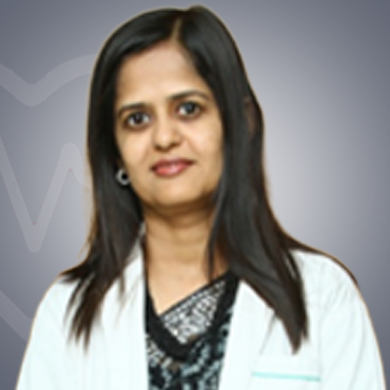
Dr Sonal Gupta
Neurosurgeon
29 Years of Experience
Dr. Sonal Gupta has an experienced neurosurgeon with more than 29+ years of clinical expertise. She is currently the Director, Neuro & Spine Surgery at Fortis Hospital, Shalimar Bagh. Before joining Fortis, she has been associated with various organizations such as Maharaja Agrasen Hospital, Action Balaji Hospital, and Max Hospital. View More
Last Reviewed - January 2026