Your Notifications
All done, no notifications

2 Specialists

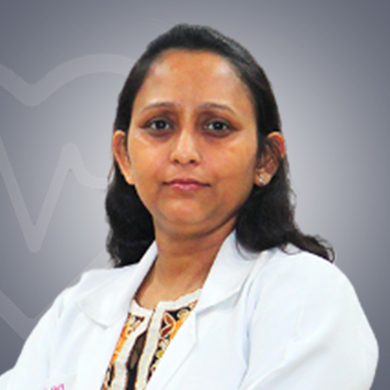
Dr. Ritu Jha

Neurologist

, Faridabad, India

8 Years of experience

Speaks: Hindi , English


Dr Ritu Jha is one of the foremost Neurologist in Faridabad, India. The doctor holds over 12 years of experience and is associated with Sarvodaya Hospital and Research Centre.

Association and Memberships Dr. Ritu Jha is part of:

  • Delhi Neurology Association
  • Indian Stroke Association
  • Indian Epilepsy Association

Qualifications :

  • M.B.B.S from G.S.V.M Medical College, Kanpur (U.P.), M.D. (Medicine) from C.S.M.M.U King George Medical University, Lucknow (U.P.), D.M. (Neurology) from S.G.P.G.I.M.S, Lucknow (U.P.).

Hospital Address :

Sarvodaya Hospital, Sector 8, Faridabad, Haryana, India

Medical Expertise of Dr. Ritu Jha

  • Medical expertise of Dr. Ritu Jha is treatment of stroke, epilepsy, movement disorders, and headache.
  • She also specialises in procedures as Brachial Plexus Injuries/Stereotactic Procedures, and Lumbar Puncture.
  • Dr. Ritu Jha is a neurologist with over 8 years of experience who specializes in treating pediatric patients.
  • MBBS from GSVM Medical College, Kanpur, MD (Medicine) from CSMMU (King George Medical University), Lucknow, and DM (Neurology) from SGPGIMS, Lucknow.
  • Gold medallist in anatomy and member of the Delhi Neurology Association, Indian Stroke Association, and Indian Epilepsy Association.
  • Her past associations have been with GTB Hospital, New Delhi as Assistant Professor Neurology and the Indraprastha Apollo Hospital as Junior Consultant.
  • Many of Dr. Ritu Jha's research papers have been published in international journals.
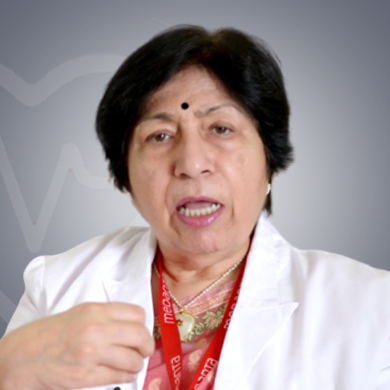
Dr. Pratibha Singhi

Pediatric Neurologist

, Faridabad, India

40 Years of experience

Speaks: Hindi , English


Dr Pratibha Singhi is one of the top Pediatric Neurologist in Gurugram, India. The medical specialist holds over 45 years of experience and was associated with Medanta - The Medicity.

Association and Memberships Dr. Pratibha Singhi is part of:

  • Executive Board Member, International Child Neurology Association (ICNA)
  • Life Member Asian Oceanian Child Neurology Association (AOCNA)
  • Member, European Pediatric Neurology Society (EPNA)
  • Life Member International Society for Behaviour and Development (ISBD)
  • Honorary Member of the American Pediatric Society
  • Member of the Commonwealth Association for Mental Handicaps and Development Disabilities (CAMHADD)
  • Member of the New York Academy of Sciences
  • Life Member of the Indian Academy of Pediatrics (IAP)
  • Life member of the Association of Child Neurology (AON)
  • Life Member Indian Academy of Cerebral Palsy (IACP)
  • Life Member of the Disability Chapter of IAP
  • Life Member of Neurology Chapter, IAP
  • Life Member of Chandigarh Branch, IAP
  • Life Member of the Indian Council for Child Welfare (ICCW)
  • Associate Life Member of the Indian Academy of Neurology (IAN)

Certifications :

  • Fellow in Pediatrics - University of South California, Los Angeles, USA, 1976

Qualifications :

  • MD (Ped.) - All India Institute of Medical Sciences, New Delhi, 1978
  • M.B.B.S - JLN Medical College, University of Rajathan, Jaipur, 1973
Frequently Asked Questions
Which are some of the best hospitals Pediatric Neurologists in Faridabad, India are associated with?

Given below are some of the most popular hospitals in Faridabad, India where Pediatric Neurologists work:

Which are some of the procedures performed by Pediatric Neurologists in Faridabad, India?

Check out the procedures performed by pediatric neurologists in Faridabad:

Which are some of the conditions treated by Pediatric Neurologist in Faridabad, India?

Some of the conditions performed by pediatric neurologists in Faridabad, India are:

  • Seizures
  • Epilepsy
Who is a Pediatric Neurologist?

A child neurologist, also called a pediatric neurologist, is a doctor who treats children having problems with their nervous system. Problems in the nervous system can begin in the spine, brain, nerves, or muscles. These can lead to problems like headaches, seizures, and developmental delays.

A child neurologist treats children from birth into young adulthood. These doctors make the care of children the core of their practice, and their advanced training, as well as experience, help them meet your child's medical needs. Pediatric neurologists treat most diseases related to the nervous system, and they can work specifically with young people and children. As pediatric doctors, they treat children from birth to18 or 19 years of age. These neurologists are trained to handle a child’s unique needs, including child-related conditions.

A wide variety of patients are seen by pediatric neurologists. They treat more common neurological conditions, such as epilepsy, migraines, cerebral palsy, and complex or rare conditions like metabolic disorders, traumatic brain injury, and degenerative neurological conditions. As the field of neurology is vast, some neurologists might choose to focus on particular conditions that are complex or require extensive treatment, such as cerebral palsy, epilepsy, stroke, and brain tumors.

What are the qualifications of a Pediatric Neurologist?

Pediatric neurologists are specialists, meaning they must go through a rigorous educational program that provides additional training in the area of their specialty.

This program typically includes:

  • A five-and-half-year MBBS course, which is common for all medical students irrespective of their specialty area.
  • An average of 3 years of MD degree.
  • Training for child neurology, which generally starts at one of three points:
  • After the fourth year of medical school
  • Any time during the first 3 years of pediatric training
  • Only after completing their pediatric residency
  • One year of basic neuroscience
  • One year in internal medicine

Once the training is complete, they should become a board-certified pediatric neurologist.

What conditions do Pediatric Neurologists treat?

Any condition related to the brain or nervous system in children is treated by a pediatric neurologist. Some conditions may be genetic or congenital. In other cases, they may be the result of trauma. The range of conditions is extensive and can include muscular dystrophy (the weakening of muscles over time) and other muscle diseases, epilepsy, Tourette’s syndrome, and developmental conditions.

Some conditions treated by pediatric neurologists include:

  • Brain Cancer
  • Neurosyphilis
  • Epilepsy
  • Brachial Plexus Avulsion
  • Brain Stroke
  • Brachial Plexus Injury At Bith
  • Encephalitis
  • Reye Syndrome
  • Brachial Plexus Rupture
  • Myelitis
  • Meningitis
  • Erb's Palsy
What diagnostic tests are required by Pediatric Neurologist?

Evaluating and diagnosing nervous system disorders may be complex. A symptom can occur in different ways in different disorders. Also, many disorders don't have clear causes or tests.

Below diagnostic tests are required before and during a consultation with a pediatric neurologist:

  • Computerized tomography (CT) scan
  • Magnetic resonance imaging (MRI)
  • Cerebral Angiogram
  • Biopsy Cerebrospinal fluid analysis
  • Electroencephalography
  • Carotid Ultrasound
  • Blood Tests
  • Echocardiogram
  • Angiography
  • Electromyography
  • Myelography
  • Polysomnogram
  • Thermography
  • Electronystagmography
  • Evoked potentials
When should you visit a Pediatric Neurologist?

Your family doctor may refer your child to a pediatric neurologist if they experience:

  • Memory loss
  • Pain
  • Lack of sensation, tingling, or numbness
  • Severe or ongoing headaches
  • Poor balance
  • Unexplained loss of consciousness
  • Problems moving
  • Unintentional jerks/tics
  • Seizures
  • Tremors
  • Developmental delays
  • Walking issues
  • Problems with coordination

If your child is diagnosed with a neurological problem, they will

have to see a pediatric neurologist for proper treatment or monitoring.

What can you expect from your first visit with a Pediatric Neurologist?

During a visit to a pediatric neurologist, a child would be assessed using various techniques. For example, the neurologist may use a reflex hammer on the knees to test reflexes. They may also use lights to check the function of the nervous system.

In order to assess your child’s balance, mental status, motor skills, and coordination, they might also ask your child to:

  • Report words or phrases
  • Answer questions
  • Walk or run
  • Stand from a sitting position

Because pediatric neurologists work with children, they are trained to work with patients whose verbal skills are limited. But, they will often ask the parents questions to better understand what is going on with the child.

Which are the most common procedures performed by a Pediatric Neurologist?
  • Lumbar puncture
  • Resection or debulking of brain tumor
  • Surgery for nerve injury
  • Biopsy
  • Spine surgery
  • Cerebral angiography

FAQs related to India