Browse verified doctors or let our care team help you find the doctor best suited to your condition, treatment goals, and budget.
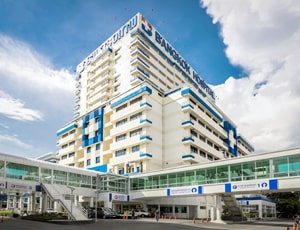
Bangkok Hospital provides specialized Kidney Cancer Treatment with a focus on accurate cancer diagnosis, kidney function preservation, and individualized oncology care. Established in 1972, the JCI accredited hospital is located in Bangkok, Thailand and operates 580 beds with modern urology, oncology, and surgical facilities.
Kidney Cancer Treatment depends on the cancer type, stage, tumor size and location, kidney function, and overall health of the patient. Localized tumors may be treated with partial or radical nephrectomy, while selected small tumors may be managed with active surveillance or ablative techniques. Advanced kidney cancer may require systemic treatments such as immunotherapy or targeted therapy. Imaging, biopsy when appropriate, and staging assessments help specialists determine the most suitable treatment approach.
Vejthani Hospital provides specialized Kidney Cancer Treatment with an emphasis on precise tumor assessment, personalized treatment selection, and long-term follow-up. Established in 1994, the JCI accredited hospital is based in Bangkok, Thailand and has 263 beds supported by modern urology and medical oncology facilities.
Kidney Cancer Treatment is planned after evaluating the tumor's size, location, stage, and biological characteristics, along with the patient's kidney function and general health. Treatment for localized cancer may involve surgery or, in selected cases, image-guided ablation or active surveillance. When cancer has spread beyond the kidney, specialists may use immunotherapy, targeted therapy, or other systemic approaches. Ongoing follow-up helps monitor kidney function, treatment effects, and signs of disease recurrence or progression.
Bangpakok 9 International Hospital provides specialized Kidney Cancer Treatment with an emphasis on precise tumor assessment, personalized treatment selection, and long-term follow-up. Established in 2003, the JCI, GHA accredited hospital is based in Bangkok, Thailand and has 300 beds supported by modern urology and medical oncology facilities.
Kidney Cancer Treatment is planned after evaluating the tumor's size, location, stage, and biological characteristics, along with the patient's kidney function and general health. Treatment for localized cancer may involve surgery or, in selected cases, image-guided ablation or active surveillance. When cancer has spread beyond the kidney, specialists may use immunotherapy, targeted therapy, or other systemic approaches. Ongoing follow-up helps monitor kidney function, treatment effects, and signs of disease recurrence or progression.
Phyathai 2 International Hospital provides specialized Kidney Cancer Treatment with an emphasis on precise tumor assessment, personalized treatment selection, and long-term follow-up. Established in 1987, the JCI accredited hospital is based in Bangkok, Thailand and has 550 beds supported by modern urology and medical oncology facilities.
Kidney Cancer Treatment is planned after evaluating the tumor's size, location, stage, and biological characteristics, along with the patient's kidney function and general health. Treatment for localized cancer may involve surgery or, in selected cases, image-guided ablation or active surveillance. When cancer has spread beyond the kidney, specialists may use immunotherapy, targeted therapy, or other systemic approaches. Ongoing follow-up helps monitor kidney function, treatment effects, and signs of disease recurrence or progression.
Piyavate Hospital provides specialized Kidney Cancer Treatment with an emphasis on precise tumor assessment, personalized treatment selection, and long-term follow-up. Established in 1993, the JCI, ISO accredited hospital is based in Bangkok, Thailand and has 150 beds supported by modern urology and medical oncology facilities.
Kidney Cancer Treatment is planned after evaluating the tumor's size, location, stage, and biological characteristics, along with the patient's kidney function and general health. Treatment for localized cancer may involve surgery or, in selected cases, image-guided ablation or active surveillance. When cancer has spread beyond the kidney, specialists may use immunotherapy, targeted therapy, or other systemic approaches. Ongoing follow-up helps monitor kidney function, treatment effects, and signs of disease recurrence or progression.

Monica from Ghana suffered from AV malformation. She decided to look for options for medical treatment when she started experiencing episodes of unconsciousness. After a…

Nasrin (Sister of the patient ) explains the journey of how MediGence helped for the treatment of Silim Shabani for Ovarian Cancer Treatment in Turkey.
| Speciality | Oncology |
| Procedure | Kidney Cancer Treatment |
| Success Rate | Varies as per stage, grade and type of cancer |
| Recovery Time | Few weeks to several months |
| Treatment Time | 2 and 3 hours |
| Chances of Recurrence | Varies as per stage, grade, type and location of cancer |
Kidney cancer treatment involves approaches like surgery, targeted therapy, immunotherapy, or a combination of these treatments. Radiation therapy and chemotherapy are also occasionally applied. Patients suffering from metastatic kidney cancer often receive multiple lines of therapy. Surgery is the most common form of kidney cancer treatment. Various types of surgeries include radical nephrectomy, partial nephrectomy, and laparoscopic and robotic nephrectomy.
Kidney cancer treatment is primarily focused on addressing renal cell carcinoma, which is the most common type of kidney cancer. Other medical conditions that can be treated through kidney cancer treatment include Wilms' tumor (a type of kidney cancer that primarily affects children), transitional cell carcinoma, and rare types of kidney tumors.
The recovery process after kidney cancer treatment varies depending on the treatment received and the individual patient. After surgery, patients may need weeks or months to heal and recover, and they may experience temporary discomfort or pain. Follow-up appointments and monitoring are important to detect any recurrence or new developments in the kidneys. In some cases, additional treatments or medications may be required to prevent or manage any potential complications.
Hospitals for any type of procedure can be ranked on several deciding aspects. The following criteria can be used to classify hospitals for Kidney Cancer Treatments in Thailand- Popularity for the procedure, Infrastructure, Availability of the Procedure, Experienced doctors, Technology used, Cost, Facilities provided, Success Rate
MediGence works incredibly diligently to ensure that you get the best possible medical travel experience that is also accessible and reasonable. We wish you to experience a trouble-free and quality healthcare journey, so we make sure that you receive our value-added benefits throughout your journey. Some of the top caregiving services available include Hotel stays, Dedicated Case Coordinator, Recovery packages, Online Consultation, round-the-clock assistance, and customized packages with discounts of up to a 30%. Other than these, there are multiple value-added services you can avail with MediGence
Yes. MediGence gives you the privilege of scheduling an online consultation with a specialist in Thailand. To schedule your online consultation with the specialist, you can reach one of our patient counselors. They will verify the doctor's consultation availability. Once confirmed, a payment link will be provided to you so you may schedule your online consultation.
Numerous people have started traveling to Thailand for Kidney Cancer Treatment because of the nation's state-of-the-art healthcare system and high success rate. When it comes to Thailand, many factors contribute to make Kidney Cancer Treatment the ideal choice. This includes:
The recovery time of the patients can be determined based on the patient’s overall health and the criticality of the procedure undergone. The length of the patient's recovery is also greatly influenced by other variables, such as their continued participation in rehabilitation sessions and postoperative care appointments. The patient is suggested to stay in close contact with their surgeon for a few months post-surgery to reduce their recovery time.