4 Hospitals

- Best Hospital in Noida, National Healthcare Achievers Awards, 2021
- Best Medical College and Hospital in Uttar Pradesh, International Healthcare Awards, 2020
- Best Hospital for Emergency Care, Times Health Awards, 2020
- Best Hospital for Pediatrics, Healthcare Asia Awards, 2019
- Best Hospital for Orthopedics, India News Health Awards, 2019
- Accreditation

Please Enquire

- Best Hospital in Noida - Times Health Awards, 2021: Metro Hospital received this award for its exceptional healthcare services and state-of-the-art technology.
- Best Neurology Hospital in Noida - Global Healthcare Excellence Awards, 2021: This award was given to Metro Hospital for its advanced technology and expert neurology team in providing exceptional neurological care.
- Best Hospital in Delhi/NCR - International Healthcare Awards, 2021: Metro Hospital was recognized for its commitment to quality healthcare services and excellent patient care.
- NABH Accreditation - 2021: Metro Hospital received this accreditation for meeting high national standards in patient care and safety.
- Best Multispecialty Hospital in Uttar Pradesh - India Healthcare Awards, 2020: Metro Hospital was recognized for providing a comprehensive range of high-quality medical services across multiple specialties.
- Accreditation

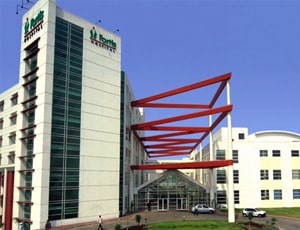
Kidney cancer treatments include surgery, chemotherapy, and radiation therapy. As with all cancers, early detection is critical for successful treatment. The Department of Oncology at Fortis Hospital Shalimar Bagh is committed to providing comprehensive care in diagnosing and treating patients with kidney cancers of all types. To identify and curate the best treatment plan, the team reviews the patient's history, details of their condition, and medical tests. Many cancers are treated at Fortis Hospital using modern and minimally invasive treatment approaches such as chemotherapy, targeted therapy, hormonal therapy, and immunotherapy. The cancer care team is multidisciplinary with many experts on board along with modern medical equipment. The kidney cancer treatment is delivered under the care of a talented team of professionals comprising physicians from other sub-specialty areas, surgeons, radiologists, behavioral scientists, nutritionists, palliative care professionals, and physiotherapists.
- Accreditation

When kidney cells begin to multiply and expand out of proportion to form a mass known as a tumor, it can lead to kidney cancer. Early on, the tumor is benign, but if it is not treated, it can develop into malignant cancer and spread to other organs. The typical signs and symptoms of kidney cancer include pain, elevated blood pressure, blood in the urine, etc. Renal cell carcinoma, transitional cell cancer, renal sarcoma, and Wilms tumor are the four different kinds of kidney cancer. The most uncommon of these is renal sarcoma, whereas renal cell carcinoma is the most frequent type of kidney cancer detected in adults.
Radiation therapy, chemotherapy, and surgery are all forms of treatment available for kidney cancer at Jaypee Hospital. As with other malignancies, successful treatment depends on early detection. At Jaypee Hospital, the Centre of Oncology is committed to providing patients with all forms of kidney cancer with comprehensive care. To determine and assemble the most effective treatment strategy, the team reviews the patient's medical history, specifics of their disease, and diagnostic testing. In Jaypee Hospital, a lot of cancers are treated with cutting-edge, minimally invasive methods such as chemotherapy, targeted therapy, hormone therapy, and immunotherapy. The comprehensive cancer care team includes numerous professionals and cutting-edge medical technology. A skilled group of healthcare professionals, including doctors from different subspecialty fields, surgeons, radiologists, behavioral scientists, dietitians, palliative care specialists, and physiotherapists, provide care for kidney cancer patients.
- Accreditation

Ask your healthcare adviser for the best multiple options and choose the one that meets your expectations
Request for an Expert Opinion

Outcomes of Kidney Cancer Treatment
| Speciality | Oncology |
| Procedure | Kidney Cancer Treatment |
| Success Rate | Varies as per stage, grade and type of cancer |
| Recovery Time | Few weeks to several months |
| Treatment Time | 2 and 3 hours |
| Chances of Recurrence | Varies as per stage, grade, type and location of cancer |
What is a Kidney Cancer Treatment and how does it work?
Kidney cancer treatment involves approaches like surgery, targeted therapy, immunotherapy, or a combination of these treatments. Radiation therapy and chemotherapy are also occasionally applied. Patients suffering from metastatic kidney cancer often receive multiple lines of therapy. Surgery is the most common form of kidney cancer treatment. Various types of surgeries include radical nephrectomy, partial nephrectomy, and laparoscopic and robotic nephrectomy.
What medical conditions can be treated through Kidney Cancer Treatment?
Kidney cancer treatment is primarily focused on addressing renal cell carcinoma, which is the most common type of kidney cancer. Other medical conditions that can be treated through kidney cancer treatment include Wilms' tumor (a type of kidney cancer that primarily affects children), transitional cell carcinoma, and rare types of kidney tumors.
What is the recovery process after a Kidney Cancer Treatment?
The recovery process after kidney cancer treatment varies depending on the treatment received and the individual patient. After surgery, patients may need weeks or months to heal and recover, and they may experience temporary discomfort or pain. Follow-up appointments and monitoring are important to detect any recurrence or new developments in the kidneys. In some cases, additional treatments or medications may be required to prevent or manage any potential complications.
Frequently Asked Questions
The ranking of hospitals according to the procedure is determined by a variety of parameters. While categorizing hospitals for Kidney Cancer Treatment in Noida, some of the important factors are Popularity for the Procedure, Infrastructure, Accessibility of the treatment, Qualified Medical Personnel, Technology Used, Price, Amenities provided, and Success Rate.
MediGence puts forth a lot of effort to make your medical travel of the finest quality, convenient, and affordable for you. With us, you can receive top-notch medical treatment while saving money and making your journey hassle-free with some unmatched benefits & services. These caregiving services are airport transfers, accommodation, 24/7 assistance, Online consultation, Assigned Patient Coordinator, and Prebundled treatment packages with upto a 30% discount. To help you receive top-notch medical treatment, we also provide a number of additional benefits.
Yes. You can avail a video consultation with a specialist before you plan your medical travel. When one of our patient advisors contacts you about your inquiry, you can demand an online consultation with the specialist. They will get in touch with the doctor to check his/her availability. After receiving confirmation, the appointment will be scheduled and you will receive a payment link to book your session.
Noida has some of the top-rated & eminent specialists in the world. Almost all the top-rated doctors in Noida provide online consultations to patients worldwide. Here are some popular ones in Noida-
Numerous people have started traveling to Noida for Kidney Cancer Treatment because of the nation's state-of-the-art healthcare system and high success rate. There are many additional factors making Noida the preferred choice for Kidney Cancer Treatment including:
- Skilled and Qualified specialists
- Affordable treatment plans
- Transparency and data privacy
- Internationally recognised hospitals
- Modern healthcare technologies
The recovery time for a procedure varies based on the condition of the patient and the complexity of the surgery. Rehabilitation and post-operative care play an important role in speeding up the recovery time and helping the patient to get back to their healthier self. The patient is suggested to stay in close contact with their surgeon for a few months post-surgery to reduce their recovery time.