Explore trusted hospitals and care options, or get personalised support to find a suitable option based on your treatment needs, preferences, and budget.

Riyadh Care Hospital is a trusted healthcare provider for Epilepsy Treatment, offering comprehensive epilepsy care supported by experienced neurologists, epileptologists, neurosurgeons, neurophysiology specialists, and multidisciplinary teams. Established in 1990, the JCI- accredited hospital is situated in Riyadh, Saudi Arabia and has 325 beds.
Epilepsy Treatment aims to reduce or prevent seizures while minimizing treatment-related effects and maintaining quality of life. Antiseizure medicines are selected according to seizure type and patient-specific factors. For individuals whose seizures remain uncontrolled despite appropriate medication, specialized evaluation may identify whether epilepsy surgery, vagus nerve stimulation, responsive neurostimulation, deep brain stimulation, or dietary therapy could be appropriate.
Al Khobar, Saudi Arabia
Choosing NMC As Salama Hospital for Epilepsy Treatment gives patients access to experienced epilepsy specialists, advanced EEG and neuroimaging systems, epilepsy monitoring facilities, neurosurgical support, and structured long-term care. Established in 2001, the CBAHI accredited hospital in Al Khobar, Saudi Arabia has 120 beds and provides specialized epilepsy and neurological services.
Epilepsy Treatment is individualized according to seizure type, seizure frequency, underlying cause, response to medication, and the patient's age and overall health. Treatment may involve regular antiseizure medication and monitoring, with medication adjustments based on seizure control and tolerability. Patients with drug-resistant epilepsy may undergo prolonged video-EEG monitoring and other investigations to determine whether a surgical or device-based treatment could reduce seizure burden.
Riyadh, Saudi Arabia

Ms Patience from Uganda travelled to India for cosmetic surgery in May 2017. She got her treatment done in Asian Institute of Medical Sciences in…

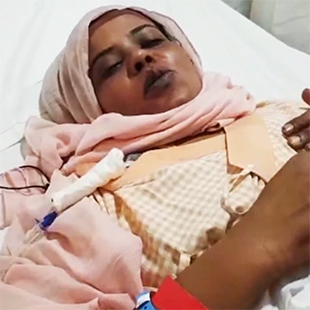
Lobna (from Sudan) was diagnosed with meningioma, a form of non-cancerous brain tumor. Her family members decided to take her to one of the most…
| Speciality | Neurology |
| Procedure | Epilepsy Treatment |
| Success Rate | Varies by condition |
| Recovery Time | Varies by condition |
| Treatment Time | Varies by condition |
| Chances of Recurrence | Varies by condition |
Epilepsy, also known as seizure disease, is a chronic medical condition that occurs due to abnormal signals in the brain produced by damaged brain cells. This uncontrolled activity can lead to changes in the state of awareness, muscle twitches and jerks, emotions, sensations, and behavior. The available surgical options include surgical resection, which involves removing abnormal brain tissue, disconnection of fiber bundles connecting different brain areas, and stereotactic radiosurgery, which targets and destroys abnormal brain tissue. Additionally, neuromodulation devices can be implanted to deliver electrical impulses to the brain, gradually reducing seizures.
Epilepsy treatment is primarily used to manage and control seizures in individuals diagnosed with epilepsy. It can help reduce the frequency and severity of seizures, improve a person's quality of life, and reduce the risk of injury during a seizure.
The recovery period following epilepsy treatment varies according to the type of treatment used. Patients taking medications may need to adhere to a specific dosage regimen and attend regular check-ups with their healthcare provider to monitor their response to the medication and adjust the dosage as needed. In the case of surgical interventions, the recovery process may include a hospital stay, post-operative care, and follow-up appointments to assess the procedure's success and the patient's overall condition. The recovery may take 3-6 weeks.
A number of determining factors can be used to rank hospitals for your suitable procedure. The following criteria can be used to classify hospitals for Epilepsy Treatments in Saudi Arabia- Availability of the Procedure, Popularity of the procedure & hospital, Infrastructure, Pricing structure, Experienced Medical Professionals, Technology Employed, Facilities Available for the Patients & Visitors, Success Rate of the Hospital.
MediGence offers you a blend of convenience, quality healthcare, and cost-savings. We make sure that your healthcare journey should be easy and hassle-free while receiving treatment overseas. Some of our notable services include Hotel stays or accommodation, Video consultation, dedicated case manager, round-the-clock help, airport transfers, and customized prebundled treatment packages with discount of up to a 30%. In addition to these, MediGence offers a variety of other value-added services to make your healthcare journey trouble-free and memorable.
Yes, you can avail a video consultation with the specialist before travelling to Saudi Arabia. To schedule your online consultation with the specialist, you can reach one of our patient counselors. They will check the doctor's availability for the consultation. Once confirmed, you will be sent a payment link to book your online consultation.
Numerous people have started traveling to Saudi Arabia for Epilepsy Treatment because of the nation's state-of-the-art healthcare system and high success rate. In addition, there are other parameters that make Saudi Arabia the ideal option for Epilepsy Treatment. They include:
Different procedures have varying recovery times based on the patient's health and the complexity of the treatment. In addition, post-treatment rehabilitation is extremely important for speeding up recovery and minimizing recovery time. Following surgery, patients must return for follow-up appointments to ensure proper healing and to expedite the healing process.