Explore trusted hospitals and care options, or get personalised support to find a suitable option based on your treatment needs, preferences, and budget.

Choosing Apollo Spectra Hospital for Microvascular Decompression (MVD) gives patients access to specialist-led cranial nerve surgery, advanced microsurgical visualization, and coordinated postoperative neurological care. Established in 2012, the NABH, NABL accredited hospital is located in Pune, India and operates 30 beds with modern neurosurgical infrastructure.
Microvascular Decompression (MVD) may be recommended when a blood vessel is identified as compressing a cranial nerve and causing recurrent facial pain, facial spasms, or other nerve-related symptoms. The surgeon creates a small surgical opening behind the ear and carefully separates the offending vessel from the nerve. A small cushioning material may be placed to prevent the vessel from contacting the nerve again. MRI and other specialized imaging can assist in identifying possible neurovascular compression before surgery.
Delhi, India
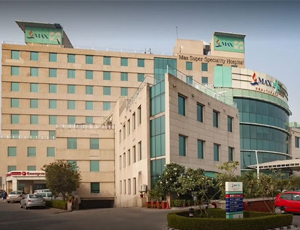
Max Super Specialty Hospital, Shalimar Bagh provides specialized Microvascular Decompression (MVD) with a focus on relieving abnormal pressure on cranial nerves and reducing nerve-related pain or involuntary muscle activity. Established in 2011, the NABH, NABL accredited hospital is located in Delhi, India and operates 402 beds with advanced neurosurgical and neurovascular facilities.
Microvascular Decompression (MVD) is a microsurgical procedure used to separate a blood vessel that is compressing a cranial nerve. It is commonly performed for conditions such as trigeminal neuralgia, hemifacial spasm, and selected cases of glossopharyngeal neuralgia. During surgery, the neurosurgeon identifies the offending vessel and places a small cushioning material between the vessel and nerve to prevent further contact. Detailed imaging and clinical assessment help determine whether nerve compression is responsible for the patient's symptoms.
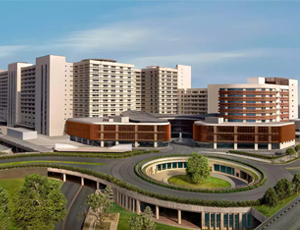
Amrita Hospital provides specialized Microvascular Decompression (MVD) with an emphasis on precise identification of neurovascular compression, careful nerve preservation, and individualized recovery planning. Established in 2022, the NABH accredited hospital is based in Faridabad, India and has 2600 beds supported by modern neurosurgical and neurodiagnostic facilities.
Microvascular Decompression (MVD) involves surgically separating a blood vessel from a cranial nerve when vascular contact is believed to be causing significant neurological symptoms. It is most commonly associated with treatment of trigeminal neuralgia and hemifacial spasm, and may also be used for selected cases of glossopharyngeal neuralgia. During surgery, the offending vessel is repositioned and a protective material is placed between the structures. Preoperative neurological assessment and MRI-based imaging help determine suitability, while postoperative care focuses on monitoring nerve function and recovery.
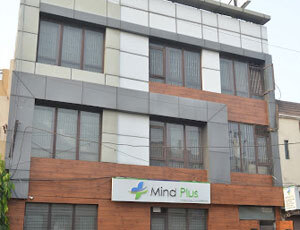
Choosing MindPlus Hospital Ludhiana for Microvascular Decompression (MVD) gives patients access to specialist-led cranial nerve surgery, advanced microsurgical visualization, and coordinated postoperative neurological care. Established in 1986, the NABH accredited hospital is located in Ludhiana, India and operates beds with modern neurosurgical infrastructure.
Microvascular Decompression (MVD) may be recommended when a blood vessel is identified as compressing a cranial nerve and causing recurrent facial pain, facial spasms, or other nerve-related symptoms. The surgeon creates a small surgical opening behind the ear and carefully separates the offending vessel from the nerve. A small cushioning material may be placed to prevent the vessel from contacting the nerve again. MRI and other specialized imaging can assist in identifying possible neurovascular compression before surgery.

Ms Patience from Uganda travelled to India for cosmetic surgery in May 2017. She got her treatment done in Asian Institute of Medical Sciences in…

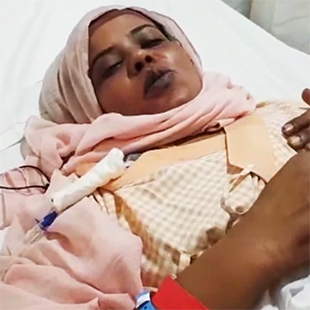
Lobna (from Sudan) was diagnosed with meningioma, a form of non-cancerous brain tumor. Her family members decided to take her to one of the most…