Browse verified doctors or let our care team help you find the doctor best suited to your condition, treatment goals, and budget.

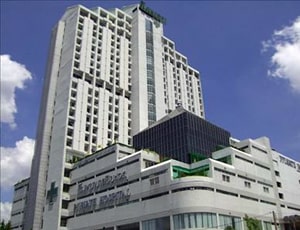
Bangkok Hospital provides specialized Lesionectomy with a focus on removing abnormal brain tissue responsible for seizures while preserving surrounding healthy structures. Established in 1972, the JCI accredited hospital is located in Bangkok, Thailand and operates 580 beds with advanced neurosurgical and epilepsy-care facilities.
Lesionectomy is a surgical procedure used to remove a structural abnormality, or lesion, in the brain that is identified as the source of seizures or other neurological symptoms. Lesions may include certain tumors, vascular malformations, scar tissue, or developmental abnormalities. Before surgery, MRI, EEG, and other specialized tests may be used to locate the lesion and determine its relationship to important brain functions. The surgeon removes the abnormal tissue while taking care to preserve surrounding healthy brain tissue.
Choosing Vejthani Hospital for Lesionectomy gives patients access to specialist-led brain lesion surgery, advanced surgical navigation, and coordinated neurological care. Established in 1994, the JCI accredited hospital is located in Bangkok, Thailand and operates 263 beds with modern neurosurgical infrastructure.
Lesionectomy may be recommended when a localized brain lesion is causing recurrent seizures or other symptoms and can be safely accessed surgically. The surgeon removes the abnormal tissue through a carefully planned craniotomy while using imaging and navigation technology to guide the procedure. In epilepsy cases, preoperative EEG and functional assessments may help identify whether the lesion corresponds to the seizure focus. The treatment and follow-up plan depend on the type, location, and size of the lesion.
Bangpakok 9 International Hospital provides specialized Lesionectomy with a focus on removing abnormal brain tissue responsible for seizures while preserving surrounding healthy structures. Established in 2003, the JCI, GHA accredited hospital is located in Bangkok, Thailand and operates 300 beds with advanced neurosurgical and epilepsy-care facilities.
Lesionectomy is a surgical procedure used to remove a structural abnormality, or lesion, in the brain that is identified as the source of seizures or other neurological symptoms. Lesions may include certain tumors, vascular malformations, scar tissue, or developmental abnormalities. Before surgery, MRI, EEG, and other specialized tests may be used to locate the lesion and determine its relationship to important brain functions. The surgeon removes the abnormal tissue while taking care to preserve surrounding healthy brain tissue.
Phyathai 2 International Hospital provides specialized Lesionectomy with an emphasis on accurate lesion localization, careful removal of abnormal tissue, and protection of important neurological structures. Established in 1987, the JCI accredited hospital is based in Bangkok, Thailand and has 550 beds supported by modern neurosurgical and neurodiagnostic facilities.
Lesionectomy is performed to remove a defined abnormal brain lesion when surgery is considered appropriate for the patient's condition. In patients with focal epilepsy, removing the lesion may reduce or potentially eliminate seizures when the lesion is confirmed to be the seizure-producing focus. Depending on the diagnosis, the procedure may also be performed for certain tumors or vascular abnormalities. Preoperative MRI, EEG, functional mapping, and other tests help guide surgical planning, while postoperative imaging and neurological assessment are used to monitor recovery.
Krabi Nakharin International Hospital provides specialized Lesionectomy with a focus on removing abnormal brain tissue responsible for seizures while preserving surrounding healthy structures. Established in 1997, the JCI accredited hospital is located in Krabi, Thailand and operates 150 beds with advanced neurosurgical and epilepsy-care facilities.
Lesionectomy is a surgical procedure used to remove a structural abnormality, or lesion, in the brain that is identified as the source of seizures or other neurological symptoms. Lesions may include certain tumors, vascular malformations, scar tissue, or developmental abnormalities. Before surgery, MRI, EEG, and other specialized tests may be used to locate the lesion and determine its relationship to important brain functions. The surgeon removes the abnormal tissue while taking care to preserve surrounding healthy brain tissue.
Yanhee International Hospital provides specialized Lesionectomy with an emphasis on accurate lesion localization, careful removal of abnormal tissue, and protection of important neurological structures. Established in 1984, the ISO, JCI accredited hospital is based in Bangkok, Thailand and has 400 beds supported by modern neurosurgical and neurodiagnostic facilities.
Lesionectomy is performed to remove a defined abnormal brain lesion when surgery is considered appropriate for the patient's condition. In patients with focal epilepsy, removing the lesion may reduce or potentially eliminate seizures when the lesion is confirmed to be the seizure-producing focus. Depending on the diagnosis, the procedure may also be performed for certain tumors or vascular abnormalities. Preoperative MRI, EEG, functional mapping, and other tests help guide surgical planning, while postoperative imaging and neurological assessment are used to monitor recovery.
At Sikarin Hospital, Lesionectomy is performed using advanced neurosurgical techniques and detailed preoperative brain mapping. Established in 1979, the JCI accredited hospital in Bangkok, Thailand has 354 beds and provides comprehensive neurosurgical and neurological care.
Lesionectomy may be considered for selected patients with drug-resistant focal epilepsy when a specific structural lesion is responsible for seizure activity. During the procedure, the neurosurgeon accesses the affected area and removes the identified lesion, sometimes along with a small margin of surrounding abnormal tissue when clinically appropriate. Detailed imaging, video EEG, and functional testing may be used before surgery to confirm the seizure focus and assess nearby critical brain regions. Postoperative monitoring helps evaluate seizure control and neurological recovery.
At Kasemrad Ramkhamhaeng Hospital, Lesionectomy is performed using advanced neurosurgical techniques and detailed preoperative brain mapping. Established in 1992, the JCI accredited hospital in Bangkok, Thailand has 120 beds and provides comprehensive neurosurgical and neurological care.
Lesionectomy may be considered for selected patients with drug-resistant focal epilepsy when a specific structural lesion is responsible for seizure activity. During the procedure, the neurosurgeon accesses the affected area and removes the identified lesion, sometimes along with a small margin of surrounding abnormal tissue when clinically appropriate. Detailed imaging, video EEG, and functional testing may be used before surgery to confirm the seizure focus and assess nearby critical brain regions. Postoperative monitoring helps evaluate seizure control and neurological recovery.
Piyavate Hospital offers dedicated Lesionectomy supported by experienced neurosurgeons, advanced neuroimaging, and specialized epilepsy monitoring facilities. Established in 1993, the JCI, ISO accredited hospital is situated in Bangkok, Thailand and has 150 beds supporting specialized brain surgery.
Lesionectomy involves surgically removing an abnormal area of brain tissue that may be contributing to seizures or other neurological problems. Depending on the underlying condition, the lesion may represent a low-grade tumor, cavernous malformation, focal cortical abnormality, or other structural change. The surgical approach is carefully planned using MRI and other diagnostic studies to identify the lesion and its proximity to important functional areas. Rehabilitation may be recommended when the procedure affects movement, speech, or other neurological functions.
MALI Interdisciplinary Hospital offers dedicated Lesionectomy supported by experienced neurosurgeons, advanced neuroimaging, and specialized epilepsy monitoring facilities. Established in 2021, the NABH, JCI, CBAHI, AACI accredited hospital is situated in Bangkok, Thailand and has 100 beds supporting specialized brain surgery.
Lesionectomy involves surgically removing an abnormal area of brain tissue that may be contributing to seizures or other neurological problems. Depending on the underlying condition, the lesion may represent a low-grade tumor, cavernous malformation, focal cortical abnormality, or other structural change. The surgical approach is carefully planned using MRI and other diagnostic studies to identify the lesion and its proximity to important functional areas. Rehabilitation may be recommended when the procedure affects movement, speech, or other neurological functions.

Ms Patience from Uganda travelled to India for cosmetic surgery in May 2017. She got her treatment done in Asian Institute of Medical Sciences in…

Lobna (from Sudan) was diagnosed with meningioma, a form of non-cancerous brain tumor. Her family members decided to take her to one of the most…