Browse verified doctors or let our care team help you find the doctor best suited to your condition, treatment goals, and budget.

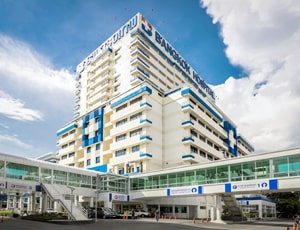
Choosing Bangkok Hospital for Rectal Polyp Removal gives patients access to specialist-led colorectal care, modern endoscopic technology, and coordinated follow-up services. Established in 1972, the JCI accredited hospital is located in Bangkok, Thailand and operates 580 beds with advanced gastrointestinal treatment infrastructure.
Rectal Polyp Removal may be carried out during a colonoscopy when a polyp is found in the rectum. The specialist uses an endoscope to visualize the lesion and removes it with appropriate instruments, with techniques selected according to its characteristics. Most polyps can be removed without open surgery, although particularly large or difficult lesions may require advanced endoscopic removal or surgical management. After removal, the tissue is sent for histopathological evaluation to determine whether additional monitoring is required.
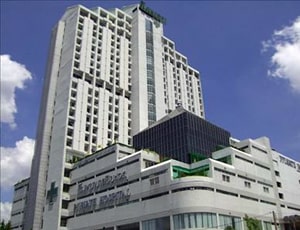
Choosing Vejthani Hospital for Rectal Polyp Removal gives patients access to specialist-led colorectal care, modern endoscopic technology, and coordinated follow-up services. Established in 1994, the JCI accredited hospital is located in Bangkok, Thailand and operates 263 beds with advanced gastrointestinal treatment infrastructure.
Rectal Polyp Removal may be carried out during a colonoscopy when a polyp is found in the rectum. The specialist uses an endoscope to visualize the lesion and removes it with appropriate instruments, with techniques selected according to its characteristics. Most polyps can be removed without open surgery, although particularly large or difficult lesions may require advanced endoscopic removal or surgical management. After removal, the tissue is sent for histopathological evaluation to determine whether additional monitoring is required.
Bangpakok 9 International Hospital offers dedicated Rectal Polyp Removal supported by experienced gastroenterologists and colorectal specialists, advanced endoscopic equipment, and modern diagnostic facilities. Established in 2003, the JCI, GHA accredited hospital is situated in Bangkok, Thailand and has 300 beds supporting comprehensive gastrointestinal care.
Rectal Polyp Removal is performed to eliminate abnormal tissue that may cause bleeding, changes in bowel habits, or other rectal symptoms and to reduce the potential risk associated with certain precancerous polyps. Depending on the polyp's size, shape, and attachment to the bowel wall, it may be removed with a snare or through another endoscopic technique. The specimen is examined under a microscope to establish the diagnosis and guide future surveillance.
Phyathai 2 International Hospital provides specialized Rectal Polyp Removal with an emphasis on precise lesion removal, safe endoscopic practice, and appropriate pathological evaluation. Established in 1987, the JCI accredited hospital is based in Bangkok, Thailand and has 550 beds supported by modern gastroenterology and colorectal facilities.
Rectal Polyp Removal is used to remove polyps arising from the rectal lining, including lesions discovered incidentally during colorectal screening or investigations for symptoms. The removal technique depends on factors such as the polyp's size, shape, number, and location. Small lesions may be removed with standard polypectomy, while larger lesions may require endoscopic mucosal resection or another specialized approach. Following the procedure, pathology results help determine the polyp type and the appropriate interval for future colorectal screening.
Krabi Nakharin International Hospital offers dedicated Rectal Polyp Removal supported by experienced gastroenterologists and colorectal specialists, advanced endoscopic equipment, and modern diagnostic facilities. Established in 1997, the JCI accredited hospital is situated in Krabi, Thailand and has 150 beds supporting comprehensive gastrointestinal care.
Rectal Polyp Removal is performed to eliminate abnormal tissue that may cause bleeding, changes in bowel habits, or other rectal symptoms and to reduce the potential risk associated with certain precancerous polyps. Depending on the polyp's size, shape, and attachment to the bowel wall, it may be removed with a snare or through another endoscopic technique. The specimen is examined under a microscope to establish the diagnosis and guide future surveillance.
Choosing Yanhee International Hospital for Rectal Polyp Removal gives patients access to specialist-led colorectal care, modern endoscopic technology, and coordinated follow-up services. Established in 1984, the ISO, JCI accredited hospital is located in Bangkok, Thailand and operates 400 beds with advanced gastrointestinal treatment infrastructure.
Rectal Polyp Removal may be carried out during a colonoscopy when a polyp is found in the rectum. The specialist uses an endoscope to visualize the lesion and removes it with appropriate instruments, with techniques selected according to its characteristics. Most polyps can be removed without open surgery, although particularly large or difficult lesions may require advanced endoscopic removal or surgical management. After removal, the tissue is sent for histopathological evaluation to determine whether additional monitoring is required.
Sikarin Hospital offers dedicated Rectal Polyp Removal supported by experienced gastroenterologists and colorectal specialists, advanced endoscopic equipment, and modern diagnostic facilities. Established in 1979, the JCI accredited hospital is situated in Bangkok, Thailand and has 354 beds supporting comprehensive gastrointestinal care.
Rectal Polyp Removal is performed to eliminate abnormal tissue that may cause bleeding, changes in bowel habits, or other rectal symptoms and to reduce the potential risk associated with certain precancerous polyps. Depending on the polyp's size, shape, and attachment to the bowel wall, it may be removed with a snare or through another endoscopic technique. The specimen is examined under a microscope to establish the diagnosis and guide future surveillance.
Kasemrad Ramkhamhaeng Hospital provides specialized Rectal Polyp Removal with an emphasis on precise lesion removal, safe endoscopic practice, and appropriate pathological evaluation. Established in 1992, the JCI accredited hospital is based in Bangkok, Thailand and has 120 beds supported by modern gastroenterology and colorectal facilities.
Rectal Polyp Removal is used to remove polyps arising from the rectal lining, including lesions discovered incidentally during colorectal screening or investigations for symptoms. The removal technique depends on factors such as the polyp's size, shape, number, and location. Small lesions may be removed with standard polypectomy, while larger lesions may require endoscopic mucosal resection or another specialized approach. Following the procedure, pathology results help determine the polyp type and the appropriate interval for future colorectal screening.
Choosing Piyavate Hospital for Rectal Polyp Removal gives patients access to specialist-led colorectal care, modern endoscopic technology, and coordinated follow-up services. Established in 1993, the JCI, ISO accredited hospital is located in Bangkok, Thailand and operates 150 beds with advanced gastrointestinal treatment infrastructure.
Rectal Polyp Removal may be carried out during a colonoscopy when a polyp is found in the rectum. The specialist uses an endoscope to visualize the lesion and removes it with appropriate instruments, with techniques selected according to its characteristics. Most polyps can be removed without open surgery, although particularly large or difficult lesions may require advanced endoscopic removal or surgical management. After removal, the tissue is sent for histopathological evaluation to determine whether additional monitoring is required.
Asia Cosmetic Hospital offers dedicated Rectal Polyp Removal supported by experienced gastroenterologists and colorectal specialists, advanced endoscopic equipment, and modern diagnostic facilities. Established in 2012, the ISO, JCI accredited hospital is situated in Nonthaburi, Thailand and it has adequate bed capacity supporting comprehensive gastrointestinal care.
Rectal Polyp Removal is performed to eliminate abnormal tissue that may cause bleeding, changes in bowel habits, or other rectal symptoms and to reduce the potential risk associated with certain precancerous polyps. Depending on the polyp's size, shape, and attachment to the bowel wall, it may be removed with a snare or through another endoscopic technique. The specimen is examined under a microscope to establish the diagnosis and guide future surveillance.

A 41 years old patient from Kenya underwent successful myomectomy procedure in India's leading Jaypee Hospital.

Ms. Fiona Whitecross decided to treat herself at Sri Ram Chandra Medical Center, Chennai. Dr. Radhakrishnan, one of the finest doctors for varicose veins in…
| Speciality | General Surgery |
| Procedure | Rectal Polyp Removal |
| Success Rate | 95-98% |
| Recovery Time | 1-2 weeks |
| Treatment Time | 30 minutes - 1 hour |
| Chances of Recurrence | 2-5% |
Rectal polyp removal surgery is also known as polypectomy. It is a procedure used to remove abnormal growths (polyps) that develop on the lining of the rectum. These polyps can be either benign or precancerous. If not removed, they can develop into colorectal cancer in later stages. The polyp removal procedure is typically performed using a colonoscope, a flexible tube with a camera, and surgical instruments that are inserted into the rectum. The surgeon identifies and removes the polyp by cutting it away from the surrounding tissue.
Rectal Polyp Removal can be performed to eliminate benign rectal polyps, adenomatous polyps (which have the potential to turn cancerous if not treated timely), and inflammatory polyps (which result in inflammation in the rectal lining).
The recovery process after Rectal Polyp Removal is typically straightforward. Patients may experience some mild discomfort or bleeding after the procedure, but this usually subsides within a few days. Most individuals can resume their regular activities within a day or two. However, weight-bearing or extremely tiring physical activities and heavy lifting should be avoided. Patients are advised to follow a soft diet and avoid spicy foods or straining during bowel movements during the healing process. Regular follow-up appointments are essential to monitor the healing progress and address any concerns after the surgery.
Hospitals for any type of procedure can be ranked on several deciding aspects. The following factors are used to rank hospitals in Thailand that perform Rectal Polyp Removals- Popularity for the procedure, Infrastructure, Availability of the Procedure, Experienced doctors, Technology used, Cost, Facilities provided, Success Rate
Your health is a top priority for MediGence, and we make sure you get it effortlessly. We keep your health a priority and make sure you receive a hassle-free medical journey with some unmatched benefits & services. Dedicated Case Manager, Video Consultation, Hotel stays or Accommodation, Recovery packages, round-the-clock assistance, and personalized packages with discounts of up to 30% are some of the best caregiving services offered. There are many more advantages for you besides the aforementioned services.
Definitely Yes. You can get an expert medical opinion via online consultation before you decide to travel. You can place your request to our patient advisors for scheduling your online consultation with the specialist. Our expert will cross-check with the specialist about his/her availability and send you a payment link for the confirmation of the appointment.
Rectal Polyp Removal in Thailand is trusted by many people across the world due to the high rate of successful outcomes and world-class hospital infrastructure. Many other factors make Thailand the preferred choice for Rectal Polyp Removal. These include:
Recovery times for various procedures vary depending on the patient's health and the complexity of the treatment. The patient should make sure to take all rehabilitation sessions and follow postoperative care protocols, among other things, to reduce their recovery time. Patients must also visit for follow-ups post-surgery to ensure proper healing and speed up the recovery process.