Browse verified doctors or let our care team help you find the doctor best suited to your condition, treatment goals, and budget.

Choosing Riyadh Care Hospital for Splenectomy gives patients access to experienced surgeons, advanced abdominal imaging, laparoscopic and open surgical facilities, specialized anesthesia services, and structured postoperative monitoring. Established in 1990, the JCI accredited hospital in Riyadh, Saudi Arabia has 325 beds and provides specialized treatment for splenic and related abdominal conditions.
Splenectomy is performed under appropriate anaesthesia, with the surgical approach selected according to the underlying condition and patient's clinical status. During surgery, the blood vessels supplying the spleen are controlled and the organ is carefully removed while protecting nearby structures. After surgery, patients are monitored for bleeding, infection, blood clots, pancreatic or other abdominal complications, and changes in blood cell counts. Appropriate vaccination and infection-prevention measures may be recommended because removal of the spleen can affect immune function.
Choosing Care national Hospital for Splenectomy gives patients access to experienced surgeons, advanced abdominal imaging, laparoscopic and open surgical facilities, specialized anesthesia services, and structured postoperative monitoring. Established in 2003, the JCI accredited hospital in Riyadh, Saudi Arabia has 460 beds and provides specialized treatment for splenic and related abdominal conditions.
Splenectomy is performed under appropriate anaesthesia, with the surgical approach selected according to the underlying condition and patient's clinical status. During surgery, the blood vessels supplying the spleen are controlled and the organ is carefully removed while protecting nearby structures. After surgery, patients are monitored for bleeding, infection, blood clots, pancreatic or other abdominal complications, and changes in blood cell counts. Appropriate vaccination and infection-prevention measures may be recommended because removal of the spleen can affect immune function.
NMC As Salama Hospital provides specialised Splenectomy with a focus on precise splenic surgery, preservation of surrounding organs and blood vessels, appropriate minimally invasive techniques, and individualized postoperative care. Established in 2001, the CBAHI accredited hospital is located in Al Khobar, Saudi Arabia and operates 120 beds, with modern surgical, diagnostic imaging, intensive-care, and postoperative monitoring infrastructure.
Splenectomy can provide definitive treatment for selected conditions affecting the spleen, including certain hematological disorders, splenic lesions, and traumatic injuries. Treatment planning considers the reason for surgery, spleen size, severity of bleeding or disease, blood counts, surrounding anatomy, previous abdominal procedures, and overall health. A detailed surgical assessment helps determine whether laparoscopic or open splenectomy is most appropriate and supports planning for postoperative monitoring and infection prevention.
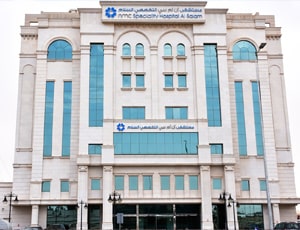
NMC Specialty Hospital Al Salam offers advanced Splenectomy using modern open and minimally invasive surgical techniques and individualized surgical care plans. Established in 1999, the CBAHI accredited hospital is located in Riyadh, Saudi Arabia and has 100 beds, providing comprehensive gastrointestinal, hematological, and surgical care for local and international patients.
Splenectomy is a surgical procedure used to remove the spleen, an organ involved in blood filtration, immune function, and removal of aging blood cells. It may be performed for conditions such as an enlarged or damaged spleen, certain blood disorders, splenic tumors, cysts, or traumatic splenic injury. Depending on the underlying condition, the procedure may be performed using laparoscopic or open surgery.