Browse verified doctors or let our care team help you find the doctor best suited to your condition, treatment goals, and budget.

Choosing Jaypee Hospital for Hepatectomy (Liver Resection) gives patients access to experienced liver surgeons, advanced CT and MRI imaging, intraoperative surgical technologies, minimally invasive and robotic systems, specialized intensive-care facilities, and structured postoperative monitoring. Established in 2014, the NABH, JCI accredited hospital in Noida, India has 1200 beds and provides specialized hepatobiliary and liver cancer care.
Hepatectomy is performed under general anaesthesia, with the surgical approach selected according to the extent and location of the liver disease. The surgeon removes the planned portion of the liver while carefully controlling blood vessels and bile ducts. In some patients with an insufficient future liver remnant, procedures such as Portal Vein Embolization may be considered before major liver resection to encourage growth of the remaining liver. After surgery, patients are monitored for bleeding, bile leakage, infection, blood clots, and impaired liver function.
Fortis Hospital, Shalimar Bagh offers advanced Hepatectomy (Liver Resection) using modern hepatobiliary surgical techniques and individualized liver care plans. Established in 2010, the NABH accredited hospital is located in Delhi, India and has 262 beds, providing comprehensive liver surgery, oncology, and multidisciplinary care for local and international patients.
Hepatectomy (Liver Resection) is a surgical procedure used to remove part or, in selected cases, most of the liver affected by disease. It may be performed for primary liver tumors, metastatic cancer involving the liver, selected benign tumors, or other localized liver conditions. Depending on the location and extent of disease, the procedure may involve removal of a small segment or a larger portion of the liver using open, laparoscopic, or robotic-assisted techniques.
Delhi, India
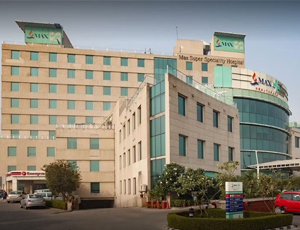
Choosing Max Smart Super Speciality Hospital for Hepatectomy (Liver Resection) gives patients access to experienced liver surgeons, advanced CT and MRI imaging, intraoperative surgical technologies, minimally invasive and robotic systems, specialized intensive-care facilities, and structured postoperative monitoring. Established in 2012, the JCI, NABH accredited hospital in Delhi, India has 250 beds and provides specialized hepatobiliary and liver cancer care.
Hepatectomy is performed under general anaesthesia, with the surgical approach selected according to the extent and location of the liver disease. The surgeon removes the planned portion of the liver while carefully controlling blood vessels and bile ducts. In some patients with an insufficient future liver remnant, procedures such as Portal Vein Embolization may be considered before major liver resection to encourage growth of the remaining liver. After surgery, patients are monitored for bleeding, bile leakage, infection, blood clots, and impaired liver function.
At Max Super Specialty Hospital, Shalimar Bagh, Hepatectomy (Liver Resection) is performed using specialized hepatobiliary surgical techniques and comprehensive liver assessment. Established in 2011, this NABH, NABL accredited hospital in Delhi, India has 402 beds and offers advanced liver surgery, surgical oncology, interventional radiology, and critical-care services.
Hepatectomy may be considered for selected patients with localized liver disease when adequate healthy liver tissue can remain after surgery. Before the procedure, imaging such as CT or MRI may be used to assess the location and extent of disease and estimate the future liver remnant. During surgery, the affected portion of the liver is carefully removed while preserving sufficient functioning liver tissue and important blood vessels and bile ducts.
At Amrita Hospital, Hepatectomy (Liver Resection) is performed using specialized hepatobiliary surgical techniques and comprehensive liver assessment. Established in 2022, this NABH accredited hospital in Faridabad, India has 2600 beds and offers advanced liver surgery, surgical oncology, interventional radiology, and critical-care services.
Hepatectomy may be considered for selected patients with localized liver disease when adequate healthy liver tissue can remain after surgery. Before the procedure, imaging such as CT or MRI may be used to assess the location and extent of disease and estimate the future liver remnant. During surgery, the affected portion of the liver is carefully removed while preserving sufficient functioning liver tissue and important blood vessels and bile ducts.
Marengo Asia Hospitals, Faridabad offers advanced Hepatectomy (Liver Resection) using modern hepatobiliary surgical techniques and individualized liver care plans. Established in 2007, the NABH, NABL accredited hospital is located in Faridabad, India and has 325 beds, providing comprehensive liver surgery, oncology, and multidisciplinary care for local and international patients.
Hepatectomy (Liver Resection) is a surgical procedure used to remove part or, in selected cases, most of the liver affected by disease. It may be performed for primary liver tumors, metastatic cancer involving the liver, selected benign tumors, or other localized liver conditions. Depending on the location and extent of disease, the procedure may involve removal of a small segment or a larger portion of the liver using open, laparoscopic, or robotic-assisted techniques.
Marengo Asia Hospitals, Gurugram is a trusted healthcare provider for Hepatectomy (Liver Resection), offering advanced liver surgery supported by experienced hepatobiliary surgeons, surgical oncologists, hepatologists, interventional radiologists, anesthesiologists, and multidisciplinary liver teams. Established in 2022, the NABH, NABL accredited hospital is situated in Gurgaon, India and has 250 beds.
Hepatectomy works by surgically removing the liver tissue affected by a tumor or other localized condition while preserving as much healthy liver as possible. The extent of resection depends on the size, number, and location of lesions, their relationship with major blood vessels and bile ducts, the condition of the remaining liver, and the patient's overall health. In selected patients, minimally invasive or robotic-assisted liver resection may be considered.