Browse verified doctors or let our care team help you find the doctor best suited to your condition, treatment goals, and budget.

At NMC Chronic Care Specialized Hospital, Balloon Angioplasty is performed using specialised catheter-based techniques and comprehensive pre-procedure cardiovascular assessment. Established in 2013, this CBAHI accredited hospital in Jeddah, Saudi Arabia has 120 beds and offers advanced interventional cardiology services.
Balloon Angioplasty may be considered for patients with significant arterial narrowing that restricts blood flow and causes symptoms such as chest discomfort or reduced exercise tolerance. During the procedure, a catheter is introduced through a blood vessel, commonly in the wrist or groin, and guided toward the affected artery. The balloon is positioned across the narrowing and inflated to restore vessel diameter. Coronary angiography and other cardiovascular assessments help identify the location and severity of the blockage before treatment.
Riyadh Care Hospital provides specialised Balloon Angioplasty with a focus on precise vascular treatment, advanced catheter-based technology, and individualised cardiovascular care. Established in 1990, the JCI accredited hospital is located in Riyadh, Saudi Arabia and operates 325 beds, with modern interventional cardiology and critical-care infrastructure.
Balloon Angioplasty can improve blood flow through arteries narrowed by atherosclerotic plaque or other forms of vascular obstruction. Treatment planning considers the location, length, severity, and characteristics of the arterial narrowing, as well as the patient's overall cardiovascular health. A detailed assessment using angiography and other appropriate investigations helps the interventional cardiology team determine whether balloon angioplasty alone or angioplasty combined with stent placement or another intervention is most suitable.
Choosing Care national Hospital for Balloon Angioplasty gives patients access to experienced interventional cardiologists, advanced angiography systems, modern catheterization laboratories, and structured post-procedure monitoring. Established in 2003, the JCI accredited hospital in Riyadh, Saudi Arabia has 460 beds and provides specialized cardiovascular intervention services.
Balloon Angioplasty is generally performed under local anaesthesia with sedation when required. A catheter is advanced through the vascular system to the affected artery, where the balloon is inflated to improve the passage of blood. Patients are monitored afterward for bleeding at the catheter insertion site, changes in heart rhythm, chest discomfort, and other potential complications. Depending on the treated artery and clinical condition, patients may require antiplatelet medicines and follow-up cardiovascular care.
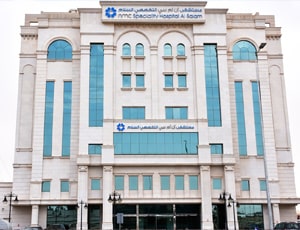
NMC Specialty Hospital Al Salam provides specialised Balloon Angioplasty with a focus on precise vascular treatment, advanced catheter-based technology, and individualised cardiovascular care. Established in 1999, the CBAHI accredited hospital is located in Riyadh, Saudi Arabia and operates 100 beds, with modern interventional cardiology and critical-care infrastructure.
Balloon Angioplasty can improve blood flow through arteries narrowed by atherosclerotic plaque or other forms of vascular obstruction. Treatment planning considers the location, length, severity, and characteristics of the arterial narrowing, as well as the patient's overall cardiovascular health. A detailed assessment using angiography and other appropriate investigations helps the interventional cardiology team determine whether balloon angioplasty alone or angioplasty combined with stent placement or another intervention is most suitable.

Baby Jason Dibye Dalle from Cameroon, aged 4, suffered from aortic stenosis since birth. Additionally, he had a neurological disorder called Pelizaeus-Merzbacher Disease, which is…
Balloon angioplasty is a minimally invasive procedure used to open narrowed or blocked blood vessels. During the procedure, a skilled interventional radiologist inserts a small, deflated balloon through a catheter. This is placed at the site of the blockage. The balloon is then inflated with the aim of pushing blockages (the plaque) in the artery against the artery walls. This procedure helps widen the vessel to restore normal blood flow.
Balloon angioplasty is commonly used to treat conditions such as coronary artery disease (CAD), peripheral artery disease (PAD), and renal artery stenosis, among others. It is particularly effective in improving blood flow to the heart, legs, and kidneys.
After a balloon angioplasty, patients usually stay in the hospital for a short observation period and are generally discharged the same day. Recovery is relatively quick, with minimal discomfort at the insertion site. It may take just a day or two. Patients are advised to take it easy for a few days. Medications are prescribed to prevent blood clots and manage any post-procedure symptoms. Your healthcare team might also suggest lifestyle modifications, such as adopting a heart-healthy diet and exercising.
A number of determining factors can be used to rank hospitals for your suitable procedure. In Saudi Arabia, hospitals that do Balloon Angioplastys are ranked according to the mentioned factors- Popularity of the procedure, Infrastructure, Availability of the treatment, Skilled Medical Professionals, Technology employed, Cost, Facilities Offered, and Success Rate.
MediGence integrates convenience, high-quality medical care, and cost savings. We make sure that your healthcare journey should be easy and hassle-free while receiving treatment overseas. Some of our caregiving services & unmatched benefits include hotel stays or accommodation, airport transfers, dedicated case manager, care packages for recovery, online consultations with the specialist, 24/7 assistance, and prenegotiated treatment packages with an assured 30% discount. We also provide several additional advantages to help you receive first-rate medical care.
Yes, you can avail a video consultation with the specialist before travelling to Saudi Arabia. You can place your request to our patient advisors for scheduling your online consultation with the specialist. Our expert will cross-check with the specialist about his/her availability and send you a payment link for the confirmation of the appointment.
Due to the country's cutting-edge healthcare system and high success rate, many people have begun traveling to Saudi Arabia for Balloon Angioplasty. Balloon Angioplasty is the best option when it comes to Saudi Arabia for a variety of reasons including:
The recovery time for a procedure varies based on the condition of the patient and the complexity of the surgery. Other factors, such as the patient's continued participation in rehabilitation sessions and postoperative care appointments, have a significant impact on the length of their recovery. The patient is suggested to stay in close contact with their surgeon for a few months post-surgery to reduce their recovery time.