Tethered Spinal Cord Syndrome Treatment in India
- Top Accredited Hospitals
- Global Medical Standards
- Cutting-Edge Technology
- Proven Treatment Options
- High Success Rate
- Trusted by Millions

What is Tethered Spinal Cord Syndrome?
A tethered spinal cord happens when your spinal cord abnormally attaches to the wall of your spinal canal. Usually, your spinal cord moves freely inside your spinal canal.
When your spinal cord attaches to your spinal canal, this can limit its movement and cause tension. This tension can cause your spinal cord to stretch and may damage it and restrict blood flow to your spinal nerves.
What is the Importance of Timely Treatment?
Since long-standing symptoms might not go away once the spinal cord is freed, it is best to treat the tethered cord as soon as possible following diagnosis. Treatment aims to stop the symptoms from getting worse and, in certain situations, to reverse them.
What are the Common Symptoms of Tethered Spinal Cord Syndrome?
Individual differences in the symptoms of a tethered spinal cord can be significant. Some newborns have signs of a tethered spinal cord. Tethered cord symptoms typically appear in youngsters as they get older. Rarely, some people have no symptoms as children but, if left untreated, may develop symptoms as adults.
Tethered spinal cord syndrome in adults and children may be linked to:
- Walking difficulties
- Your lower back may have dimples, benign tumours, or hair patches
- Haemangiomas, a kind of birthmark, and patches of discoloured skin
- Your back or legs may feel numb
- Severe back or leg discomfort that frequently spreads to your genital area or rectum
- Scoliosis
- Acrochordons, or skin tags
- Difficulty controlling one's bowels and bladder.
- Spinal cord cysts filled with fluid (syringomyelia)
- Muscular atrophy is the loss of muscular mass.
Connect with our advisor for a PRIORITY response
Tethered Spinal Cord Syndrome Prevention Tips
Although tethered spinal cords cannot be avoided, symptoms can be reversed with early intervention. If you or your kid exhibit any signs of a tethered spinal cord, get medical help immediately.
Treatment options for Tethered Spinal Cord Syndrome
Spinal Fusion Surgery: Spinal cord fusion surgery and laminectomy are typically performed by a neurosurgeon, a medical professional specialising in brain and spine surgeries. They start by cutting your lower back. After that, doctors carefully remove scar tissue and separate the spinal cord from the spinal canal using surgical instruments. To keep the patient's spine in a more straight posture, an orthopedic surgeon will fasten screws and rods to the curved portion. Bone chips will be positioned around the impacted vertebrae to promote bone formation. This spine portion will eventually unite to form a stable, solid bone.
Cost Start From USD 6500 - USD 9500Explore Options
A tethered spinal cord is typically diagnosed by a neurologist, a medical professional specialising in the brain, spinal cord, and nerves. They ask about symptoms and physically examine you or your child. Usually, they additionally employ imaging tests like:
- Magnetic resonance imaging (MRI): Examines your spinal cord, nerves, and surrounding structures using radio waves and magnets.
Myelogram: A contrast dye is injected by your healthcare practitioner into the membrane that envelops your spinal cord, known as the thecal sac. They then check for tethering to your spinal canal using an X-ray. - CT scan: This examination uses specialised computers and X-rays to examine your body. Neurologists may utilise a CT scan following a myelogram to observe the contrast dye flow around your spinal cord.
- Ultrasound: Your healthcare provider employs high-frequency sound waves to see within your body. Your neurologist may use it to examine the movement of your spinal cord within your spinal canal. Young newborns are the most common users of this.
MediRehab (chain of Rehab centers - part of MediGence provides comprehensive rehabilitation services designed to support Tethered Spinal Cord Syndrome patients in India.
Following surgery, some patients may require physical or occupational therapy to help them regain function. Although it is unlikely to repair nerve damage that has already occurred, the procedure is done to stop further nerve damage. Therefore, even after treatment, some persons may still experience muscle weakness or difficulty with motor control (movement).
Only surgery is the option to treat Tethered Spinal Cord Syndrome. However, doctors may prescribe medications for symptoms while recovering from surgery.
Instantly Connect with our Specialists


Hospitals for Tethered Spinal Cord Syndrome in India

Dr. Rela Institute and Medical Centre
Chennai, India
The mega-structure of RIMC serves as a hospital as well as an educational institute. Hence, it offers a huge array of medical services and facilities to cater to the needs of its patients.
Fertility Services - RIMC specializes in both male and female fertility and in procedures like IntraCytoplasmic Sperm Injection (ICSI), Uterine Transplants, Preimplantation genetics and Laser Assisted Hatching (LAH).
Anaesthesia and ICU - The ICU rooms in RIMC are equipped to serve the individual needs of every patient. They boast the largest liver transplant ICU in India and a specific ICU dedicated to pediatrics multi-organ transplants.
Radiology and Imaging Sciences - RIMC has the infrastructure to support high-quality scans including 128 Slice CT, Cardiac MRI, and 3 Tesla MRIs.
Blood Bank and Transfusion Medicine - RIMC has an active blood bank system with facilities dedicated to Blood Component Separation and Therapy. They use high-end technology like the Automated 1H500 Analyser and have a separate Therapeutic Apheresis Unit.
Advanced Endoscopy - Dr. Rela Institute and Medical Centre has one of the most advanced hospital facilities with an individual healthcare unit specifically dedicated to Endoscopy. Advanced procedures like Spyglass Cholangioscopy, Laser therapy, Endoscopic Ultrasound, Capsule Endoscopy, and special ERCP and EUS Suite.
Some of the other healthcare facilities, departments, and services offered by Dr. Rela Institute and Medical Healthcare are listed below:
- Orthopaedics
- Obstetrics and Gynaecology
- Reproductive Medicine
- Hepatology
- Cardiology
- Internal Medicine and Diabetology
- Advanced Paediatrics
- Ear Nose and Throat
- Emergency Medicine
- Interventional Radiology and Imaging Services
- Neonatology
- Neurology
- Liver Disease and Transplantation
- Gastroenterology
- Medical Oncology
- Nephrology
- Neonatology
- Pathology
- Ophthalmology
- Plastic and Reconstructive Surgery
- Radiation Oncology
- Pulmonary Medicine
- Urology
- Surgical Oncology
- Transfusion Medicine
Apart from these facilities, Dr. Rela Institute and Medical Centre also have a preventive health check lounge, 72 consultation suites, and 360 degrees including lab facilities specifically for outpatients.
Visit Dr. Rela Institute and Medical Centre in Chromepet, Chennai today and find the best care for you and your loved ones.
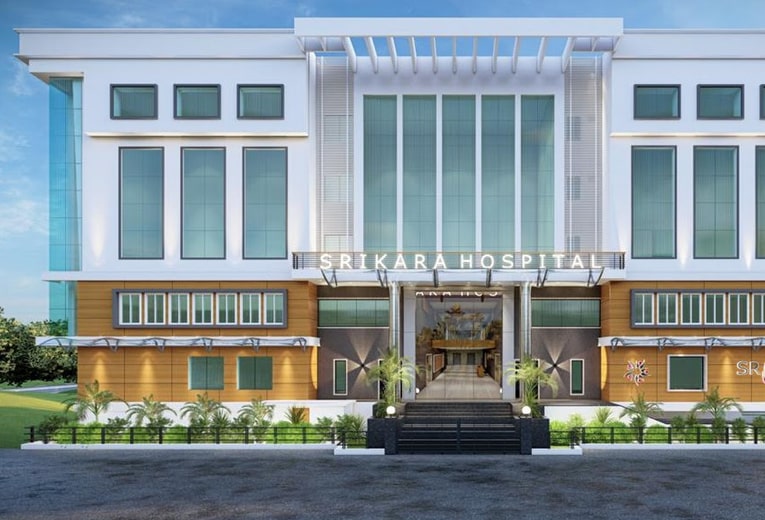
Srikara Hospital, RTC Cross Roads
Hyderabad, India
Srikara Group of Hospitals is an 850-Bedded Tertiary Care healthcare facility, spread over 7 branches and two states in Southern India. 6 out of these 7 branches are situated in the twin city of Hyderabad- Secunderabad and 1 branch is at Vijayawada, Andhra Pradesh. As the ultimate combination of benefits a hospital can provide, Srikara Ortho & Multi-Specialty Hospitals represents the infusion of quality, knowledge, technical proficiency, international standards, compassion, and reasonably priced care. Srikara Hospital is known for its excellence in Orthopedic as well as Neuro-Spine Surgeries. With top-of-the-chart technical proficiency, quality, and skills; Srikara is the destination of choice for patients from not only India but across the globe. Srikara Hospitals are the pioneers in doing Robotics-assisted Joint Replacements in Southern India. These hospitals have been using technologies like Computer Navigation and I-Suite theaters since their inception. Three of its 7 branches offer minimally Invasive Spine surgeries done with the use of top quality Operating microscopes. For patients from other countries seeking treatment at its facilities, Srikara has established a separate unit. By partnering with hospitals and institutions that share its commitment to and passion for ‘Patient Care’, it now hopes to expand its surgical expertise throughout the country and the world.
International quality care at affordable prices is what the Srikara Group of Hospitals strives for. The quality & compassion in care can be bought in only by the human skills behind world-class technology. Rich in human skills & experience, the team of doctors at Srikara Hospitals is decorated with a collective experience of more than 23000 Knee Replacement Surgeries over a period of two decades. 5000+ of these Knee Replacements were Robotic-assisted Knee Replacement surgeries. The team of surgeons and the Sports Medicine Unit at SRIKARA Group of Hospitals hold experience in doing more than 5500 Knee Ligament surgeries. The team of Neuro-spine surgeons holds a collective experience of 11+ years and offers various surgical remedies with and without the assistance of an Operating Microscope. Srikara Group of Hospitals offers a wide array of specialties like Orthopaedics, Neuro-spine, Urology, Laparoscopy, Cardiology, Cosmetic Surgery, etc. with the help of nationally and internationally acclaimed doctors.
To expand their healthcare services globally and for the ease of their patients, the doctors at Srikara Group of Hospitals are also providing Online Consultations to individuals who are unable to visit in person but are in need of medical attention. Srikara Group of Hospitals looks forward to continuing to cater to its domestic as well as overseas patients with compassion and evidence-based healthcare services. All the hospitals of Srikara Group are built in accordance to provide relaxing, serene surroundings, greenery, and a hygienic setting to the patients & visitors. With a large influx of people seeking the best care and facilities in Hyderabad, it is well renowned for its dedication to providing unique and evidence-based healthcare services.

Medanta - The Medicity
Gurgaon, India
Medanta – The Medicity, Gurugram, founded by renowned cardiac surgeon Dr. Naresh Trehan, is a leading multi-super speciality hospital offering advanced yet affordable healthcare. Spread across a 43-acre campus, it houses 1,391 beds, 270 ICU beds, 40 operation theatres, and 900+ doctors across 30+ specialities. Accredited by JCI, NABH, and NABL, Medanta is designed per American Institute of Architects’ healthcare guidelines. Recognised as the Best Private Hospital in India (2020–2025) and among the World’s Top 250 Hospitals (Newsweek 2024), it excels in Cardiac Care, Cancer, Neurosciences, Gastro, Orthopaedics, and Renal Care, ensuring world-class, collaborative, and compassionate treatment.
Our Services to better your experience
Opinion & Option
We submit the most accurate opinion and options from one or more countries for your review
Consult Privately
Consult with a certified specialist privately on our telemedicine platform even before you decide to travel
Logistics
We handle flights, visas, transfers, and accommodation—so you can focus on your health.
Recovery
Our In-house rehabilitation service packages to better your recovery and treatment outcome
Why Choose India for Tethered Spinal Cord Syndrome treatment?
Here are some of the reasons for choosing India:
- Due to advancements in medical facilities, such as minimally invasive surgical techniques and spinal cord fusion surgery.
- World-class experts include highly experienced doctors, JCI, and NABH-accredited healthcare institutions.
- Compared to other countries, treatment in Indian hospitals is cost-effective.
- Indian hospitals provide international patient services, including a multilingual support system.
- Improved treatment methods and biological therapies.
Frequently Asked Questions
Yes, Tethered Spinal cord syndrome is treatable. Surgery to release (detether) the spinal cord in adults helps lessen the size and progression of cord cysts. Additionally, surgery may relieve some symptoms or restore some function. Other types of treatment can help alleviate TSCS symptoms in both adults and children.
The nation's healthcare institutions offer top-notch treatment alternatives, guaranteeing successful outcomes for many patients. In India, the majority of patients report significant symptom improvement after surgery, especially when diagnosed and treated early. However, success rates can vary based on the severity of the tethering, the patient's unique circumstances, and the surgeon's skill; studies have shown that effectiveness rates in India range from 70% to 90%.
Yes, many Indian hospitals offer the following for Tethered Spinal Cord Syndrome treatment:
- Advanced diagnostic tools like MRI, CT scan, electromyography, and PET scan for accurate diagnoses of Tethered Spinal Cord Syndrome.
- Skilled neurologist, surgeons performing spinal cord fusion for Tethered Spinal Cord Syndrome treatment.
- Comprehensive post-surgery care and rehabilitation for long-term health benefit
Always consider the following factors when selecting Indian hospitals:
- Hospitals that are accredited (authorised by JCI and NABH).
- Patient reviews and success rates.
- Hospitals that provide seamless care to patients from abroad.
The success rates in India can vary based on the severity of the tethering, the patient's unique circumstances, and the surgeon's skill; studies have shown that effectiveness rates in India range from 70% to 90%.
Children who have a tethered spinal cord may experience shooting pain in their legs or back ache. weakness, numbness, or issues with the function of the leg muscles.
Early diagnosis and surgical intervention are essential to minimise the long-term complications of Tethered Spinal Cord Syndrome (TSCS), which can cause progressive muscle weakness, numbness in the legs, difficulty walking, impaired bladder and bowel control, chronic back pain, and in severe cases, partial paralysis, if left untreated.
When caring for a child with Tethered Spinal Cord Syndrome, it is important to keep an eye on their symptoms, lead a healthy lifestyle, seek early surgical intervention if needed, and work closely with a team of specialists that includes a urologist, physical therapist, and neurosurgeon. This is especially important if the child exhibits any signs of worsening neurological function, such as increased back pain, muscle weakness, or problems controlling their bladder.

Reviewer
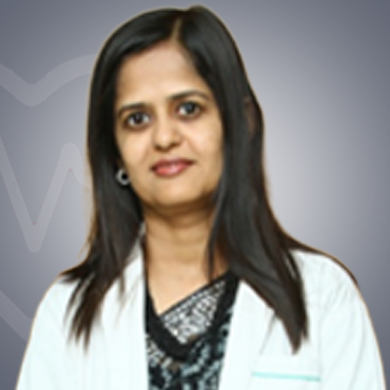
Dr Sonal Gupta
Neurosurgeon
29 Years of Experience
Dr. Sonal Gupta has an experienced neurosurgeon with more than 29+ years of clinical expertise. She is currently the Director, Neuro & Spine Surgery at Fortis Hospital, Shalimar Bagh. Before joining Fortis, she has been associated with various organizations such as Maharaja Agrasen Hospital, Action Balaji Hospital, and Max Hospital. View More
Last Reviewed - January 2026