Sturge Weber Syndrome Treatment in India
- Top Accredited Hospitals
- Global Medical Standards
- Cutting-Edge Technology
- Proven Treatment Options
- High Success Rate
- Trusted by Millions

What is Sturge Weber Syndrome?
The neurocutaneous illness known as Sturge-Weber syndrome (SWS) is typified by angiomas that affect the leptomeninges, choroid, and face. "Port-wine stain" or "nevus flammeus" are other names for the facial capillary vascular malformation, which is typically found in the trigeminal nerve's region.
What is the Importance of Timely Treatment?
When seizures are promptly controlled in the early stages of development, a patient's neurological outcome can be greatly improved by preventing further brain damage from seizures, minimising cognitive impairments, and addressing potential complications like glaucoma. Delaying treatment can result in more severe neurological deficits and developmental delays. This is why it is so important to treat Sturge-Weber syndrome as soon as possible.
What are the Common Symptoms of Sturge Weber Syndrome?
- Seizures that start in childhood and can get worse as people age
- Convulsions can vary in intensity and typically occur on the side of the body opposite the birthmark
- Muscle weakness that can be either temporary or permanent
- Cognitive impairment and developmental delays
- Glaucoma, or elevated intraocular pressure, may occur from birth or later. The eyeball may swell and protrude from its socket due to elevated intraocular pressure (buphthalmos)
- Migraines
Causes and Risk Factors of Sturge-Weber Syndrome
Causes
Sturge-Weber syndrome is brought on by a hereditary variation of the CNAQ gene. Instructions for controlling the development and operation of blood vessels are provided by this gene. Blood vessels do not form correctly before birth when this gene is altered because it does not receive the instructions necessary to perform its function as intended.
There is no genetic component to Sturge-Weber syndrome. It occurs intermittently and at random. This implies that the condition can be inherited by anyone.
The genetic alteration is somatic; the sperm and egg cells (sex cells) are unaffected. It happens early on in an embryo's development. The gene will alter in some cells but not in others (mosaicism). This indicates that while some blood vessels mature normally, others do not.
Risk Factors
Risk factors for Sturge-Weber Syndrome: Sturge-Weber syndrome-related leptomeningeal angiomas may raise your risk of:
- Near the angioma, there are calcifications (calcium deposits)
- Atrophy is the loss of brain tissue
- Paralysis
- Stroke.
Connect with our advisor for a PRIORITY response
Treatment options for Sturge Weber Syndrome
Seizure Management: Sturge-Weber syndrome is treated by managing its symptoms, which may involve anti-seizure drugs or seizure surgery. Laser skin resurfacing is used to lessen the visibility of the port-wine birthmark.
Cost Start From USD 500 - USD 1500Explore Options
Stem Cell Therapy: In India, novel therapies, including stem cell therapy, have been investigated. One documented incident, for example, demonstrated that a child's motor skills improved after receiving stem cell therapy.
After your baby is born, a medical professional will diagnose Sturge-Weber syndrome. The port-wine birthmark will be visible on your child's skin. Following a neurological examination and tests to check for blood vessel problems that impact the brain and vision, their provider will examine it during their initial physical examination. Tests could consist of:
- MRI
- CT scan
- EEG stands for electroencephalogram
- Eye examination.
MediRehab (chain of Rehab center - part of MediGence provides comprehensive rehabilitation services designed to support arthritis patients in <India>. These services include:
- Nutritional Counseling: Diet plans to reduce inflammation and maintain a healthy weight.
- Personalised Therapy Plans: Individually tailored treatments for pain management and enhanced mobility.
- Rehabilitation post-surgery: physiotherapy sessions focused on restoring joint function and strength.
- Nutrition Guidance: Customized dietary plan for reducing inflammation and maintaining a healthy weight for overall recovery.
- Depending on the situation, your healthcare professional may prescribe medicine to help control your symptoms and support the treatment plan.
Instantly Connect with our Specialists


Hospitals for Sturge Weber Syndrome in India

Metro Hospital
Noida, India
Metro Hospital located in Noida, India is accredited by ISO, NABH, NABL. Also listed below are some of the most prominent infrastructural details:
- Metro Hospital is a 317 bedded state-of-the-art super speciality hospital, which is functioning as two units- 110 beds capacity in Metro Heart Institute and 207 beds capacity in Metro Multispeciality Hospital
- 45 beds in Intensive Coronary Care and High Dependency Unit
- 24/7 Blood Bank
- 24/7 Pharmacy
- 24/7 Cardiac Ambulance
- 24/7 Emergency unit
- Different types of patients in-patient rooms are available for patients convenience- Super Deluxe rooms (8), Deluxe Rooms (2), Private Rooms (6), Semi-private rooms (14), Triple bedded rooms (6), Four bedded rooms (8), Five bedded rooms (5) and Six bedded rooms (12)
- Cafeteria/Restaurant

Medeor Hospital
Delhi, India
Supported by the first class staff, Medeor Hospital is dedicated to providing the latest in medical advances. The hospital’s professional expertise is regarded as one of the finest in India. The centre provides acute specialist services and aims at delivering top-quality medical and patient care.
Infrastructure & Facilities:
- 24x7 Emergency, Diagnostics and Pharmacy services
- State of the art instruments
- Hi-tech ICUs
- Modular OTs
- High-end Medical Diagnostic Laboratories
- Highly Experienced Physicians & Surgeons
- Zero Bacteria Operation Theaters
- Modern Infrastructure Equipped with Advanced Facilities
- Radiology department equipped with advanced diagnostic imaging technologies like 1.5 tesla MRI, high-tech 160 CT Scan and dual detector X – ray
- Cardiac Catheterization Lab having Hybrid Operating Room
- Linear Accelerator, Brachytherapy Suite, Wide Bore CT Simulator
- Slice CT Scan, CT Simulation
- Slice PET CT, Dual Head 6 Slice SPECT CT
- Facilitation counter at International Airport, New Delhi
- Translator of different languages
- Assistance in lodging, boarding and ticketing
- Wi-Fi and local SIM cards
- Tele-medicine, e-consultation and post discharge follow up
- Foreign exchange services
- Prayer and meditation rooms

Bai Jerbai Wadia Hospital for Children
Mumbai, India
Bai Jerbai Wadia Hospital for Children located in Mumbai, India is accredited by AAAHC. Also listed below are some of the most prominent infrastructural details:
- There are two parts of the hospital, one is focused on women's care and the other is focused on child care.
- Bai Jerbai Wadia hospital for Children
- 300 bed capacity
- 60 Pediatricians
- 10,000 in-patients (annual)
- 100,000 outpatients (annual)
- Biggest Neonatal ICU (West zone)
- Nowrosjee Wadia Maternity Hospital
- Obstetrics and Gynecological disciplines (several)
- 20 specialists
- 305 bed capacity
- It is also a referral centre for women who are rehabilitating as well as their families.
Our Services to better your experience
Opinion & Option
We submit the most accurate opinion and options from one or more countries for your review
Consult Privately
Consult with a certified specialist privately on our telemedicine platform even before you decide to travel
Logistics
We handle flights, visas, transfers, and accommodation—so you can focus on your health.
Recovery
Our In-house rehabilitation service packages to better your recovery and treatment outcome
Why Choose India for Stroke Treatment?
Here are some of the reasons for choosing India:
- Due to advancements in medical facilities, such as minimally invasive surgical techniques.
- World-class experts include highly experienced doctors, JCI, and NABH-accredited healthcare institutions.
- Compared to other countries, treatment in Indian hospitals is cost-effective.
- Indian hospitals provide international patient services, including a multilingual support system.
- Improved treatment methods and biological therapies.
Frequently Asked Questions
Sturge-Weber is an incurable, lifelong illness. Nonetheless, symptom management can enhance your child's quality of life and help avoid difficulties.
The nation's healthcare institutions offer top-notch treatment alternatives, guaranteeing successful outcomes for many patients. The primary objective of treatment is to control seizures with anticonvulsant drugs, which are successfully available in India.
Yes, many Indian hospitals offer the following for Sturge Weber Syndrome treatment:
- Advanced diagnostic tools like MRI, CT scan, electromyography, and PET scan for accurate diagnoses of Sturge Weber Syndrome
- Skilled neurologist, paediatricians and surgeons to treat Sturge Weber Syndrome.
- Comprehensive post-surgery care and rehabilitation for long-term health benefit
Always consider the following factors when selecting Indian hospitals:
- Hospitals that are accredited (authorised by JCI and NABH).
- Patient reviews and success rates.
- Hospitals that provide seamless care to patients from abroad.
A youngster with Sturge Weber Syndrome frequently has a port-wine birthmark on their face. Neurological disorders, such as seizures, and visual issues, including glaucoma, are other prominent signs of Sturge Weber Syndrome. Each patient experiences these three typical SWS traits to differing degrees.
Some people have serious impairments in their vision, convulsions, movement, and IQ. Some, on the other hand, are less severely impacted; they have intact vision, well-controlled seizures, minimal motor disability, and normal intelligence, possibly with milder learning impairments or concentration issues.
Sturge-Weber is a lifelong condition that can't be cured. However, treatment of symptoms can help prevent complications and improve your child's quality of life. Seizures: In many cases, seizures can be controlled with anti-seizure medications.

Reviewer
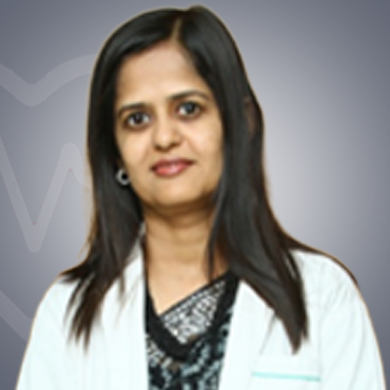
Dr Sonal Gupta
Neurosurgeon
29 Years of Experience
Dr. Sonal Gupta has an experienced neurosurgeon with more than 29+ years of clinical expertise. She is currently the Director, Neuro & Spine Surgery at Fortis Hospital, Shalimar Bagh. Before joining Fortis, she has been associated with various organizations such as Maharaja Agrasen Hospital, Action Balaji Hospital, and Max Hospital. View More
Last Reviewed - January 2026