Kidney Stones Treatment in India
- Top Accredited Hospitals
- Global Medical Standards
- Cutting-Edge Technology
- Proven Treatment Options
- High Success Rate
- Trusted by Millions

What are Kidney Stones?
Kidney stones are solid lumps or crystals that develop from materials in your kidneys, such as salts, minerals, and acids. They can range in size from tiny to enormous. Nephrolithiasis or renal calculi are other names for kidney stones.
You might not even be aware that you have a kidney stone, depending on its size. Without causing any symptoms, smaller stones may pass through your urinary tract in your urine. Large kidney stones may become trapped in your ureter.
What is the Importance of Timely Treatment?
Urinary tract infections (UTIs), severe pain, and kidney damage can all be avoided with timely kidney stone therapy. Kidney damage or renal failure may result from kidney stones that enlarge, become trapped in the urinary tract, or obstruct urine flow if treatment is not received. In addition to reducing the need for more intrusive procedures like surgery, early intervention helps to relieve symptoms and stop the growth of stones. Early intervention, such as medication, lifestyle modifications, and surgery, can preserve kidney function and improve results.
What are the Common Symptoms of Kidney Stones?
Kidney stone symptoms include:
- Pain in your lower back, belly or side (flank pain)
- Nausea and vomiting
- Bloody pee
- Pain when you pee
- Inability to pee
- Feeling the urge to pee a lot
- Fever or chills
- Cloudy or foul-smelling pee
Causes, Risk Factors and Complications of Kidney Stones
Causes
- Kidney stones form when your urine contains more crystal-forming substances such as calcium, oxalate and uric acid than the fluid in your urine can dilute.
- At the same time, your urine may lack substances that prevent crystals from sticking together, creating an ideal environment for kidney stones to form.
Risk Factors
Types of kidney stones
- Calcium-oxalate and calcium phosphate stones: When you consume low-calcium or high-oxalate diets and don't drink enough water, calcium-based stones may develop.
- Uric acid stones: Uric acid stones can develop from eating animal proteins, such as fish, poultry, pig, eggs, and beef.
- Struvite stones: Struvite stones can be brought on by bacterial infections.
- Cystine stones: Cystine stones are caused by a genetic disorder known as cystinuria. Two cysteine amino acids are joined to form the compound cysteine.
Complications
Kidney stones may increase your risk of:
- An obstruction that causes your kidneys to enlarge by backing urine up into them (hydronephrosis).
- Inflammation of the kidneys (pyelonephritis).
- One form of kidney failure that may be curable is acute renal injury.
- Recurrent UTIs (urinary tract infections).
- CKD, or chronic kidney disease.
Connect with our advisor for a PRIORITY response
Latest Research and Technologies in the Treatment of Kidney Stones
- Compared to conventional procedures, recent studies have shown that flexible ureteroscopy (FURS) offers the benefits of less trauma, a faster recovery, and fewer complications in the treatment of kidney stones because of the advancements in endoscopic equipment and minimally invasive technologies.
Kidney Stones Prevention Tips
Your risk of kidney stones may be influenced by what foods and drinks you consume. A few of the guidelines to follow to Reduce the risk of kidney stones:
- Consuming a lot of water.
- Restricting the use of animal proteins.
- Limiting salt and sugar-rich foods.
- Limiting oxalate-rich foods.
- Consumption of foods high in calcium.
Treatment options for Kidney Stones
Kidney Stone Removal: Ureteroscopy and percutaneous nephrolithotomy are two methods for removing kidney stones. A small tube is inserted through the urethra and bladder into the ureter or kidney during ureteroscopy, a minimally invasive procedure used to remove or break down kidney stones. Large kidney stones can be surgically removed with a percutaneous nephrolithotomy, which is performed under imaging guidance through a tiny back incision.
Cost Start From USD 2500 - USD 3500Explore Options
Extracorporeal shock wave lithotripsy (ESWL): Using sound waves to produce powerful vibrations known as shock waves, extracorporeal shock wave lithotripsy (ESWL) breaks up the stones into little fragments that can be eliminated through urine.
Cost Start From USD 200 - USD 500Explore Options
Your doctor may perform the following diagnostic tests and procedures if they think you have a kidney stone:
- Blood testing: Your blood may have excessive uric acid or calcium levels, according to blood tests.
- Urine testing: The 24-hour urine collection test results may indicate that you are excreting either too few chemicals that prevent stones or too many minerals that cause them.
- X-ray (KUB - Kidney, Ureter, and Bladder): Offers a basic picture of the kidneys and urinary tract stones.
- Ultrasound: Non-invasive and frequently used to find stones, particularly in pregnant women or young children.
- CT Scan: Offers the most detailed view and is the gold standard for detecting kidney stones, including size, location, and type.
The goals of kidney stone rehabilitation are to control symptoms, stop recurrence, and enhance general kidney health:
- Hydration: Consuming a lot of liquids aids in the removal of minor stones and stops the formation of new ones.
- Dietary modifications: Reducing salt, foods high in oxalate, or animal protein, for example, can help avoid kidney stones by modifying the diet according to the kind of kidney stones.
- Physical Activity: Regular exercise can help keep the kidneys healthy overall and facilitate the transit of smaller stones.
A healthcare professional may recommend or prescribe medications if your kidney stone is self-resolving and not causing infection to:
- To aid in the passage of stones, relax your ureter.
- Control your nausea and vomiting.
- Manage pain conditions
Instantly Connect with our Specialists


Hospitals for Kidney Stones in India
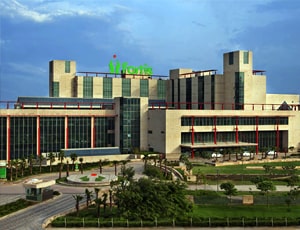
Fortis Memorial Research Institute
Gurgaon, India
Fortis Healthcare Limited stands as one of India's largest integrated healthcare providers, managing 33 hospitals across 11 states and operating more than 5,700 beds and 400 diagnostic labs. Four of our hospitals are accredited by JCI and 26 by NABH. With a workforce of over 12,500 healthcare professionals, we combine clinical excellence, a patient-focused approach, and innovation to provide high-quality, affordable, and compassionate healthcare to patients in India.
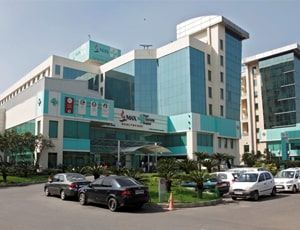
Max Super Speciality Hospital, Saket
Delhi, India
Max Smart Super Speciality Hospital, Saket, is a 250-bed tertiary care hospital awarded NABH accreditation, which provides advanced medical care in various specialities such as Cardiac Sciences, Orthopaedics, Neurology, Urology, Kidney Transplant, Paediatrics, and Obstetrics & Gynaecology. The hospital provides quality, safe, integrated, and patient-centric medical care using modular OTs, ICUs, Cath Labs, CT, MRI and Dialysis units.

Manipal Hospital, Hebbal
Bangalore, India
Manipal Hospitals, a group of Manipal Education Medical Group, is India’s leading multi-speciality network, comprising over 650 beds. Dedicated to clinical excellence, patient-centric care and ethical practices, it provides sophisticated diagnostics, surgery and home care services to both domestic and international patients, while also improving access to affordable healthcare for underprivileged communities.
Our Services to better your experience
Opinion & Option
We submit the most accurate opinion and options from one or more countries for your review
Consult Privately
Consult with a certified specialist privately on our telemedicine platform even before you decide to travel
Logistics
We handle flights, visas, transfers, and accommodation—so you can focus on your health.
Recovery
Our In-house rehabilitation service packages to better your recovery and treatment outcome
Why Choose India for Kidney Stones Treatment?
Here are some of the reasons for choosing India:
- Due to advancements in medical facilities, such as minimally invasive surgical techniques.
- World-class experts include highly experienced doctors, JCI, and NABH-accredited healthcare institutions.
- Compared to other countries, treatment in Indian hospitals is cost-effective.
- Indian hospitals provide International patient services, including a multilingual support system.
- Improved treatment methods and biological therapies.
Frequently Asked Questions
Drink lots of water to flush out your kidney stone if your doctor believes it will go away. As directed by your physician, take any prescribed medication as directed, and abide by their dietary and drink instructions.
Sixty per cent of kidney stones larger than 6 mm and ninety per cent of kidney stones smaller than 6 mm pass on their own. You will require a procedure to break up and/or remove a kidney stone if it is large or obstructing your urine flow. Smaller stones that were supposed to pass by themselves can occasionally expand or shift, blocking the flow.
In India, kidney stones are typically successfully treated, particularly with innovative surgical techniques and modern medical technology. Depending on the size and location of the stones, non-invasive procedures such as extracorporeal shock wave lithotripsy (ESWL) have success rates of 85–90%. When carried out by skilled professionals, the success rate for operations such as ureteroscopy and percutaneous nephrolithotomy (PCNL) can reach 90–95%. Overall, the results are favourable, with lifestyle modifications, appropriate therapy, and early detection helping control the condition and avoid recurrence.
You are more likely to get kidney stones again and develop chronic renal disease if you have already had kidney stones.
The size and location of the stone affect how long it takes. While larger stones can take longer or necessitate medical intervention, smaller stones might go away in a few days.
A stone that becomes lodged may cause excruciating pain, infection, or obstruction, necessitating medical assistance to break or remove it.
The length of recovery varies according to the type of surgery. Recovery times can range from a few days for less invasive operations like ureteroscopy to a few weeks for more invasive treatments like percutaneous nephrolithotomy.
Following removal or passage, a stone may be sent for analysis to ascertain its composition (such as uric acid or calcium oxalate), which aids in directing preventative measures.

Reviewer

Dr. Ashish George
Gastroenterologist
18 Years of Experience
Dr. Ashish George is one of the leading names in HPB surgery & liver transplantation and has about 18+ years of experience.He is a principal consultant & unit head of liver transplant at Fortis Shalimar Bagh. View More
Last Reviewed - January 2026