Blount's disease Treatment in India
- Top Accredited Hospitals
- Global Medical Standards
- Cutting-Edge Technology
- Proven Treatment Options
- High Success Rate
- Trusted by Millions

What is Blount’s disease?
Blount's disease is a growth problem that affects the tibia, or shinbone, and causes the legs to bow excessively. It is caused by abnormal growth plate development at the top of the tibia, which causes the leg to angulate inward gradually. If treatment is not received, the illness, which is more prevalent in children and teenagers, may worsen over time.
What is the Importance of Timely Treatment?
To avoid severe deformities and difficulties with movement, Blount's disease must be diagnosed and treated as soon as possible. Timely intervention leads to proper leg alignment, which may help involve bracing for younger children and surgery for more severe cases. This lowers long-term problems and enhances the quality of life overall.
- The bending of the leg worsens over time.
- Joint instability and knee discomfort
- Early-stage arthritis
- Walking difficulties and decreased mobility
What are the Common Symptoms of Blount’s disease?
Blount's disease symptoms vary and depend upon the age and severity of the disease. Among the most typical signs are as follows:
- Excessive leg bowing, which is more noticeable than typical child bowing
- Knee pain brought on by excessive joint stress
- Walking problems or an irregular gait, such as waddling or inward-turned feet.
- Leg length disparity (sometimes one leg appears shorter than the other)
- Instead of getting better with age, bending gets worse over time.
Causes and Risk Factors of Blount’s Disease
The exact reason for Blount's disease is not fully understood, but it is believed to be due to excessive pressure on the growth plate of the tibia. The following are the risk factors.
- Early Walking: Children who begin walking before 12 months may be more vulnerable due to the increased strain on the tibia.
- Obesity: Carrying too much weight can strain growing bones and cause abnormalities.
- Genetic Predisposition: The risk is increased if Blount's disease runs in the family.
- Vitamin D Deficiency: The condition may occur due to poor bone health brought on by an insufficient diet.
Connect with our advisor for a PRIORITY response
Latest Research and Technologies in the Treatment of Blount’s Disease in India
Recent research focuses on advanced bracing techniques, better surgical techniques, and early detection to treat Blount's disease. Deformities can be corrected with little intervention by growth modulation operations, such as guided growth plates that use tension plates. While robotically assisted surgery improves accuracy, 3D printing technology helps with precise surgical planning. Stem cell therapies and regenerative medicine are also being investigated to promote bone formation. For better outcomes, physiotherapy and weight control are still crucial.
Blounts Disease Prevention Tips
To help prevent or effectively manage it if you already have it, the following is the advice to be considered:
- Maintaining a healthy weight: Being overweight puts more strain on the growth plates, which can lead to Blount's disease. Excessive weight gain can be avoided with a healthy diet and frequent exercise.
- Promote Good Walking Habits: Ensure kids start walking generally at a young age and refrain from standing or walking too much on their bow legs.
- Frequent pediatric checkups: Early detection of leg misalignment through routine screenings enables prompt correction.
- Maintain Bone Health: A calcium and vitamin D diet supports proper leg growth and strong bones.
- Wear Supportive Footwear: Proper leg alignment is maintained by wearing shoes that fit well and provide adequate arch support.
Treatment options for Blount's disease
Osteotomy: An osteotomy is a surgical operation used to treat Blount's disease, which causes the tibia to bow. The surgeon makes cuts and realigns the bone to reestablish appropriate leg alignment. The bone may be stabilised during the healing process by plates, screws, or external fixation devices. An osteotomy is usually advised when bracing is inadequate or in extreme situations.
Cost Start From USD 3500 - USD 4500Explore Options
Limb Lengthening: An osteotomy treats Blount's disease, which causes the tibia to bow. The surgeon makes cuts and realigns the bone to reestablish proper leg alignment. The bone may be stabilised during the healing process by plates, screws, or external fixation devices. An osteotomy is usually advised when bracing is inadequate or in extreme situations.
Cost Start From USD 10000 - USD 12000Explore Options
The following are key diagnostic tools:
- Physical examination: Assesses knee stability, gait anomalies, and leg alignment.
- X-rays are the main form of imaging used for detecting growth plate abnormalities and tibial bending.
- MRI or CT scan: In extreme situations, an s is used to examine the bone and cartilage structure in greater detail.
- Gait analysis: It examines how people move to identify biomechanical problems.
Options for Blount's Disease Rehabilitation are:
- Physical therapy promotes mobility, strengthens the legs' muscles, and corrects gait anomalies.
- Bracing helps young children with modest abnormalities correct their tibia for early-stage cases.
- Post-Surgical Rehab: The treatment promotes joint flexibility and muscle healing following limb-lengthening or osteotomy surgery.
- Controlling weight lessens the strain on the legs, which delays
- In general, there is, as such, no medication for Blount’s disease. However, certain medications like NSAIDs and calcium vitamin D are taken as supportive treatments.
Instantly Connect with our Specialists


Hospitals for Blount's disease in India

Clear Medi Hospital, Karkardooma
Delhi, India
Clear Medi Hospital, Karkardooma located in New Delhi, India is accredited by ISO. Also listed below are some of the most prominent infrastructural details:
- There are 12 Linear Accelerators in all hospitals of Clear Medi Hospital, Delhi, India and more in the development stage.
- Over 25 surgical and medical specialties across all Clear Medi Hospitals
- Care Medi is one of the biggest Oncology care organisations in India.
- Hospital management solutions provided to over 15 partner healthcare organisations managing more than 300 beds.
- The organisation consists of offerings such as clinical manpower management and equipment management.
- Advanced radiology and nuclear medicine centres
- Professionally managed international patient care
- Clear Medi Hospital, Delhi has a capacity of 100 beds.
- Clear Medi is a multispecialty hospital.
- It is a NABH (National Accreditation Board for Hospitals & Healthcare providers) certified hospital.
- It has Oncology and Cardiac departments with an Intensive Care Unit.
- It also has fully equipped Operation Theatres.
- Clear Medi Hospital ensures coordination with patients and International Patient assistance
- It has an online Tumor Board with a number of Medical, Surgical and Radiation Oncologists.

VPS Rockland Hospital
Gurgaon, India
VPS Rockland Hospital located in Gurugram, India is accredited by NABH, NABL. Also listed below are some of the most prominent infrastructural details:
- Well-designed compact 103-bed hospital expanding over120,000 square feet
- Well equipped modular operation theatres, intensive care unit, interventional Cath lab, and in-patient rooms ranging from economy to luxury
- Offers a bouquet of services like Internal Medicine, Obstetrics & Gynaecology, Surgery, Pediatrics
- High-end diagnostic services like 1.5 T MRI and 128 slice CT Scan
- Advanced non-invasive assessment with echo & TMT machines
- State of the art cardiac Cath-Lab
- Appointment Scheduling
- Treatment packages
- Accommodation arrangement for the accompanying attendant
- Customized diet for patient and attendant
- Laundry services
- Prayer room
- Visa assistance
- Pick and drop facility from/to the Airport
- Foreign exchange facility
- Registration with the Foreigners Regional Registration Office
- Dedicated Neuro-Intensive care unit managed by expert intensivists
- Accommodation arrangements post discharge
- Highly advanced instruments for deep brain stimulation, stereotaxy, micro-neurosurgery, pediatric neurosurgery & neurophysiology
- Most advanced dialysis machines and advanced diagnostic and therapeutic facilities
- Renal replacement therapy for hemo-dynamically unstable patient
- Technologically advanced endoscopy suite
- Wi-Fi/internet service in the room
- Travel arrangement for patient & attendant post discharge
- Tele-consults post discharge
- Dialysis beds
- 24x7 ‘Trauma & Emergency Center
- Dedicated blood bank
- 24x7 comprehensive patient care.
- Deployed high-end technologies & smart digital system
- Robust Hospital Information Systems to meet complex medical needs of patients
- Robotic-assisted surgeries
- International Patients Lounge

The Madras Institute of Orthopedics and Traumatology
Chennai, India
MIOT started its journey with only 70 beds and focusing on Orthopedics and Trauma care. However, we grew into a multi-specialty hospital with time. MIOT is now a 1000-bedded hospital and can offer an extensive range of services across 63 specialties. The state of art laboratory of our hospital is ranked 8th internationally. We have 21 super-specialty operation theaters equipped with cutting-edge technology to help our doctors with complex procedures.
We take great care to make our patient rooms comfortable enough. The patient rooms get plenty of fresh air as well as natural light. The soothing views from the rooms do not let the patients feel cut off from the outside world. We use separate entrances for emergency patients, out-patients, in-patients, and their attendants. We put our patients’ safety first which is why we use a superior air system to ensure a near-zero infection healthy environment.
Apart from that, MIOT’s 24 hours blood bank provides all kinds of blood work related services which include blood collection to component separation. This state-of-art blood bank alone handles more than 30,000 units of blood over the course of a year. Every month around 600 blood transfusions are managed by this blood bank.
MIOT’s SIGNA Pioneer 3T MRI machine is made with noise reduction technology. This silent MRI machine can deliver superior quality neuroimages without wasting any time. The department of Radiology and Imaging Sciences can give tough competition to any international hospital with its advanced technology and accuracy.
The PET CT service at MIOT International is the first of its kind in South India enabling better and more accurate diagnosis than earlier. The superior diagnosis is also possible for the two digital cath labs at MIOT Heart Revive center.
We also have a physiotherapy team where a team of highly efficient physiotherapists deals with the mobility and functional disability issues of our patients. They listen to the patients carefully to identify the root of the pain and use therapeutic exercises to reduce their pain.
The CCU of MIOT is something to be proud of. The specially-trained staff of this unit is dedicated to ensuring top-quality medical support to serious patients. This unit along with the MIOT International Laboratory is the backbone of our facility.
Furthermore, what makes MIOT unique is our Telemedicine service. In the new normal, we are trying everything to reach our patients. Our one of its kind Telemedicine service connects our patients to our 250 full-time doctors over email, phone, chat and video consultations.
Our Services to better your experience
Opinion & Option
We submit the most accurate opinion and options from one or more countries for your review
Consult Privately
Consult with a certified specialist privately on our telemedicine platform even before you decide to travel
Logistics
We handle flights, visas, transfers, and accommodation—so you can focus on your health.
Recovery
Our In-house rehabilitation service packages to better your recovery and treatment outcome
Why Choose India for Blount’s Disease?
India is a popular choice for treating Blount's disease because of its highly qualified orthopaedic surgeons, state-of-the-art medical facilities, and affordable treatment alternatives. Top institutions provide specialist pediatric orthopaedic care together with cutting-edge technologies. Effective healing is ensured via shorter wait times and thorough rehabilitation treatments. India also offers reasonably priced surgery without compromising quality.
Frequently Asked Questions
Surgery is required for Blount's disease if the leg bending is severe, getting worse, or not responding to bracing (in children under 3). It is also necessary if X-rays detect substantial tibial growth plate damage or if the ailment results in joint injury or a disparity in leg length. Surgery is frequently the primary treatment for adolescents (those over 10) because bracing is less successful.
The age groups most commonly impacted by Blount's disease are infants (under three years old) and adolescents (over ten years old). While in teenagers, Blount's usually affects one leg and is associated with obesity or fast growth; infantile Blount's is more prevalent and typically affects both legs.
Blount's disease is not entirely inherited; genetic factors may play a role in its development. It is more prevalent in kids who have a family history of severe bending and is impacted by things like early walking and obesity. The exact genetic connection is yet unknown, though.
Blount's disease may get worse if treatment is not received, resulting in joint discomfort, knee instability, and extreme leg bending. It may impair mobility and quality of life by causing arthritis, walking difficulties, and lifelong deformity. It may result in differences in leg length and permanent impairment in extreme situations.
Yes, after getting treatment for Blount's disease, physical therapy is required to improve strength, flexibility, and balance. It speeds up recovery, corrects abnormal gait, and increases joint stability. Regular therapy sessions prevent issues while promoting long-term mobility and function.
Blount's disease recovery is contingent upon the type and intensity of therapy. While full recovery, including walking and strength improvement, may take up to a year with physical therapy, most children recuperate after surgery in 3 to 6 months. For younger children, bracing may not show effects for many months to a year.
In India, more than 90% of cases of Blount's disease show notable improvement following surgery or bracing, indicating a high success rate for this condition. Skilled orthopaedic surgeons, cutting-edge procedures, and post-operative rehabilitation facilitate effective repair and long-term healing.
Before choosing hospitals in India, always look for the following:
- Hospitals with accreditation (JCI, NABH approved).
- Skilled orthopaedic surgeons specialising in sports injuries
- Success rates and patient reviews.
- Hospitals that assist patients from overseas for a seamless experience
Yes, Indian doctors have extensive expertise in treating the abnormalities caused by Blount's illness. Prominent orthopaedic surgeons employ cutting-edge methods, including external fixation, osteotomy, and guided growth, to treat pediatric limb abnormalities. Top hospitals provide individualised treatment strategies and cutting-edge facilities. High success rates and efficient patient recovery are guaranteed by their experience.

Reviewer
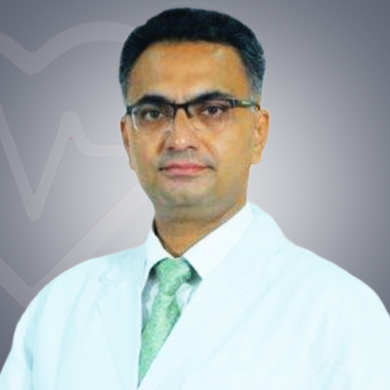
Dr. Puneet Mishra
Orthopaedic Surgeon
25 Years of Experience
Known among his patients for treating with compassion and personal care, Dr. Puneet Mishra is one of the best orthopedic surgeons in New Delhi. Dr. Puneet completed his MBBS from Maulana Azad Medical College in 1996 and from the same college he completed his MS (orthopedics) in 2000. With almost 25+ years of surgical experience under him, Dr. Pankaj takes pride in working with some of the finest medical institutions of the world such as University Hospital, Bern, Maulana Azad Medical College, New Delhi, Endoklinik, Germany, and Professor and Consultant orthopedician at Guru Teg Bahadur Hospital, New Delhi. View More
Last Reviewed - January 2026