Age-Related Macular Degeneration Treatment in India
- Top Accredited Hospitals
- Global Medical Standards
- Cutting-Edge Technology
- Proven Treatment Options
- High Success Rate
- Trusted by Millions

What is Age-related macular degeneration?
Age-related macular degeneration (AMD) is a degenerative eye condition in which the macula, which is the center region of the retina that provides sharp and detailed vision, is impacted. It is one of the main reasons why people over 50 lose their vision. Although AMD does not result in total blindness, it can majorly affect central vision, making it challenging to read, drive, and recognise faces.
There are generally two types of AMD
- Wet AMD
- Dry AMD
What is the importance of timely treatment?
Age-related macular degeneration (AMD) must be treated promptly to prevent visual loss and maintain central vision. Severe blindness can be avoided with early intervention with drugs, injections, or lifestyle modifications. A delayed course of treatment could result in irreversible visual impairment, making it challenging to perform daily tasks like reading and driving. Frequent eye exams guarantee early AMD detection and improved treatment.
What are the Common Symptoms of Age-related macular degeneration?
AMD frequently progresses slowly, and in its early stages, symptoms might not be apparent. But when the illness worsens, people could encounter:
- Center vision that is blurred (straight lines may appear curved or wavy).
- Impairment of eyesight resulting in difficulty reading or identifying faces.
- Scotomas are areas in the center of vision that are dark or empty.
- Diminished sensitivity to brightness and contrast.
- Better lighting is required for close-up work.
- Gradual recovery of vision following exposure to intense light.
- Having trouble adjusting to low light levels.
Causes and Risk Factors of Age-related macular degeneration
Causes
AMD is thought to be caused by a confluence of
- Lifestyle, environmental, and genetic factors, while the precise etiology is unknown.
- Degeneration of the light-sensitive cells in charge of central vision results from damage to the macula.
Risk Factors
Several variables raise the chance of having AMD, such as:
- Age: The most significant threat factor is age, with those over 50 more vulnerable.
- Genetics and Family History: The chance of getting AMD is increased if there is a family history of the disorder.
- Smoking: Smoking damages the retina, which significantly raises the risk.
- Obesity: Carrying too much weight can accelerate the development of AMD.
- Bad Diet: A diet deficient in vitamins, omega-3 fatty acids, and antioxidants may raise the risk.
- Hypertension, or elevated blood pressure: It can damage the blood vessels in the retina, increasing
Connect with our advisor for a PRIORITY response
Latest Research and Technologies in the Treatment of Age-related macular degeneration India
The treatment of Age-Related Macular Degeneration (AMD) in India has advanced recently thanks to long-acting anti-VEGF medications, which lessen the need for frequent injections. Long-term VEGF inhibition is being investigated using gene therapy. Recently SYFOVRE has been approved to reduce the progression of Geographic Atrophy (GA) in dry AMD.
Treatment options for Age-Related Macular Degeneration
Macular degeneration surgery: When all other therapies for severe cases of age-related macular degeneration (AMD) fail, macular degeneration surgery is the term used to describe the surgical methods utilised. In advanced wet AMD, operations such as vitrectomy can assist in removing blood or scar tissue, but the main treatments are anti-VEGF injections and laser therapies. An implantable tiny telescope (IMT) is sometimes used to help patients with end-stage dry AMD see better. Surgery can help maintain or improve remaining vision, but it is not a cure.
Cost Start From USD 1500 - USD 2500Explore Options
Following are the various diagnostic test
- OCT, or optical coherence tomography, offers fine-grained retinal imaging to identify eye abnormalities.
- Fundus fluorescein angiography (FFA) detects leakage and aberrant blood vessels in wet AMD.
- Deeper blood artery anomalies can be found with the aid of Indocyanine Green Angiography (ICG).
- The Amsler Grid Test is a straightforward at-home examination used to track eye-light changes.
- Visual Acuity and Dilated Eye Exam: Evaluates macular health and central vision loss.
Although there isn't a specific rehabilitation therapy for AMD, a nutrient-rich diet, lifestyle changes, and multivitamin supplements are essential for controlling the illness and delaying its progression.
- Depending on the situation, your healthcare professional may prescribe medicine to help control your symptoms and support the treatment plan. Multivitamins including zeaxanthin and lutein are generally prescribed.
Instantly Connect with our Specialists


Hospitals for Age-Related Macular Degeneration in India
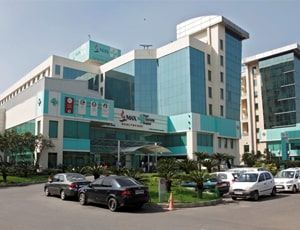
Max Super Speciality Hospital, Saket
Delhi, India
Max Smart Super Speciality Hospital, Saket, is a 250-bed tertiary care hospital awarded NABH accreditation, which provides advanced medical care in various specialities such as Cardiac Sciences, Orthopaedics, Neurology, Urology, Kidney Transplant, Paediatrics, and Obstetrics & Gynaecology. The hospital provides quality, safe, integrated, and patient-centric medical care using modular OTs, ICUs, Cath Labs, CT, MRI and Dialysis units.

Manipal Hospital, Hebbal
Bangalore, India
Manipal Hospitals, a group of Manipal Education Medical Group, is India’s leading multi-speciality network, comprising over 650 beds. Dedicated to clinical excellence, patient-centric care and ethical practices, it provides sophisticated diagnostics, surgery and home care services to both domestic and international patients, while also improving access to affordable healthcare for underprivileged communities.

The Madras Institute of Orthopedics and Traumatology
Chennai, India
MIOT started its journey with only 70 beds and focusing on Orthopedics and Trauma care. However, we grew into a multi-specialty hospital with time. MIOT is now a 1000-bedded hospital and can offer an extensive range of services across 63 specialties. The state of art laboratory of our hospital is ranked 8th internationally. We have 21 super-specialty operation theaters equipped with cutting-edge technology to help our doctors with complex procedures.
We take great care to make our patient rooms comfortable enough. The patient rooms get plenty of fresh air as well as natural light. The soothing views from the rooms do not let the patients feel cut off from the outside world. We use separate entrances for emergency patients, out-patients, in-patients, and their attendants. We put our patients’ safety first which is why we use a superior air system to ensure a near-zero infection healthy environment.
Apart from that, MIOT’s 24 hours blood bank provides all kinds of blood work related services which include blood collection to component separation. This state-of-art blood bank alone handles more than 30,000 units of blood over the course of a year. Every month around 600 blood transfusions are managed by this blood bank.
MIOT’s SIGNA Pioneer 3T MRI machine is made with noise reduction technology. This silent MRI machine can deliver superior quality neuroimages without wasting any time. The department of Radiology and Imaging Sciences can give tough competition to any international hospital with its advanced technology and accuracy.
The PET CT service at MIOT International is the first of its kind in South India enabling better and more accurate diagnosis than earlier. The superior diagnosis is also possible for the two digital cath labs at MIOT Heart Revive center.
We also have a physiotherapy team where a team of highly efficient physiotherapists deals with the mobility and functional disability issues of our patients. They listen to the patients carefully to identify the root of the pain and use therapeutic exercises to reduce their pain.
The CCU of MIOT is something to be proud of. The specially-trained staff of this unit is dedicated to ensuring top-quality medical support to serious patients. This unit along with the MIOT International Laboratory is the backbone of our facility.
Furthermore, what makes MIOT unique is our Telemedicine service. In the new normal, we are trying everything to reach our patients. Our one of its kind Telemedicine service connects our patients to our 250 full-time doctors over email, phone, chat and video consultations.
Our Services to better your experience
Opinion & Option
We submit the most accurate opinion and options from one or more countries for your review
Consult Privately
Consult with a certified specialist privately on our telemedicine platform even before you decide to travel
Logistics
We handle flights, visas, transfers, and accommodation—so you can focus on your health.
Recovery
Our In-house rehabilitation service packages to better your recovery and treatment outcome
Why Choose India for Age-Related Macular Degeneration?
India is one of the best places to cure age-related macular degeneration (AMD) because of its
- cutting-edge medical equipment, highly qualified ophthalmologists, and reasonably priced healthcare.
- Anti-VEGF injections, laser therapy, and low-vision rehabilitation are state-of-the-art treatments at prestigious eye facilities.
- Furthermore, telemedicine services and AI-based diagnostics increase accessibility, making India a top option for premium AMD treatment at a fraction of the price of other countries.
Frequently Asked Questions
Age-related macular degeneration (AMD) usually does not require surgery. Most cases, particularly wet AMD, are treated with photodynamic treatment, laser therapy, or anti-VEGF injections. Surgery, such as a vitrectomy or an implanted miniature telescope (IMT) implantation, is only considered in severe or advanced cases.
In India, the prevalence of age-related macular degeneration (AMD) is rising as the population ages. According to research studies, the prevalence of AMD in Indian adults over 50 ranges from 1.4% to 4.7%. The number of AMD patients is predicted to increase as life expectancy rises. Early detection and treatment are essential to manage vision loss.
Age-related macular degeneration (AMD) analysis is crucial for prompt management, early detection, and averting irreversible vision loss. The macula, the center region of the retina in charge of crisp vision, is impacted by AMD. It is divided into two categories: wet AMD (abnormal blood vessel growth resulting in leakage and scarring) and dry AMD (gradual retinal thinning). Analysis uses fluorescein angiography, optical coherence tomography (OCT), and retinal imaging to evaluate the course of the disease. Through lifestyle modifications, medicine, or therapy, early detection aids in symptom management, slowing the progression, and maintaining vision.
Untreated AMD can result in severe and irreversible central vision loss, which makes it challenging to perform daily tasks, including driving, reading, and recognising faces. Wet AMD can cause irreparable scarring and blindness because of fluid leaks, while dry AMD can lead to regional atrophy and widespread retinal cell death. The necessity for prompt medical attention is highlighted by the fact that untreated AMD raises the risk of falls, depression, and a lower quality of life.
Most hospitals in India offer the following:
- Assistance in obtaining visas.
- Airport Service to and from the hospitals.
- Multilingual experts and Best accommodations services.
- Personalised treatment plans for patients from abroad.
Before choosing a recognised eye institute, research the doctor's experience, patient testimonials, hospital amenities, and availability of cutting-edge AMD treatments to determine the best doctor and hospital in India for AMD treatment. You can also get support by speaking with a medical tourism facilitator at mediGence to select the best doctor and facility.
Many hospitals in India have the latest technology for diagnosing and treating age-related macular degeneration (AMD). For precise diagnosis, top eye hospitals and specialty centers employ fundus fluorescein angiography (FFA), indocyanine green angiography (ICG), and sophisticated optical coherence tomography (OCT). Significant cities and medical facilities offer a wide range of treatments, including vitrectomy,
Various research studies have reported that the disease's stage and type determine how well AMD is treated in India. The primary treatment for wet AMD, anti-VEGF injections, has demonstrated over 90% efficacy in slowing more vision loss and, in certain situations, a 30–40% improvement in vision. Laser treatments and photodynamic therapy (PDT) aid in slowing the progression. Although there is no known cure for dry AMD, lifestyle modifications and nutritional supplements (AREDS formula) can help slow the progression of the disease. Treatment results are greatly enhanced by early diagnosis.
Yes, there are highly qualified retinal experts and ophthalmologists in India who have treated AMD for a long time. Many specialise in retinal and macular disorders and have received training at prestigious international universities. Advanced AMD therapies are available at renowned institutes. Indian medical professionals are also actively involved in global clinical trials and research about the treatment of AMD.
The recovery period following surgery for AMD varies depending on the technique. Patients who receive anti-VEGF injections can return to their regular activities in as little as one day due to their short recovery period. While photodynamic treatment (PDT) takes one to two weeks and causes transient light sensitivity, laser photocoagulation may take a few weeks to heal. It takes weeks to months to recover from a vitrectomy, which is more intrusive. For the best results, regular check-ups and following physician instructions are essential.

Reviewer
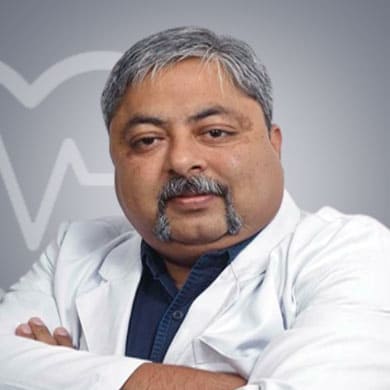
Dr. Vidit Tripathi
ENT Surgeon
24 Years of Experience
One of the finest ENT Surgeon in New Delhi, India, Dr. Vidit Tripathi, has worked with several world class multidisciplinary hospitals over the years. Dr. Vidit Tripathi has over 24+ years of experience in his field. The specialist treats and manages a wide range of conditions such as Goiter, Radiation Necrosis in Neck, Neck Injury, Perforates Eardrum View More
Last Reviewed - January 2026