Your Notifications
All done, no notifications

4 Specialists

Dr. Juhair Johar Mohammed Aljohar

Obstetrics & Gynaecologist

, Riyadh, Saudi Arabia

11 Years of experience

Speaks: Arabic , English


Dr. Juhair Johar Mohammed Aljohar is a specialized Gynecologist in Saudi Arabia. And one of the most sought after medical specialists in Riyadh, Saudi Arabia. The doctor has over of experience and is associated with Riyadh Care Hospital.

Qualifications :

  • MBBS, Saudi Board

Hospital Address :

Riyadh Care Hospital, Unayzah Street, Riyadh Saudi Arabia
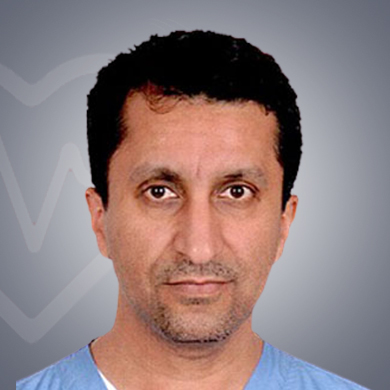
Dr. Abdulaziz Saleh Alobaid

Obstetrics & Gynaecologist

, Riyadh, Saudi Arabia

5 Years of experience

Speaks: English


Dr. Abdulaziz Saleh Alobaid is a specialized Gynecologist in Saudi Arabia. And one of the most sought after medical specialists in Riyadh, Saudi Arabia. The doctor has over 5 Years of experience and is associated with Riyadh Care Hospital.

Certifications :

  • Fellowship of the Royal College of Surgeons in Canada (FRCS-C)
  • Fellowship of the American College of Obstetricians and Gynecologists (FACOG)

Qualifications :

  • Bachelor of Medicine and Surgery at from King Saud University
  • Masters in Health Administration from University of Minesota

Hospital Address :

Riyadh Care Hospital, Unayzah Street, Riyadh Saudi Arabia

What is the medical expertise of Dr Abdulaziz Saleh Alobaid?

  • Dr Abdulaziz Saleh Alobaid is a renowned gynaecologist.
  • He is a member of the American and Canadian Boards in Obstetrics and Gynecology. Additionally, he also obtained a Canadian fellowship in Gynecologic Oncology.
  • Dr Alobaid has established himself as one of the pioneers of the field. He has published research papers in several renowned journals. Some of his works include:
    1. AlDakhil L, Aljuhaimi A, AlKhattabi M, Alobaid S, Mattar RE, Alobaid A. Ovarian neoplasia in adolescence: a retrospective chart review of girls with neoplastic ovarian tumours in Saudi Arabia. J Ovarian Res. 2022 Sep 16;15(1):105.
    2. Akbar SA, Tunio MA, AlShakweer W, Alobaid A, AlAsiri M. Inguinal lymph node presenting as the delayed site of metastasis in early-stage endometrial carcinoma: A case report. Int J Surg Case Rep. 2017;32:12-15.
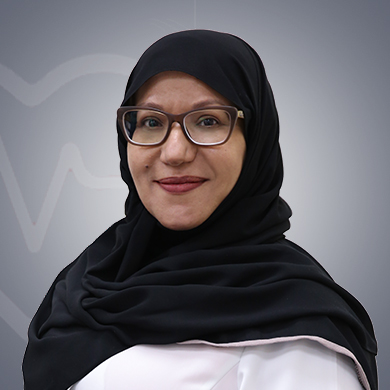
Dr. Manal Saleh Alhoshan Alomar

Obstetrics & Gynaecologist

, Riyadh, Saudi Arabia

22 Years of experience

Speaks: Arabic , English


Dr. Manal Saleh Alhoshan Alomar is a specialized Gynecologist in Saudi Arabia. And one of the most sought after medical specialists in Riyadh, Saudi Arabia. The doctor has over of experience and is associated with Riyadh Care Hospital.

Association and Memberships Dr. Manal Saleh Alhoshan Alomar is part of:

  • FRCS

Qualifications :

  • M.B.B.S, MD

Hospital Address :

Riyadh Care Hospital, Unayzah Street, Riyadh Saudi Arabia

Do you know?

Using MediGence’s Telemedicine Platform, you can book a personalized video consultation with renowned doctors around the world

Explore Telemedicine Platform

Featured Telemedicine Doctors

Dr. Karima Abubakr Mandour

Endocrinologist

, Riyadh, Saudi Arabia

18 Years of experience

Speaks: Arabic ,English


Dr. Karima Abubakr Mandour is a specialized Reproductive Endocrinologist in Saudi Arabia. And one of the most sought after medical specialists in Riyadh, Saudi Arabia. The doctor has over 18 Years of experience and is associated with NMC Specialty Hospital Al Salam.

Association and Memberships Dr. Karima Abubakr Mandour is part of:

  • Member Saudi Board in Obstetrics and Gynecology
  • Member Arab Board in Obstetric and Gynecology

Qualifications :

  • Maternity and Children Hospital, Saudi Arabia
  • Diploma in Gynecological Endoscopy from Kiel School Sharjah University ,UAE

Hospital Address :

NMC Speciality Hospital Al Salam, Riyadh Saudi Arabia

Frequently Asked Questions
Who are the top Fertility Specialists from other cities?

Listed below are some of the top Fertility Specialists in other cities:

Who is a Fertility Specialist?

A fertility specialist is a doctor who specializes in diagnosing and treating fertility problems, to help people who are unsuccessfully trying to have a baby. Fertility doctors treat conditions related to both male and female infertility.

A fertility doctor is also a reproductive endocrinologist who practices obstetrics and gynecology called reproductive endocrinology & infertility (REI). It is a field of medicine that studies hormonal functioning as it is related to reproduction and infertility in both men and women. An infertility workup also includes an endometrial biopsy to determine whether imbalanced hormone levels are affecting the endometrium.

Once a fertility specialist has received as much information as he or she could from the infertility workup, they will recommend suitable fertility treatment options. Common fertility-related conditions treated by fertility specialists include ovulation problems, hormonal disorders, polycystic ovarian syndrome (PCOS), weight or age-related infertility, endometriosis, fibroids, blocked fallopian tubes, azoospermia, abnormal sperm production, fertility-related to certain genetic conditions.

What are the qualifications of a Fertility Specialist?

A student willing to become a fertility specialist needs to clear a medical entrance test to pursue a five-and-half-a-year MBBS course. This includes both academic education as well as on-field training. After this, they need to earn a Doctor of Medicine (MD) degree. The MD course will be for 3 years. Earning an MD degree is a prerequisite for more specialized knowledge in reproductive medicine. Typically, a fertility doctor follows the educational path of a GYN/OB before getting specialized education.

Steps to become a fertility specialist:

  • Earn a Bachelor's degree (MBBS) followed by a Master’s Degree (MD).
  • Take part in a residency program: After passing out from a medical school, future fertility specialists should take part in a residency program to boost their knowledge and skills to provide the best possible treatment for patients.
  • Obtain a Fellowship: The final step in the education of fertility specialists is to get a fellowship in reproductive endocrinology. Fellowships allow future fertility specialists to achieve valuable experience, seeing many patients with different health conditions - from basic endocrinology to male infertility to a large number of reproductive disorders.
What conditions does a Fertility Specialist treat?

A fertility specialist specializes in the treatment of fertility issues. But there may be other conditions related to the male and female reproductive system that can be treated by a fertility doctor.

Some common conditions treated by a fertility expert are listed below:

  • Problems with ovulation
  • Ovulation problems
  • Hormonal disorders
  • Weight or age-related infertility
  • Polycystic ovarian syndrome
  • Endometriosis
  • Fibroids
  • Blocked fallopian tubes
  • Abnormal sperm production
  • Azoospermia
  • Infertility related to genetic conditions
  • Abnormalities of the ovaries, fallopian tubes or uterus
  • Endometriosis
  • Polycystic ovarian syndrome (PCOS)
  • Multiple miscarriages
What diagnostic tests are required by a Fertility Specialist?

Before infertility testing, a fertility specialist works to understand your overall sexual habits in order to make recommendations to increase your chances of getting pregnant. An evaluation for infertility must be done in a focused way to determine all relevant factors and should include the female as well as male partners. The least invasive methods that help detect the most common causes of infertility must be done first.

The following tests may be recommended as part of your infertility evaluation:

  • Semen analysis
  • Hormone testing
  • Testicular biopsy
  • Hysterosalpingography
  • Ovarian reserve testing
  • Hysteroscopy
  • Laparoscopy
  • Transvaginal Ultrasonography
  • Sonohysterography
  • Hysteroscopy
  • Sonohysterogram
  • Ultrasound
  • Hormone blood test
When should you visit a Fertility Specialist?

Fertility specialists are technically gynecologists or urologists who have had additional training in dealing with issues related to the reproductive organs. There are various reasons your doctor might refer you to a fertility specialist, some of which are given below:

  • Difficulty conceiving for more than six months if you are of age 35 or older, or for more than a year if you are younger.
  • Having two or more miscarriages.
  • Just beginning to try to conceive with known symptoms or risk factors of infertility, such as genetic conditions, irregular cycles, or any prior sexually transmitted diseases (even though already treated).
  • Women or men who are interested in permanent birth control options, like or vasectomy tubal ligation.
  • Men or women with a cancer diagnosis who require guidance on ways to preserve fertility before undergoing treatments, or those willing to conceive after treatments.
  • Your partner has trouble achieving an erection.
  • Absence of period, heavy bleeding, and irregular periods
  • Either you or your partner has a history of sexually transmitted diseases.
  • You may also want to see a fertility specialist if you have had cancer (like chemotherapy treatment) or if your mother experienced early menopause.
What can you expect from your first visit with a Fertility Specialist?

Much of the first appointment with a fertility specialist will focus on the review of your overall medical history and discussion about the possibility of male-factor issues. The fertility specialist may ask you to have blood tests done or go for a pelvic exam, and might also prescribe tests for the male or female partner. If these tests are already been done, the doctor will review, and then discuss the results with you.

Make sure that you write down all questions that come to your mind beforehand and share them with your doctor because this is the opportunity to understand what might happen next and what decisions you need to make to get desired results. Always feel free to clear your doubts with your medical team. It is their core responsibility to educate you and also respond to your concerns.

When you visit for the first time, the fertility doctor would want to determine whether there are any medical issues in your or your partner’s history that may lead to an underlying medical condition that is resulting in infertility that might need further evaluation. The next steps can involve the evaluation of the ovaries, the Fallopian tubes, and the sperm count.

Which are the most common procedures performed by a Fertility Specialist?
  • Tubal Surgery
  • Endometriosis
  • In vitro fertilization
  • Uterine surgery
  • Open Abdominal Procedures
  • Ovarian drilling
  • Hysteroscopy
  • Laparoscopy and Robotic Laparoscopy
  • Laparotomy
  • Egg Retrieval
  • Varicocelectomy
  • Vasectomy Reversal (Vasovasostomy or Vasoepididymostomy)
  • Sperm Retrieval (epididymal aspiration)
  • Intracytoplasmic sperm injection
  • Gamete intrafallopian transfer
  • Zygote intrafallopian transfer

FAQs related to Saudi Arabia