Browse verified doctors or let our care team help you find the doctor best suited to your condition, treatment goals, and budget.

At Centro Medico Teknon, Minimally Invasive Knee Replacement Surgery is performed using advanced minimally invasive orthopedic techniques and personalised treatment plans based on the patient's knee condition. Established in 1994, this JCI hospital in Barcelona, Spain has 211 beds and provides comprehensive orthopedic services.
Minimally Invasive Knee Replacement Surgery may be recommended for patients experiencing severe knee pain, stiffness, deformity, or difficulty walking because of advanced joint damage. Depending on the extent of disease, the procedure may involve partial or total knee replacement through a less extensive surgical approach. Preoperative assessment and imaging help determine the appropriate surgical technique and implant. After surgery, early mobilisation and physiotherapy support recovery, improve knee movement, and help patients gradually resume daily activities.
Hospital Quironsalud Barcelona is a trusted healthcare provider for Minimally Invasive Knee Replacement Surgery, offering advanced knee replacement procedures supported by experienced orthopedic surgeons and modern medical infrastructure. Established in 1944, the JCI, ISO hospital is situated in Barcelona, Spain and has 165 beds.
Minimally Invasive Knee Replacement Surgery is a surgical approach designed to replace damaged portions of the knee joint while limiting disruption to surrounding tissues where appropriate. It may be considered for selected patients with severe osteoarthritis, inflammatory arthritis, or other conditions causing significant joint damage. Depending on the patient's condition, surgeons may perform partial or total knee replacement. Detailed evaluation and imaging are performed before surgery, followed by rehabilitation to improve strength, flexibility, and functional mobility.
Hospital Ruber International offers advanced Minimally Invasive Knee Replacement Surgery using modern orthopedic surgical techniques and internationally accepted treatment protocols. Established in 1982, the ISO hospital is located in Madrid, Spain and has 345 beds, providing comprehensive orthopedic care for local and international patients.
Minimally Invasive Knee Replacement Surgery may be considered for patients with severe knee arthritis, joint damage, persistent pain, or reduced mobility when medicines, physiotherapy, injections, and other non-surgical treatments no longer provide sufficient relief. The technique uses smaller incisions and aims to minimise disruption to surrounding soft tissues while replacing damaged joint surfaces. Before surgery, doctors evaluate the knee through physical examination and imaging. Postoperative physiotherapy and rehabilitation help restore movement, strength, and mobility.
Jimenez Diaz Foundation University Hospital provides specialised Minimally Invasive Knee Replacement Surgery with a focus on precise implant placement, tissue preservation, patient safety, and functional recovery. Established in 1935, the ISO, JCI hospital is located in Madrid, Spain and operates 686 beds with modern orthopedic infrastructure.
Minimally Invasive Knee Replacement Surgery is an option for appropriately selected patients with advanced knee joint damage that causes persistent pain, stiffness, or reduced mobility. Depending on the condition, surgeons may perform a minimally invasive partial or total knee replacement to restore joint function. A comprehensive preoperative assessment helps determine whether the approach is suitable for the patient. Following surgery, early mobilisation, physiotherapy, pain management, and structured rehabilitation support recovery and a gradual return to normal activities.
Quironsalud Marbella Hospital is a trusted healthcare provider for Minimally Invasive Knee Replacement Surgery, offering advanced knee replacement procedures supported by experienced orthopedic surgeons and modern medical infrastructure. Established in 1979, the ISO hospital is situated in Marbella, Spain and has 120 beds.
Minimally Invasive Knee Replacement Surgery is a surgical approach designed to replace damaged portions of the knee joint while limiting disruption to surrounding tissues where appropriate. It may be considered for selected patients with severe osteoarthritis, inflammatory arthritis, or other conditions causing significant joint damage. Depending on the patient's condition, surgeons may perform partial or total knee replacement. Detailed evaluation and imaging are performed before surgery, followed by rehabilitation to improve strength, flexibility, and functional mobility.
Choosing Traumatologia XXI for Minimally Invasive Knee Replacement Surgery gives patients access to experienced orthopedic specialists, advanced surgical technology, and comprehensive rehabilitation services. Established in 0, the hospital in Bilbao, Spain it has adequate bed capacity and provides specialised orthopedic care.
Minimally Invasive Knee Replacement Surgery may be considered when chronic knee pain and stiffness significantly interfere with walking and daily activities despite conservative treatment. The procedure uses a smaller surgical access and specialised techniques to replace damaged joint surfaces while preserving healthy tissues where possible. Doctors generally perform physical examination, X-rays, and other imaging before surgery to assess joint damage and plan treatment. Physiotherapy following surgery helps restore knee movement, muscle strength, and mobility.
Quironsalud Torrevieja Hospital offers advanced Minimally Invasive Knee Replacement Surgery using modern orthopedic surgical techniques and internationally accepted treatment protocols. Established in 2006, the ISO hospital is located in Torrevieja, Spain and has 119 beds, providing comprehensive orthopedic care for local and international patients.
Minimally Invasive Knee Replacement Surgery may be considered for patients with severe knee arthritis, joint damage, persistent pain, or reduced mobility when medicines, physiotherapy, injections, and other non-surgical treatments no longer provide sufficient relief. The technique uses smaller incisions and aims to minimise disruption to surrounding soft tissues while replacing damaged joint surfaces. Before surgery, doctors evaluate the knee through physical examination and imaging. Postoperative physiotherapy and rehabilitation help restore movement, strength, and mobility.
Choosing University Hospital Quironsalud Madrid for Minimally Invasive Knee Replacement Surgery gives patients access to experienced orthopedic specialists, advanced surgical technology, and comprehensive rehabilitation services. Established in 2006, the ISO, JCI hospital in Madrid, Spain has 575 beds and provides specialised orthopedic care.
Minimally Invasive Knee Replacement Surgery may be considered when chronic knee pain and stiffness significantly interfere with walking and daily activities despite conservative treatment. The procedure uses a smaller surgical access and specialised techniques to replace damaged joint surfaces while preserving healthy tissues where possible. Doctors generally perform physical examination, X-rays, and other imaging before surgery to assess joint damage and plan treatment. Physiotherapy following surgery helps restore knee movement, muscle strength, and mobility.
Sagrat Cor University Hospital provides specialised Minimally Invasive Knee Replacement Surgery with a focus on precise implant placement, tissue preservation, patient safety, and functional recovery. Established in 1970, the hospital is located in Barcelona, Spain and operates 323 beds with modern orthopedic infrastructure.
Minimally Invasive Knee Replacement Surgery is an option for appropriately selected patients with advanced knee joint damage that causes persistent pain, stiffness, or reduced mobility. Depending on the condition, surgeons may perform a minimally invasive partial or total knee replacement to restore joint function. A comprehensive preoperative assessment helps determine whether the approach is suitable for the patient. Following surgery, early mobilisation, physiotherapy, pain management, and structured rehabilitation support recovery and a gradual return to normal activities.
Catalunya General University Hospital offers advanced Minimally Invasive Knee Replacement Surgery using modern orthopedic surgical techniques and internationally accepted treatment protocols. Established in 1984, the ISO hospital is located in Barcelona, Spain and has 300 beds, providing comprehensive orthopedic care for local and international patients.
Minimally Invasive Knee Replacement Surgery may be considered for patients with severe knee arthritis, joint damage, persistent pain, or reduced mobility when medicines, physiotherapy, injections, and other non-surgical treatments no longer provide sufficient relief. The technique uses smaller incisions and aims to minimise disruption to surrounding soft tissues while replacing damaged joint surfaces. Before surgery, doctors evaluate the knee through physical examination and imaging. Postoperative physiotherapy and rehabilitation help restore movement, strength, and mobility.

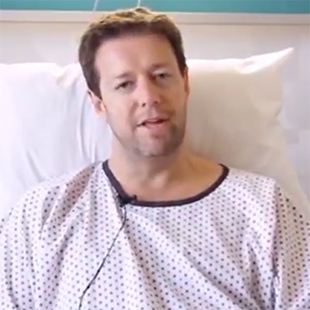
Kevin Stewart from Scotland could barely walk straight due to a Slip Disc. He faced many discomforts for the past 2 years and eventually had…

Mr. Muhammed Dumia was suffering from painful left Knee and was in considerable pain for the last 2 months. He eventually underwent Knee Replacement Surgery…