Browse verified doctors or let our care team help you find the doctor best suited to your condition, treatment goals, and budget.

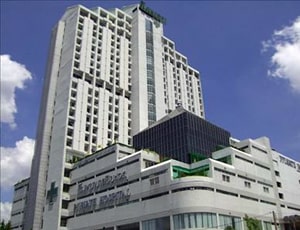
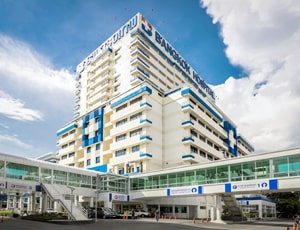
Bangkok Hospital offers advanced Papillary Thyroid Cancer Treatment using modern oncology techniques and internationally accepted treatment protocols. Established in 1972, the JCI hospital is located in Bangkok, Thailand and has 580 beds, providing comprehensive cancer care for local and international patients.
Papillary Thyroid Cancer Treatment depends on factors such as tumor size, location, lymph node involvement, and the overall health of the patient. Treatment may include surgery to remove part or all of the thyroid, with radioactive iodine therapy considered for selected patients. Thyroid hormone therapy and regular monitoring may also be recommended. Before treatment, doctors generally perform thyroid imaging, biopsy, and other assessments to determine the extent of disease and develop an individualized treatment plan.
Vejthani Hospital is a trusted healthcare provider for Papillary Thyroid Cancer Treatment, offering multidisciplinary thyroid cancer care supported by experienced specialists and modern medical infrastructure. Established in 1994, the JCI hospital is situated in Bangkok, Thailand and has 263 beds.
Papillary Thyroid Cancer is the most common type of thyroid cancer and generally develops from thyroid follicular cells. Treatment is selected according to factors such as tumor size, spread, lymph node involvement, and recurrence risk. Depending on the patient's condition, treatment may include surgery, radioactive iodine therapy, thyroid hormone therapy, targeted therapy, or active surveillance for selected low-risk tumors. Comprehensive evaluation and regular follow-up help monitor treatment response and thyroid health.
Bangpakok 9 International Hospital provides specialised Papillary Thyroid Cancer Treatment with a focus on accurate diagnosis, individualised treatment, and long-term cancer management. Established in 2003, the JCI, GHA hospital is located in Bangkok, Thailand and operates 300 beds with modern oncology infrastructure.
Papillary Thyroid Cancer Treatment aims to effectively control the cancer while preserving thyroid-related health and minimising unnecessary treatment. Depending on the patient's risk profile, management may involve thyroid surgery, radioactive iodine therapy, thyroid hormone replacement, or active surveillance. In advanced or recurrent cases, additional systemic treatments may be considered. Doctors typically use imaging, biopsy, blood tests, and pathology findings to guide treatment decisions, and then conduct regular monitoring for recurrence and thyroid function.
Phyathai 2 International Hospital offers advanced Papillary Thyroid Cancer Treatment using modern oncology techniques and internationally accepted treatment protocols. Established in 1987, the JCI hospital is located in Bangkok, Thailand and has 550 beds, providing comprehensive cancer care for local and international patients.
Papillary Thyroid Cancer Treatment depends on factors such as tumor size, location, lymph node involvement, and the overall health of the patient. Treatment may include surgery to remove part or all of the thyroid, with radioactive iodine therapy considered for selected patients. Thyroid hormone therapy and regular monitoring may also be recommended. Before treatment, doctors generally perform thyroid imaging, biopsy, and other assessments to determine the extent of disease and develop an individualized treatment plan.
Krabi Nakharin International Hospital is a trusted healthcare provider for Papillary Thyroid Cancer Treatment, offering multidisciplinary thyroid cancer care supported by experienced specialists and modern medical infrastructure. Established in 1997, the JCI hospital is situated in Krabi, Thailand and has 150 beds.
Papillary Thyroid Cancer is the most common type of thyroid cancer and generally develops from thyroid follicular cells. Treatment is selected according to factors such as tumor size, spread, lymph node involvement, and recurrence risk. Depending on the patient's condition, treatment may include surgery, radioactive iodine therapy, thyroid hormone therapy, targeted therapy, or active surveillance for selected low-risk tumors. Comprehensive evaluation and regular follow-up help monitor treatment response and thyroid health.
Yanhee International Hospital offers advanced Papillary Thyroid Cancer Treatment using modern oncology techniques and internationally accepted treatment protocols. Established in 1984, the ISO, JCI hospital is located in Bangkok, Thailand and has 400 beds, providing comprehensive cancer care for local and international patients.
Papillary Thyroid Cancer Treatment depends on factors such as tumor size, location, lymph node involvement, and the overall health of the patient. Treatment may include surgery to remove part or all of the thyroid, with radioactive iodine therapy considered for selected patients. Thyroid hormone therapy and regular monitoring may also be recommended. Before treatment, doctors generally perform thyroid imaging, biopsy, and other assessments to determine the extent of disease and develop an individualized treatment plan.
Sikarin Hospital provides specialised Papillary Thyroid Cancer Treatment with a focus on accurate diagnosis, individualised treatment, and long-term cancer management. Established in 1979, the JCI hospital is located in Bangkok, Thailand and operates 354 beds with modern oncology infrastructure.
Papillary Thyroid Cancer Treatment aims to effectively control the cancer while preserving thyroid-related health and minimising unnecessary treatment. Depending on the patient's risk profile, management may involve thyroid surgery, radioactive iodine therapy, thyroid hormone replacement, or active surveillance. In advanced or recurrent cases, additional systemic treatments may be considered. Doctors typically use imaging, biopsy, blood tests, and pathology findings to guide treatment decisions, and then conduct regular monitoring for recurrence and thyroid function.
Kasemrad Ramkhamhaeng Hospital is a trusted healthcare provider for Papillary Thyroid Cancer Treatment, offering multidisciplinary thyroid cancer care supported by experienced specialists and modern medical infrastructure. Established in 1992, the JCI hospital is situated in Bangkok, Thailand and has 120 beds.
Papillary Thyroid Cancer is the most common type of thyroid cancer and generally develops from thyroid follicular cells. Treatment is selected according to factors such as tumor size, spread, lymph node involvement, and recurrence risk. Depending on the patient's condition, treatment may include surgery, radioactive iodine therapy, thyroid hormone therapy, targeted therapy, or active surveillance for selected low-risk tumors. Comprehensive evaluation and regular follow-up help monitor treatment response and thyroid health.
Piyavate Hospital provides specialised Papillary Thyroid Cancer Treatment with a focus on accurate diagnosis, individualised treatment, and long-term cancer management. Established in 1993, the JCI, ISO hospital is located in Bangkok, Thailand and operates 150 beds with modern oncology infrastructure.
Papillary Thyroid Cancer Treatment aims to effectively control the cancer while preserving thyroid-related health and minimising unnecessary treatment. Depending on the patient's risk profile, management may involve thyroid surgery, radioactive iodine therapy, thyroid hormone replacement, or active surveillance. In advanced or recurrent cases, additional systemic treatments may be considered. Doctors typically use imaging, biopsy, blood tests, and pathology findings to guide treatment decisions, and then conduct regular monitoring for recurrence and thyroid function.
MALI Interdisciplinary Hospital provides specialised Papillary Thyroid Cancer Treatment with a focus on accurate diagnosis, individualised treatment, and long-term cancer management. Established in 2021, the NABH, JCI, CBAHI, AACI hospital is located in Bangkok, Thailand and operates 100 beds with modern oncology infrastructure.
Papillary Thyroid Cancer Treatment aims to effectively control the cancer while preserving thyroid-related health and minimising unnecessary treatment. Depending on the patient's risk profile, management may involve thyroid surgery, radioactive iodine therapy, thyroid hormone replacement, or active surveillance. In advanced or recurrent cases, additional systemic treatments may be considered. Doctors typically use imaging, biopsy, blood tests, and pathology findings to guide treatment decisions, and then conduct regular monitoring for recurrence and thyroid function.

Monica from Ghana suffered from AV malformation. She decided to look for options for medical treatment when she started experiencing episodes of unconsciousness. After a…

Nasrin (Sister of the patient ) explains the journey of how MediGence helped for the treatment of Silim Shabani for Ovarian Cancer Treatment in Turkey.