Browse verified doctors or let our care team help you find the doctor best suited to your condition, treatment goals, and budget.

With proper technology, Centro Medico Teknon can perform Abdominoperineal Resection (APR) surgeries for patients whose cancer is localised in the rectal or anal area. Centro Medico Teknon has been established in 1994 and is situated in Barcelona, Spain with 211 beds available.
The procedure involves removing the rectum and anus and creating a permanent colostomy. It may be recommended when preserving the anal sphincter is not medically appropriate. Before treatment, the colorectal team performs detailed imaging and clinical assessments to plan surgery. Patients receive personalised post-operative care, including colostomy education and follow-up.
The state-of-the-art Abdominoperineal Resection (APR) procedure is available at Hospital Quironsalud Barcelona, a well-known hospital that employs modern colorectal surgical techniques and internationally recognised treatment protocols. The hospital was established in 1944 and holds accreditation from JCI, ISO. Located in Barcelona, Spain, it has 165 beds and welcomes both local and international patients.
Abdominoperineal Resection is an important procedure done to treat some types of rectal and anal cancer. The surgery is a choice for those cases when the tumor is situated too close to the anal sphincter. The procedure involves removal of not just the rectum but also the anus along with other parts of the body. The surgeons prepare for the operation by evaluating the tumor and the patient's state of health in advance.
Hospital Ruber International is equipped with advanced technology for Abdominoperineal Resection (APR) as part of its extensive practice of colorectal surgery. The hospital was founded in 1982, has received ISO accreditation, and is located in Madrid, Spain, with 345 beds.
Abdominoperineal Resection is performed in patients with certain types of low rectal and anal cancer for whom the preservation of the anatomical structure of the anal sphincter is not possible. It involves the surgical removal of the rectum and anus, thereby paving the way for a permanent colostomy. The patient's condition must be assessed by various specialists before treatment, including the provision of post-operative help with recovery and nutrition.
Jimenez Diaz Foundation University Hospital is equipped with advanced technology for Abdominoperineal Resection (APR) as part of its extensive practice of colorectal surgery. The hospital was founded in 1935, has received ISO, JCI accreditation, and is located in Madrid, Spain, with 686 beds.
Abdominoperineal Resection is performed in patients with certain types of low rectal and anal cancer for whom the preservation of the anatomical structure of the anal sphincter is not possible. It involves the surgical removal of the rectum and anus, thereby paving the way for a permanent colostomy. The patient's condition must be assessed by various specialists before treatment, including the provision of post-operative help with recovery and nutrition.
With proper technology, Quironsalud Torrevieja Hospital can perform Abdominoperineal Resection (APR) surgeries for patients whose cancer is localised in the rectal or anal area. Quironsalud Torrevieja Hospital has been established in 2006 and is situated in Torrevieja, Spain with 119 beds available.
The procedure involves removing the rectum and anus and creating a permanent colostomy. It may be recommended when preserving the anal sphincter is not medically appropriate. Before treatment, the colorectal team performs detailed imaging and clinical assessments to plan surgery. Patients receive personalised post-operative care, including colostomy education and follow-up.
University Hospital Quironsalud Madrid is equipped with advanced technology for Abdominoperineal Resection (APR) as part of its extensive practice of colorectal surgery. The hospital was founded in 2006, has received ISO, JCI accreditation, and is located in Madrid, Spain, with 575 beds.
Abdominoperineal Resection is performed in patients with certain types of low rectal and anal cancer for whom the preservation of the anatomical structure of the anal sphincter is not possible. It involves the surgical removal of the rectum and anus, thereby paving the way for a permanent colostomy. The patient's condition must be assessed by various specialists before treatment, including the provision of post-operative help with recovery and nutrition.
The Abdominoperineal Resection (APR) service at Dexeus University Hospital provides state-of-the-art technology alongside experienced colorectal surgical teams. Dexeus University Hospital started its operation in 1973 and has a 200bed capacity while keeping its accreditation to JCI. In Barcelona, Spain, Dexeus University Hospital works with patients from around the world.
APR is performed mainly for selected rectal or anal cancers when the tumour cannot be safely removed while preserving the anal sphincter. The procedure removes the affected rectum and anus and creates a permanent colostomy for bowel elimination. Pre-operative imaging and assessment help the surgical team plan treatment, while post-operative care includes wound management, nutrition, and colostomy support.
Sagrat Cor University Hospital offers high-level Abdominoperineal Resection (APR) surgeries based on the most current approaches in colorectal surgery and best clinical practices. Sagrat Cor University Hospital, with established in 1970 and accredited under , is situated in Barcelona, Spain, with a capacity for 323 patients.
Abdominoperineal Resection is a sophisticated form of surgery for the removal of cancer localized in the rectum or anus. Surgery usually requires the removal of both the anus and rectum and subsequent permanent colostomy. Before the operation, a consultant checks the location and size of the tumor and overall health of the patient. After the surgery, patients go through monitoring, nutritional support, and wound care as needed, along with counselling sessions regarding colostomy.

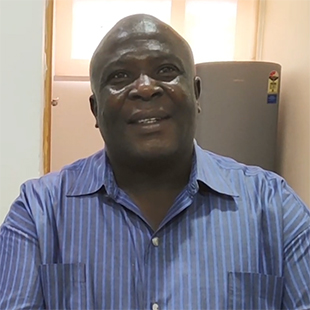
Mrs Sumi Dinatu Adamu, a 47-year-old patient from Nigeria met with an accident and experienced eye injury and drooping eyelid. The patient was rushed to…
| Speciality | Oncology |
| Procedure | Abdominoperineal Resection |
| Success Rate | Varies as per stage, grade, type and location of cancer |
| Recovery Time | 4-6 weeks |
| Treatment Time | 3-5 hours |
| Chances of Recurrence | Varies as per stage, grade, type and location of cancer |
It's a fact that while ranking a hospital, certain factors need to be considered. The following factors are used to rank hospitals in Spain that perform Abdominoperineal Resections- Infrastructure, Procedure Availability, Popularity of procedure, Technology, Cost-effectiveness, Skilled medical personnel, Patient-care facilities, and Rate of Success
MediGence provides you with a combination of cost-savings, convenience, and quality healthcare. We make sure that your healthcare journey should be easy and hassle-free while receiving treatment overseas. Some of the top caregiving services available include Hotel stays, Dedicated Case Coordinator, Recovery packages, Online Consultation, round-the-clock assistance, and customized packages with discounts of up to a 30%. Furthermore, we have alot more other benefits for you to recieve top-notch medical care.
Yes, it's simple to do that. When one of our patient advisors contacts you about your inquiry, you can demand an online consultation with the specialist. They will check the doctor's availability, send the payment link to you, and finalize your appointment.
Due to the high success rate and top-notch hospital infrastructure, Abdominoperineal Resection in Spain is considered reliable by many people around the world. Other factors that contribute to Spain being the best choice for Abdominoperineal Resection include:
Recovery times for various procedures vary depending on the patient's health and the complexity of the treatment. Additionally, post-treatment rehabilitation is crucial for accelerating recovery and cutting down on recovery time. It is recommended that the patient maintain regular contact with their surgeon for a few months after surgery to speed up recovery.