5 Hospitals

- Accreditation

Please Enquire

Wockhardt Hospital is well-equipped for cutting-edge stroke care. The hospital has minimally invasive and robotic treatment options. Diagnostic techniques in the neuro department at the hospital include 64 slices of Spiral CT, CT angiogram, MRI, MR angiography, MR spectroscopy, Functional MRI, SPECT and nuclear scanning, PET scan, Digital subtraction angiography, Myelography, Carotid and intra cranial Doppler, Nerve conduction studies, Needle and surface Electromyography, Single fiber EMG, Tilt table test, PCR Study, Chromosomal analysis with the genetic institute, etc. The hospital provides holistic treatment for stroke along with rehabilitation facilities.
The hospital has a ‘code white’ in which within a minute, a team comprising a neurologist, a neuro-intensivist, and a radiologist reach by the patient’s size and ensures the best possible treatment for stroke. Endoscopic spine surgery is an appealing option for patients because it allows for faster recovery, less post-operative pain, smaller incisions, and less soft tissue damage. Dr. Ashwin Borkar is a famous neuro specialist associated with Wockhardt Hospital.
- Accreditation

- Times of India Award: Felicitated for "Excellence in Healthcare" in 2024.
- 12th International Patient Safety Conference: Recognised for its "Live-tracking of Nursing Practice & Outcome Indicators" project.
- BMJ Awards India 2014: Medical Team of the Year.
- Asian Hospital Management Awards 2014: Patient Safety & HRD category.
- Asian Patient Safety Award 2014: Innovation in Staff Education.
- Healthcare Leadership Awards 2014: Best Patient Safety Award.
- National Energy Conservation Award 2012: Awarded by the President of India.
- Indian Healthcare Awards 2011: Best Orthopaedic Hospital Award.
- Accreditation


Neurogen Hospital has received global recognition for its excellent results in brain stroke treatment in India. This has been achieved through the combination of revolutionary regenerative medicine, medical intervention, and holistic comprehensive neurorehabilitation. NeuroGen's success lies in its ability to combine the newest developments (stem cells) with conventional rehabilitation techniques.
- Accreditation


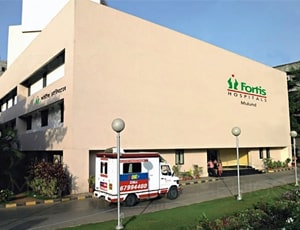
Stroke is treated in the emergency department at Fortis Hiranandani Hospital. Physical examination (speech, eye movements, muscle strength, and coordination, listening to your heart), blood tests, CT scans and MRI (3T MRI), Cerebral angiogram or DSA, Echocardiogram, and other tests may be performed to help confirm the diagnosis and determine the type of stroke. The type of stroke that patients have determines their treatment. The stroke specialists at Fortis Hospital provide the best treatment for various types of strokes.
Treatments for ischemic stroke include Emergency IV medication (IV tPA), Emergency endovascular procedures, Carotid endarterectomy, and Angioplasty and stents. The primary goal of treatment for hemorrhagic strokes (brain bleeding) is to control the bleeding and reduce brain pressure. Blood pressure control, surgery, surgical clipping or endovascular coiling, and AVM removal are all possible treatments. Following treatment, the patient will be closely monitored by a team of world-class rehabilitation specialists and physiotherapists to aid in recovery. Dr. Amit Vatkar and Dr. Neeraj Jain are neuro specialists at Fortis Hiranandani Hospital.
- Accreditation
Ask your healthcare adviser for the best multiple options and choose the one that meets your expectations
Request for an Expert Opinion

Outcomes of Stroke Treatment
| Speciality | Neurology |
| Procedure | Stroke Treatment |
| Success Rate | Varies by condition |
| Recovery Time | Varies by condition |
| Treatment Time | Varies by condition |
| Chances of Recurrence | Varies by condition |
What is a Stroke Treatment and how does it work?
Stroke treatment involves a combination of various interventions to minimize damage to the brain. The treatment approach depends on the type of stroke, whether it is ischemic (caused by a blood clot) or hemorrhagic (caused by bleeding in the brain). Ischemic stroke treatment may involve medications to dissolve or remove the clot, while hemorrhagic stroke treatment focuses on stopping bleeding and relieving pressure on the brain.
What medical conditions can be treated through Stroke Treatment?
Stroke treatment can address a range of medical conditions, including ischemic stroke, hemorrhagic stroke, transient ischemic attacks (TIAs), and certain underlying risk factors that contribute to stroke, such as high blood pressure, atrial fibrillation, and carotid artery disease. The goal is to prevent further damage to the brain, restore blood flow, and manage risk factors to reduce the likelihood of future strokes.
What is the recovery process after a Stroke Treatment?
The recovery process after a stroke depends on the severity of the stroke and individual factors. The recovery process includes rehabilitation programs like physical therapy, occupational therapy, speech therapy, and other specialized therapies. The focus is on improving motor skills, restoring speech and language abilities, and regaining independence in daily activities. Recovery is gradual and may take months or even years. Doctors may suggest lifestyle modifications and prescribe certain medications to prevent future strokes.
Frequently Asked Questions
The ranking of hospitals according to the procedure is based on a number of elements. To rank these hospitals in Mumbai for Stroke Treatment, take the following aspects into account- Infrastructure, procedure accessibility, procedure popularity, Technology, Cost-effectiveness, Experienced Doctors, Patient-care Facilities, and Success Rate
MediGence puts forth a lot of effort to make your medical travel of the finest quality, convenient, and affordable for you. All of this is made possible by the exceptional services we offer you, which make your healthcare experience comfortable, hassle-free, and budget-friendly. Some of the best caregiving services are Online consultation, Hotel Stays or Accommodation, Case Manager, Recovery Packages, 24/7 assistance, and Individually-crafted Packages with upto 30% savings. In addition to these, MediGence offers a variety of other value-added services to make your healthcare journey trouble-free and memorable.
Yes. You can avail a video consultation with a specialist before you plan your medical travel. You can place your request to our patient advisors for scheduling your online consultation with the specialist. Upon your request, our experts will check the doctor's availability, and send you the payment link to finalize the appointment.
Mumbai is becoming a prime destination for many people across the world for Stroke Treatment because of high success rates and modern infrastructure. Stroke Treatment is the best option when it comes to Mumbai for a variety of reasons including:
- Skilled and Qualified specialists
- Affordable treatment plans
- Transparency and data privacy
- Internationally recognised hospitals
- Modern healthcare technologies
Depending on the patient's health and the complexity of the treatment, different procedures have different recovery times. Other factors like continuously taking rehab sessions and enrolling in postoperative care sessions also greatly impact the recovery time of the patient. Patient must keep in touch with their surgeon for a few months after surgery in order to speed up recovery.