Browse verified doctors or let our care team help you find the doctor best suited to your condition, treatment goals, and budget.

Choosing Riyadh Care Hospital for Lumbar Puncture gives patients access to experienced neurologists, advanced diagnostic facilities, laboratory testing, and structured post-procedure monitoring. Established in 1990, the JCI accredited hospital in Riyadh, Saudi Arabia has 325 beds and provides specialized neurological diagnostic services.
Lumbar Puncture is generally performed using local anaesthesia while the patient lies on their side or sits in a suitable position. The lower back is cleaned and numbed before a fine needle is carefully advanced into the lumbar subarachnoid space to obtain CSF. Patients are monitored afterward for symptoms such as headache, back discomfort, bleeding, or signs of infection. In some cases, additional precautions or imaging guidance may be required based on the patient's clinical condition.
NMC As Salama Hospital provides specialised Lumbar Puncture with a focus on accurate cerebrospinal fluid collection, careful patient assessment, and individualized neurological care. Established in 2001, the CBAHI accredited hospital is located in Al Khobar, Saudi Arabia and operates 120 beds, with modern neurological, imaging, laboratory, and diagnostic infrastructure.
Lumbar Puncture can assist in the evaluation of conditions such as meningitis, encephalitis, subarachnoid hemorrhage, multiple sclerosis, and other neurological disorders when clinically indicated. Treatment planning includes assessment of the patient's neurological status, coagulation profile, medications, and imaging findings when required. A detailed evaluation helps the medical team determine the safest puncture site, appropriate CSF investigations, and whether additional diagnostic or therapeutic procedures are necessary.
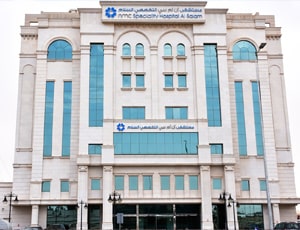
NMC Specialty Hospital Al Salam is a trusted healthcare provider for Lumbar Puncture, offering diagnostic spinal procedures supported by experienced neurologists, neurospecialists, trained clinical teams, and modern laboratory facilities. Established in 1999, the CBAHI- accredited hospital is situated in Riyadh, Saudi Arabia and has 100 beds.
Lumbar Puncture provides access to cerebrospinal fluid for laboratory evaluation and can help identify abnormalities that may not be detected through routine blood tests or imaging alone. CSF analysis may include assessment of cell counts, protein, glucose, microbiological findings, and other specialized markers depending on the suspected condition. Before the procedure, the medical team reviews the patient's symptoms, neurological findings, medications, bleeding risk, and relevant imaging to determine whether lumbar puncture is appropriate.

Ms Patience from Uganda travelled to India for cosmetic surgery in May 2017. She got her treatment done in Asian Institute of Medical Sciences in…

Lobna (from Sudan) was diagnosed with meningioma, a form of non-cancerous brain tumor. Her family members decided to take her to one of the most…
| Speciality | Neurology |
| Procedure | Lumbar Puncture |
| Success Rate | NA |
| Recovery Time | 1-2 days |
| Treatment Time | 30 minutes - 1 hour |
| Chances of Recurrence | NA |
A lumber puncture is more commonly known as a spinal tap procedure. In this procedure, a thin needle is inserted into the lower back to extract and collect cerebrospinal fluid (CSF). This procedure is generally performed for diagnostic purposes. A lumbar puncture may also be performed to reduce the pressure within the skull.
Lumbar puncture is an outpatient neurological procedure commonly performed to diagnose and manage conditions like Meningitis (inflammation of the membranes surrounding the brain and spinal cord), Encephalitis (inflammation of the brain tissue, often caused by viral infections), Subarachnoid Hemorrhage (bleeding in the space surrounding the brain), Pseudotumor Cerebri (increased pressure within the skull without a clear cause), and some central nervous system disorders and cancers.
The recovery process after a Lumbar Puncture is usually short. Patients may experience mild soreness at the puncture site, which typically resolves within a few days. It is essential to rest and avoid strenuous activities for the first 24 hours after the procedure. Drinking plenty of fluids is suggested to replenish the CSF lost during the procedure. Most patients can resume normal activities the day after the Lumbar Puncture, although they should avoid heavy lifting or strenuous exercises for a few days.
There are several factors for ranking the hospitals on the basis of the procedure. To rank these hospitals in Saudi Arabia for Lumbar Puncture, take the following aspects into account- Popularity of the procedure, Infrastructure, Availability of the treatment, Skilled Medical Professionals, Technology employed, Cost, Facilities Offered, and Success Rate.
With MediGence, you can avail quality healthcare along with convenience and cost-savings. While travelling for treatment abroad, MediGence makes sure that your healthcare journey should be smooth and hassle-free. Some of our caregiving services & unmatched benefits include hotel stays or accommodation, airport transfers, dedicated case manager, care packages for recovery, online consultations with the specialist, 24/7 assistance, and prenegotiated treatment packages with an assured 30% discount. Other than these, there are multiple value-added services you can avail with MediGence
Yes, it's simple to do that. When one of our patient advisors contacts you about your inquiry, you can demand an online consultation with the specialist. They will get in touch with the doctor to check his/her availability. After receiving confirmation, the appointment will be scheduled and you will receive a payment link to book your session.
Numerous people have started traveling to Saudi Arabia for Lumbar Puncture because of the nation's state-of-the-art healthcare system and high success rate. Many other factors make Saudi Arabia the preferred choice for Lumbar Puncture. These include:
The length of recovery after treatment is determined by the patient's overall health as well as the criticality of the treatment. Other factors like continuously taking rehab sessions and enrolling in postoperative care sessions also greatly impact the recovery time of the patient. The patient is suggested to stay in close contact with their surgeon for a few months post-surgery to reduce their recovery time.