Browse verified doctors or let our care team help you find the doctor best suited to your condition, treatment goals, and budget.

Bangkok Hospital offers dedicated Lumbar Discectomy supported by experienced spine surgeons, advanced imaging, and modern minimally invasive surgical facilities. Established in 1972, the JCI accredited hospital is situated in Bangkok, Thailand and has 580 beds supporting specialized lumbar spine care.
Lumbar Discectomy is designed to relieve pressure on a spinal nerve caused by a herniated disc in the lower back. Through a carefully planned surgical approach, the surgeon reaches the affected disc and removes the portion that has moved out of its normal position and is compressing the nerve. Only the problematic disc material is generally removed when possible. Postoperative care may include early mobilization, activity modification, and physiotherapy to support recovery.
Vejthani Hospital provides specialized Lumbar Discectomy with a focus on relieving nerve compression, removing problematic disc material, and supporting recovery of lower-back and leg function. Established in 1994, the JCI accredited hospital is located in Bangkok, Thailand and operates 263 beds with modern neurosurgical and orthopedic spine facilities.
Lumbar Discectomy is a surgical procedure used to remove the portion of a herniated or damaged disc that is pressing on a spinal nerve in the lower back. It may be recommended for patients with persistent sciatica, leg pain, numbness, or weakness when symptoms do not improve adequately with conservative treatment. During surgery, the surgeon accesses the affected disc and removes the compressive fragment while preserving as much of the healthy disc as possible.
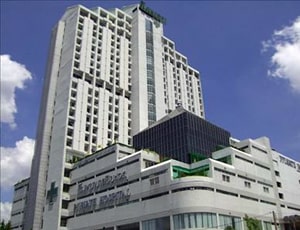
Bangpakok 9 International Hospital offers dedicated Lumbar Discectomy supported by experienced spine surgeons, advanced imaging, and modern minimally invasive surgical facilities. Established in 2003, the JCI, GHA accredited hospital is situated in Bangkok, Thailand and has 300 beds supporting specialized lumbar spine care.
Lumbar Discectomy is designed to relieve pressure on a spinal nerve caused by a herniated disc in the lower back. Through a carefully planned surgical approach, the surgeon reaches the affected disc and removes the portion that has moved out of its normal position and is compressing the nerve. Only the problematic disc material is generally removed when possible. Postoperative care may include early mobilization, activity modification, and physiotherapy to support recovery.
Choosing Phyathai 2 International Hospital for Lumbar Discectomy gives patients access to specialist-led lumbar disc surgery, modern spinal visualization technology, and coordinated postoperative care. Established in 1987, the JCI accredited hospital is located in Bangkok, Thailand and operates 550 beds with advanced spine surgery infrastructure.
Lumbar Discectomy may be recommended for selected patients with a herniated lumbar disc causing significant nerve-related symptoms that persist despite medication, physiotherapy, or other non-surgical measures. During the procedure, the surgeon carefully exposes the affected nerve and removes the herniated disc fragment causing compression. A minimally invasive or open technique may be used depending on the location and severity of the disc problem. Recovery typically involves gradual return to movement while avoiding activities that place excessive strain on the healing spine.
Krabi Nakharin International Hospital offers dedicated Lumbar Discectomy supported by experienced spine surgeons, advanced imaging, and modern minimally invasive surgical facilities. Established in 1997, the JCI accredited hospital is situated in Krabi, Thailand and has 150 beds supporting specialized lumbar spine care.
Lumbar Discectomy is designed to relieve pressure on a spinal nerve caused by a herniated disc in the lower back. Through a carefully planned surgical approach, the surgeon reaches the affected disc and removes the portion that has moved out of its normal position and is compressing the nerve. Only the problematic disc material is generally removed when possible. Postoperative care may include early mobilization, activity modification, and physiotherapy to support recovery.
Yanhee International Hospital provides specialized Lumbar Discectomy with an emphasis on precise disc fragment removal, effective nerve decompression, and personalized rehabilitation. Established in 1984, the ISO, JCI accredited hospital is based in Bangkok, Thailand and has 400 beds supported by modern neurosurgical and orthopedic facilities.
Lumbar Discectomy involves removing herniated disc material that is irritating or compressing a nerve root in the lower spine. It is primarily used when symptoms such as sciatica, leg pain, numbness, or weakness are severe or persistent and do not respond sufficiently to conservative care. Before surgery, neurological examination and imaging help identify the affected disc and nerve. During the procedure, the surgeon removes the compressive fragment while limiting disruption to surrounding spinal structures.
Choosing Sikarin Hospital for Lumbar Discectomy gives patients access to specialist-led lumbar disc surgery, modern spinal visualization technology, and coordinated postoperative care. Established in 1979, the JCI accredited hospital is located in Bangkok, Thailand and operates 354 beds with advanced spine surgery infrastructure.
Lumbar Discectomy may be recommended for selected patients with a herniated lumbar disc causing significant nerve-related symptoms that persist despite medication, physiotherapy, or other non-surgical measures. During the procedure, the surgeon carefully exposes the affected nerve and removes the herniated disc fragment causing compression. A minimally invasive or open technique may be used depending on the location and severity of the disc problem. Recovery typically involves gradual return to movement while avoiding activities that place excessive strain on the healing spine.
At Kasemrad Ramkhamhaeng Hospital, Lumbar Discectomy is performed using advanced lumbar spine techniques and individualized surgical planning. Established in 1992, the JCI accredited hospital in Bangkok, Thailand has 120 beds and provides comprehensive spine surgery and rehabilitation services.
Lumbar Discectomy may be considered when a herniated lumbar disc compresses a nerve root and causes radiating leg pain, tingling, numbness, or weakness. The surgeon removes the displaced disc fragment responsible for the compression, creating additional space around the affected nerve. The procedure can be performed through conventional or minimally invasive techniques, depending on the patient's condition and surgeon's assessment. MRI is commonly used before surgery to confirm the disc herniation and affected spinal level.
Piyavate Hospital offers dedicated Lumbar Discectomy supported by experienced spine surgeons, advanced imaging, and modern minimally invasive surgical facilities. Established in 1993, the JCI, ISO accredited hospital is situated in Bangkok, Thailand and has 150 beds supporting specialized lumbar spine care.
Lumbar Discectomy is designed to relieve pressure on a spinal nerve caused by a herniated disc in the lower back. Through a carefully planned surgical approach, the surgeon reaches the affected disc and removes the portion that has moved out of its normal position and is compressing the nerve. Only the problematic disc material is generally removed when possible. Postoperative care may include early mobilization, activity modification, and physiotherapy to support recovery.
At MALI Interdisciplinary Hospital, Lumbar Discectomy is performed using advanced lumbar spine techniques and individualized surgical planning. Established in 2021, the NABH, JCI, CBAHI, AACI accredited hospital in Bangkok, Thailand has 100 beds and provides comprehensive spine surgery and rehabilitation services.
Lumbar Discectomy may be considered when a herniated lumbar disc compresses a nerve root and causes radiating leg pain, tingling, numbness, or weakness. The surgeon removes the displaced disc fragment responsible for the compression, creating additional space around the affected nerve. The procedure can be performed through conventional or minimally invasive techniques, depending on the patient's condition and surgeon's assessment. MRI is commonly used before surgery to confirm the disc herniation and affected spinal level.

Ms Patience from Uganda travelled to India for cosmetic surgery in May 2017. She got her treatment done in Asian Institute of Medical Sciences in…

Lobna (from Sudan) was diagnosed with meningioma, a form of non-cancerous brain tumor. Her family members decided to take her to one of the most…