Browse verified doctors or let our care team help you find the doctor best suited to your condition, treatment goals, and budget.

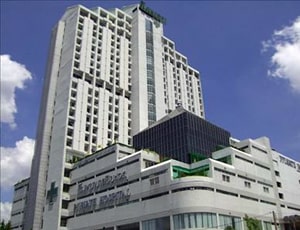
Bangkok Hospital offers dedicated Lumbar Decompression supported by experienced spine surgeons, advanced imaging, and modern minimally invasive and open surgical facilities. Established in 1972, the JCI accredited hospital is situated in Bangkok, Thailand and has 580 beds supporting specialized lumbar spine care.
Lumbar Decompression is designed to increase the available space around compressed nerves in the lower back. It may be used for lumbar spinal stenosis, nerve compression caused by degenerative changes, or selected cases of herniated discs. Depending on the condition, procedures such as laminectomy, laminotomy, or foraminotomy may be performed to remove the source of compression. Postoperative physiotherapy and gradual activity progression may help restore strength and functional mobility.
Vejthani Hospital provides specialized Lumbar Decompression with an emphasis on precise nerve decompression, preservation of spinal structures, and personalized recovery support. Established in 1994, the JCI accredited hospital is based in Bangkok, Thailand and has 263 beds supported by modern neurosurgical and orthopedic facilities.
Lumbar Decompression involves removing or modifying structures that are narrowing the spinal canal or neural foramina and compressing nerves in the lower back. It may help relieve symptoms associated with lumbar spinal stenosis and other causes of nerve compression when conservative treatment has not provided sufficient relief. The surgeon may remove a portion of the vertebral bone, thickened ligament, or disc material depending on the source of compression. Preoperative imaging helps determine the affected levels, while postoperative care focuses on pain control, mobility, and gradual rehabilitation.
Choosing Bangpakok 9 International Hospital for Lumbar Decompression gives patients access to specialist-led lumbar nerve decompression, modern surgical technology, and coordinated postoperative care. Established in 2003, the JCI, GHA accredited hospital is located in Bangkok, Thailand and operates 300 beds with advanced spine surgery infrastructure.
Lumbar Decompression may be recommended for patients who experience persistent leg pain, numbness, weakness, or walking difficulties due to compression of nerves in the lower spine. During surgery, the surgeon carefully removes the bone or soft tissue responsible for narrowing around the nerve. A minimally invasive or conventional approach may be selected according to the patient's anatomy and condition. If significant instability is present, spinal fusion may be considered alongside decompression.
Phyathai 2 International Hospital provides specialized Lumbar Decompression with an emphasis on precise nerve decompression, preservation of spinal structures, and personalized recovery support. Established in 1987, the JCI accredited hospital is based in Bangkok, Thailand and has 550 beds supported by modern neurosurgical and orthopedic facilities.
Lumbar Decompression involves removing or modifying structures that are narrowing the spinal canal or neural foramina and compressing nerves in the lower back. It may help relieve symptoms associated with lumbar spinal stenosis and other causes of nerve compression when conservative treatment has not provided sufficient relief. The surgeon may remove a portion of the vertebral bone, thickened ligament, or disc material depending on the source of compression. Preoperative imaging helps determine the affected levels, while postoperative care focuses on pain control, mobility, and gradual rehabilitation.
Krabi Nakharin International Hospital provides specialized Lumbar Decompression with an emphasis on precise nerve decompression, preservation of spinal structures, and personalized recovery support. Established in 1997, the JCI accredited hospital is based in Krabi, Thailand and has 150 beds supported by modern neurosurgical and orthopedic facilities.
Lumbar Decompression involves removing or modifying structures that are narrowing the spinal canal or neural foramina and compressing nerves in the lower back. It may help relieve symptoms associated with lumbar spinal stenosis and other causes of nerve compression when conservative treatment has not provided sufficient relief. The surgeon may remove a portion of the vertebral bone, thickened ligament, or disc material depending on the source of compression. Preoperative imaging helps determine the affected levels, while postoperative care focuses on pain control, mobility, and gradual rehabilitation.
Yanhee International Hospital offers dedicated Lumbar Decompression supported by experienced spine surgeons, advanced imaging, and modern minimally invasive and open surgical facilities. Established in 1984, the ISO, JCI accredited hospital is situated in Bangkok, Thailand and has 400 beds supporting specialized lumbar spine care.
Lumbar Decompression is designed to increase the available space around compressed nerves in the lower back. It may be used for lumbar spinal stenosis, nerve compression caused by degenerative changes, or selected cases of herniated discs. Depending on the condition, procedures such as laminectomy, laminotomy, or foraminotomy may be performed to remove the source of compression. Postoperative physiotherapy and gradual activity progression may help restore strength and functional mobility.
ing. Established in 1979, the JCI accredited hospital in Bangkok, Thailand has 354 beds and provides comprehensive spine surgery and rehabilitation services.
Lumbar Decompression may be considered when narrowing or other structural changes in the lower spine place persistent pressure on one or more nerve roots. The procedure can involve removal of part of the lamina, ligament, bone spurs, or herniated disc material to create more space for the affected nerves. The exact technique depends on the location and cause of compression. MRI or CT imaging is generally used before surgery to identify the affected spinal levels and guide treatment.
Kasemrad Ramkhamhaeng Hospital provides specialized Lumbar Decompression with an emphasis on precise nerve decompression, preservation of spinal structures, and personalized recovery support. Established in 1992, the JCI accredited hospital is based in Bangkok, Thailand and has 120 beds supported by modern neurosurgical and orthopedic facilities.
Lumbar Decompression involves removing or modifying structures that are narrowing the spinal canal or neural foramina and compressing nerves in the lower back. It may help relieve symptoms associated with lumbar spinal stenosis and other causes of nerve compression when conservative treatment has not provided sufficient relief. The surgeon may remove a portion of the vertebral bone, thickened ligament, or disc material depending on the source of compression. Preoperative imaging helps determine the affected levels, while postoperative care focuses on pain control, mobility, and gradual rehabilitation.
ing. Established in 1993, the JCI, ISO accredited hospital in Bangkok, Thailand has 150 beds and provides comprehensive spine surgery and rehabilitation services.
Lumbar Decompression may be considered when narrowing or other structural changes in the lower spine place persistent pressure on one or more nerve roots. The procedure can involve removal of part of the lamina, ligament, bone spurs, or herniated disc material to create more space for the affected nerves. The exact technique depends on the location and cause of compression. MRI or CT imaging is generally used before surgery to identify the affected spinal levels and guide treatment.
Choosing MALI Interdisciplinary Hospital for Lumbar Decompression gives patients access to specialist-led lumbar nerve decompression, modern surgical technology, and coordinated postoperative care. Established in 2021, the NABH, JCI, CBAHI, AACI accredited hospital is located in Bangkok, Thailand and operates 100 beds with advanced spine surgery infrastructure.
Lumbar Decompression may be recommended for patients who experience persistent leg pain, numbness, weakness, or walking difficulties due to compression of nerves in the lower spine. During surgery, the surgeon carefully removes the bone or soft tissue responsible for narrowing around the nerve. A minimally invasive or conventional approach may be selected according to the patient's anatomy and condition. If significant instability is present, spinal fusion may be considered alongside decompression.

Ms Patience from Uganda travelled to India for cosmetic surgery in May 2017. She got her treatment done in Asian Institute of Medical Sciences in…

Lobna (from Sudan) was diagnosed with meningioma, a form of non-cancerous brain tumor. Her family members decided to take her to one of the most…