Browse verified doctors or let our care team help you find the doctor best suited to your condition, treatment goals, and budget.

Choosing Rabin Medical Center for Cranioplasty gives patients access to specialist-led skull reconstruction, modern implant technology, and coordinated postoperative neurosurgical care. Established in 1996, the JCI accredited hospital is located in Petah Tikva, Israel and operates 1300 beds with advanced neurosurgical infrastructure.
Cranioplasty may be performed when part of the skull is absent after trauma, decompressive surgery, infection, or another medical condition. The surgeon places a bone flap or suitable artificial implant over the skull defect and fixes it securely to the surrounding bone. The procedure aims to restore the protective barrier around the brain and improve the contour of the skull. Before surgery, specialists assess the patient's neurological status, skull defect, soft tissues, and imaging findings to determine the appropriate timing and reconstruction method.
At Sheba Medical Center, Cranioplasty is performed using advanced cranial reconstruction techniques and individualized neurosurgical planning. Established in 1948, the JCI accredited hospital in Ramat Gan, Israel has 1900 beds and provides comprehensive neurosurgical and rehabilitation services.
Cranioplasty may be recommended to restore a skull defect following traumatic injury, previous brain surgery, or removal of part of the skull to relieve intracranial pressure. During the procedure, the surgeon places a suitable bone flap or custom-made implant over the defect and secures it with plates, screws, or other fixation devices. The reconstruction restores the protective skull contour and may also improve local cranial protection and, in selected patients, neurological function.
Choosing Herzliya Medical Center for Cranioplasty gives patients access to specialist-led skull reconstruction, modern implant technology, and coordinated postoperative neurosurgical care. Established in 1983, the accredited hospital is located in Herzliya, Israel and operates 120 beds with advanced neurosurgical infrastructure.
Cranioplasty may be performed when part of the skull is absent after trauma, decompressive surgery, infection, or another medical condition. The surgeon places a bone flap or suitable artificial implant over the skull defect and fixes it securely to the surrounding bone. The procedure aims to restore the protective barrier around the brain and improve the contour of the skull. Before surgery, specialists assess the patient's neurological status, skull defect, soft tissues, and imaging findings to determine the appropriate timing and reconstruction method.
Kaplan Medical Centre provides specialized Cranioplasty with an emphasis on precise skull reconstruction, secure implant fixation, and personalized postoperative monitoring. Established in 1953, the JCI accredited hospital is based in Rehovot, Israel and has 1100 beds supported by modern neurosurgical and reconstructive facilities.
Cranioplasty is performed to reconstruct a section of the skull that has been surgically removed or lost because of injury, disease, or a previous procedure. The surgeon carefully positions the replacement bone or implant to match the patient's skull anatomy and secures it using appropriate fixation systems. Depending on the case, reconstruction may use stored autologous bone or materials such as titanium or customized synthetic implants. Postoperative care includes monitoring for infection, bleeding, neurological changes, and proper healing of the reconstructed area.
Assuta Hospital provides specialized Cranioplasty with a focus on restoring the shape and structural integrity of the skull, protecting the brain, and supporting functional recovery. Established in 1934, the JCI accredited hospital is located in Tel Aviv, Israel and operates 300 beds with modern neurosurgical and reconstructive facilities.
Cranioplasty is a surgical procedure used to repair or reconstruct a portion of the skull that is missing, damaged, or removed during an earlier operation. The skull defect may be reconstructed using the patient's own preserved bone or a synthetic material such as a customized implant. It may be performed after trauma, decompressive craniectomy, infection-related bone loss, or other conditions. Preoperative imaging helps assess the skull defect and plan the reconstruction.
Tel Aviv, Israel
Choosing Tel Aviv Sourasky Medical Center -Ichilov Hospital for Cranioplasty gives patients access to specialist-led skull reconstruction, modern implant technology, and coordinated postoperative neurosurgical care. Established in 1963, the JCI accredited hospital is located in Tel Aviv, Israel and operates 1500 beds with advanced neurosurgical infrastructure.
Cranioplasty may be performed when part of the skull is absent after trauma, decompressive surgery, infection, or another medical condition. The surgeon places a bone flap or suitable artificial implant over the skull defect and fixes it securely to the surrounding bone. The procedure aims to restore the protective barrier around the brain and improve the contour of the skull. Before surgery, specialists assess the patient's neurological status, skull defect, soft tissues, and imaging findings to determine the appropriate timing and reconstruction method.

Ms Patience from Uganda travelled to India for cosmetic surgery in May 2017. She got her treatment done in Asian Institute of Medical Sciences in…

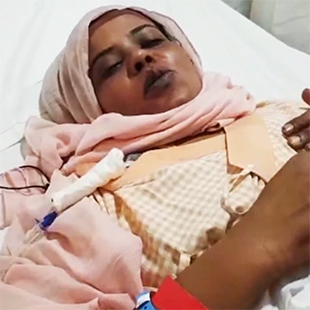
Lobna (from Sudan) was diagnosed with meningioma, a form of non-cancerous brain tumor. Her family members decided to take her to one of the most…