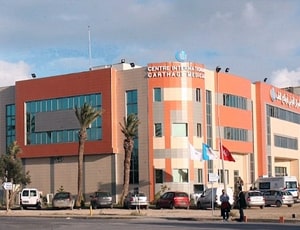
Carthage International Medical Center
Monastir, Tunisia
Choosing Carthage International Medical Center for Laparoscopic Hernia Repair gives patients access to experienced laparoscopic surgeons, advanced surgical equipment, modern operating facilities, and structured postoperative care. Established in 2014, the JCI accredited hospital in Monastir, Tunisia has 120 beds and provides specialised hernia and minimally invasive surgical services.
Laparoscopic Hernia Repair is generally performed under general anaesthesia. The surgeon creates small abdominal openings, introduces a camera to visualize the hernia, and uses specialized instruments to reposition the protruding tissue and reinforce the weakened area, usually with mesh. After surgery, patients are monitored for pain, bleeding, wound problems, urinary difficulties, and other potential complications. Gradual return to normal activities is recommended according to the type of repair and the surgeon's advice.
Please Enquire

Taoufik Clinique is a trusted healthcare provider for Laparoscopic Hernia Repair, offering minimally invasive hernia surgery supported by experienced general surgeons, advanced laparoscopic facilities, and multidisciplinary perioperative care. Established in 1979, the ISO- accredited hospital is situated in Tunis, Tunisia and has 180 beds.
Laparoscopic Hernia Repair aims to correct the abdominal wall defect responsible for the hernia while restoring the normal position of the displaced tissue. The surgeon accesses the affected area through small incisions and places a mesh over or around the defect to provide additional structural support. Different laparoscopic approaches, including transabdominal preperitoneal and totally extraperitoneal techniques, may be selected according to the type and location of the hernia and the patient's individual anatomy.

Ezzahra Clinic provides specialised Laparoscopic Hernia Repair with a focus on precise hernia correction, advanced laparoscopic techniques, and individualised postoperative care. Established in 1986, the NABH accredited hospital is located in Ez Zahra, Tunisia and operates 110 beds, with modern general surgical, laparoscopic, and recovery infrastructure.
Laparoscopic Hernia Repair can provide a minimally invasive approach to repairing selected abdominal wall defects while reinforcing the weakened tissue and reducing the likelihood of recurrence. Treatment planning considers the type, size, and location of the hernia, previous abdominal or hernia surgeries, overall health, and the presence of complications. A detailed preoperative assessment helps the surgical team determine whether laparoscopic repair is appropriate and select the most suitable technique and mesh placement strategy.
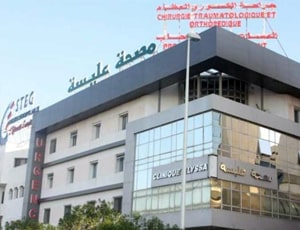
Clinic Alyssa provides specialised Laparoscopic Hernia Repair with a focus on precise hernia correction, advanced laparoscopic techniques, and individualised postoperative care. Established in 2015, the accredited hospital is located in Tunis, Tunisia and operates 80 beds, with modern general surgical, laparoscopic, and recovery infrastructure.
Laparoscopic Hernia Repair can provide a minimally invasive approach to repairing selected abdominal wall defects while reinforcing the weakened tissue and reducing the likelihood of recurrence. Treatment planning considers the type, size, and location of the hernia, previous abdominal or hernia surgeries, overall health, and the presence of complications. A detailed preoperative assessment helps the surgical team determine whether laparoscopic repair is appropriate and select the most suitable technique and mesh placement strategy.

Choosing Hannibal International Clinic for Laparoscopic Hernia Repair gives patients access to experienced laparoscopic surgeons, advanced surgical equipment, modern operating facilities, and structured postoperative care. Established in 2007, the accredited hospital in Tunis, Tunisia has 120 beds and provides specialised hernia and minimally invasive surgical services.
Laparoscopic Hernia Repair is generally performed under general anaesthesia. The surgeon creates small abdominal openings, introduces a camera to visualize the hernia, and uses specialized instruments to reposition the protruding tissue and reinforce the weakened area, usually with mesh. After surgery, patients are monitored for pain, bleeding, wound problems, urinary difficulties, and other potential complications. Gradual return to normal activities is recommended according to the type of repair and the surgeon's advice.