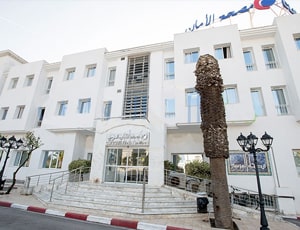
Browse verified doctors or let our care team help you find the doctor best suited to your condition, treatment goals, and budget.

At Centre International Carthage Medical, Stapled Hemorrhoidopexy is performed using specialized colorectal surgical techniques and comprehensive assessment of the severity and type of hemorrhoidal disease. Established in 2014, this accredited hospital in Monastir, Tunisia has 120 beds and offers advanced proctology, colorectal surgery, minimally invasive procedures, and postoperative care services.
Stapled Hemorrhoidopexy may be considered for appropriately selected patients with symptomatic prolapsing internal hemorrhoids, particularly when conservative treatments have not provided sufficient relief. Before surgery, the colorectal specialist evaluates the degree of prolapse, bleeding, discomfort, bowel habits, and other anorectal symptoms. During the procedure, a circular stapler is positioned inside the anal canal to remove a band of mucosal tissue and reposition the prolapsed hemorrhoidal tissue.
Choosing Hannibal International Clinic for Stapled Hemorrhoidopexy gives patients access to experienced colorectal surgeons, advanced anorectal diagnostic facilities, minimally invasive surgical systems, specialized anesthesia services, and structured postoperative care. Established in 2007, the accredited hospital in Tunis, Tunisia has 120 beds and provides specialized treatment for hemorrhoidal disease.
Stapled Hemorrhoidopexy is performed under appropriate anaesthesia, with the stapling device used to reposition prolapsed internal hemorrhoidal tissue. The procedure generally does not involve direct excision of external hemorrhoids and is therefore not suitable for every type of hemorrhoidal disease. After surgery, patients may experience temporary pain, urgency, bleeding, or discomfort during bowel movements. Potential complications include bleeding, urinary difficulties, infection, recurrence, or, rarely, injury to surrounding tissues.
Choosing Chirurgie Pro for Stapled Hemorrhoidopexy gives patients access to experienced colorectal surgeons, advanced anorectal diagnostic facilities, minimally invasive surgical systems, specialized anesthesia services, and structured postoperative care. Established in 2010, the accredited hospital in La Marsa, Tunisia it has adequate bed capacity and provides specialized treatment for hemorrhoidal disease.
Stapled Hemorrhoidopexy is performed under appropriate anaesthesia, with the stapling device used to reposition prolapsed internal hemorrhoidal tissue. The procedure generally does not involve direct excision of external hemorrhoids and is therefore not suitable for every type of hemorrhoidal disease. After surgery, patients may experience temporary pain, urgency, bleeding, or discomfort during bowel movements. Potential complications include bleeding, urinary difficulties, infection, recurrence, or, rarely, injury to surrounding tissues.