Browse verified doctors or let our care team help you find the doctor best suited to your condition, treatment goals, and budget.

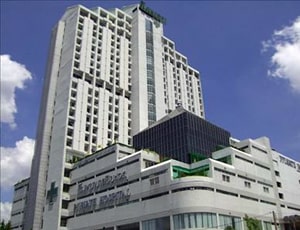
Bangkok Hospital provides specialised Nissen Fundoplication with a focus on precise anti-reflux surgery, minimally invasive techniques, anatomical restoration, and individualized postoperative management. Established in 1972, the JCI accredited hospital is located in Bangkok, Thailand and operates 580 beds, with modern foregut surgery, endoscopy, imaging, laparoscopic, and postoperative care infrastructure.
Nissen Fundoplication can provide a surgical treatment option for appropriately selected patients with chronic GERD or associated hiatal hernia. Treatment planning considers the severity and duration of reflux symptoms, response to medical therapy, esophageal motility, presence and size of a hiatal hernia, endoscopic findings, and overall health. A detailed gastroenterological and surgical assessment helps determine whether complete fundoplication is appropriate and supports individualized perioperative and follow-up care.
Vejthani Hospital provides specialised Nissen Fundoplication with a focus on precise anti-reflux surgery, minimally invasive techniques, anatomical restoration, and individualized postoperative management. Established in 1994, the JCI accredited hospital is located in Bangkok, Thailand and operates 263 beds, with modern foregut surgery, endoscopy, imaging, laparoscopic, and postoperative care infrastructure.
Nissen Fundoplication can provide a surgical treatment option for appropriately selected patients with chronic GERD or associated hiatal hernia. Treatment planning considers the severity and duration of reflux symptoms, response to medical therapy, esophageal motility, presence and size of a hiatal hernia, endoscopic findings, and overall health. A detailed gastroenterological and surgical assessment helps determine whether complete fundoplication is appropriate and supports individualized perioperative and follow-up care.
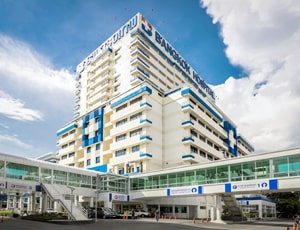
Bangpakok 9 International Hospital provides specialised Nissen Fundoplication with a focus on precise anti-reflux surgery, minimally invasive techniques, anatomical restoration, and individualized postoperative management. Established in 2003, the JCI, GHA accredited hospital is located in Bangkok, Thailand and operates 300 beds, with modern foregut surgery, endoscopy, imaging, laparoscopic, and postoperative care infrastructure.
Nissen Fundoplication can provide a surgical treatment option for appropriately selected patients with chronic GERD or associated hiatal hernia. Treatment planning considers the severity and duration of reflux symptoms, response to medical therapy, esophageal motility, presence and size of a hiatal hernia, endoscopic findings, and overall health. A detailed gastroenterological and surgical assessment helps determine whether complete fundoplication is appropriate and supports individualized perioperative and follow-up care.
Choosing Phyathai 2 International Hospital for Nissen Fundoplication gives patients access to experienced foregut surgeons, advanced gastrointestinal imaging and endoscopy, laparoscopic surgical systems, specialized anesthesia services, and structured postoperative care. Established in 1987, the JCI accredited hospital in Bangkok, Thailand has 550 beds and provides specialized treatment for GERD and related upper gastrointestinal conditions.
Nissen Fundoplication is generally performed under general anaesthesia through several small abdominal incisions when a laparoscopic approach is used. The surgeon creates a complete wrap of the stomach fundus around the lower esophagus after addressing any associated hiatal hernia. Following surgery, patients may initially require dietary modifications while swallowing and gastrointestinal function recover. Potential postoperative effects can include difficulty swallowing, bloating, gas-related discomfort, nausea, or recurrence of reflux in some patients.
At Yanhee International Hospital, Nissen Fundoplication is performed using specialized anti-reflux and minimally invasive surgical techniques with comprehensive preoperative evaluation. Established in 1984, this ISO, JCI accredited hospital in Bangkok, Thailand has 400 beds and offers advanced gastroenterology, foregut surgery, and laparoscopic treatment services.
Nissen Fundoplication may be considered for patients with persistent or severe GERD symptoms despite appropriate medical management, selected patients with significant hiatal hernia, or those who prefer a surgical approach after specialist evaluation. Before surgery, the patient may undergo upper gastrointestinal endoscopy, esophageal manometry, pH monitoring, and imaging to confirm the diagnosis and assess esophageal function. During the procedure, the stomach fundus is wrapped 360 degrees around the lower esophagus to strengthen the anti-reflux barrier.
Choosing Sikarin Hospital for Nissen Fundoplication gives patients access to experienced foregut surgeons, advanced gastrointestinal imaging and endoscopy, laparoscopic surgical systems, specialized anesthesia services, and structured postoperative care. Established in 1979, the JCI accredited hospital in Bangkok, Thailand has 354 beds and provides specialized treatment for GERD and related upper gastrointestinal conditions.
Nissen Fundoplication is generally performed under general anaesthesia through several small abdominal incisions when a laparoscopic approach is used. The surgeon creates a complete wrap of the stomach fundus around the lower esophagus after addressing any associated hiatal hernia. Following surgery, patients may initially require dietary modifications while swallowing and gastrointestinal function recover. Potential postoperative effects can include difficulty swallowing, bloating, gas-related discomfort, nausea, or recurrence of reflux in some patients.
Kasemrad Ramkhamhaeng Hospital offers advanced Nissen Fundoplication using modern minimally invasive foregut surgical techniques and individualized gastrointestinal care plans. Established in 1992, the JCI accredited hospital is located in Bangkok, Thailand and has 120 beds, providing comprehensive gastrointestinal and surgical care for local and international patients.
Nissen Fundoplication is a surgical procedure primarily used to treat gastroesophageal reflux disease (GERD) and selected cases of hiatal hernia. During the procedure, the upper portion of the stomach, called the fundus, is wrapped completely around the lower esophagus to reinforce the lower esophageal sphincter and reduce the backward flow of stomach contents. The procedure is commonly performed using a laparoscopic approach.
Piyavate Hospital is a trusted healthcare provider for Nissen Fundoplication, offering advanced surgical treatment for reflux disease supported by experienced foregut surgeons, gastroenterologists, anesthesiologists, and multidisciplinary gastrointestinal teams. Established in 1993, the JCI, ISO- accredited hospital is situated in Bangkok, Thailand and has 150 beds.
Nissen Fundoplication works by creating a new anti-reflux barrier around the lower esophagus. The surgeon mobilizes the upper stomach and wraps it around the lower esophageal sphincter, helping prevent stomach acid and contents from moving back into the esophagus. If a hiatal hernia is present, the repair may be performed during the same operation to restore the normal position of the stomach and reinforce the diaphragm opening.
Choosing MALI Interdisciplinary Hospital for Nissen Fundoplication gives patients access to experienced foregut surgeons, advanced gastrointestinal imaging and endoscopy, laparoscopic surgical systems, specialized anesthesia services, and structured postoperative care. Established in 2021, the NABH, JCI, CBAHI, AACI accredited hospital in Bangkok, Thailand has 100 beds and provides specialized treatment for GERD and related upper gastrointestinal conditions.
Nissen Fundoplication is generally performed under general anaesthesia through several small abdominal incisions when a laparoscopic approach is used. The surgeon creates a complete wrap of the stomach fundus around the lower esophagus after addressing any associated hiatal hernia. Following surgery, patients may initially require dietary modifications while swallowing and gastrointestinal function recover. Potential postoperative effects can include difficulty swallowing, bloating, gas-related discomfort, nausea, or recurrence of reflux in some patients.