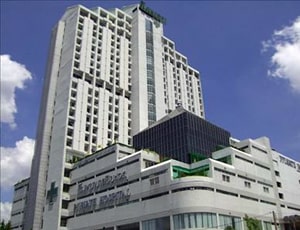
Browse verified doctors or let our care team help you find the doctor best suited to your condition, treatment goals, and budget.

Bangkok Hospital provides specialised Low Anterior Resection with a focus on precise rectal resection, preservation of the anal sphincter where appropriate, minimally invasive techniques, and individualized postoperative management. Established in 1972, the JCI accredited hospital is located in Bangkok, Thailand and operates 580 beds, with modern colorectal surgery, pelvic imaging, oncology, laparoscopic, robotic, and postoperative care infrastructure.
Low Anterior Resection can provide an important surgical treatment option for appropriately selected patients with rectal cancer and other localized rectal conditions. Treatment planning considers the tumor's location and stage, involvement of surrounding tissues, sphincter function, bowel health, previous abdominal surgery, nutritional status, and overall health. For rectal cancer, a multidisciplinary team may recommend chemotherapy or radiation therapy before or after surgery depending on the disease stage and individual treatment plan.
Vejthani Hospital is a trusted healthcare provider for Low Anterior Resection, offering advanced rectal surgery supported by experienced colorectal surgeons, surgical oncologists, gastroenterologists, radiologists, anesthesiologists, and multidisciplinary cancer teams. Established in 1994, the JCI accredited hospital is situated in Bangkok, Thailand and has 263 beds.
Low Anterior Resection involves removing the diseased portion of the rectum while aiming to preserve the anal sphincter and normal bowel function. In cases of rectal cancer, the procedure may include removal of surrounding fatty tissue and nearby lymph nodes as part of oncological resection. Depending on the patient's condition, the operation may be performed through open, laparoscopic, or robotic-assisted techniques.
Choosing Bangpakok 9 International Hospital for Low Anterior Resection gives patients access to experienced colorectal surgeons, advanced pelvic imaging, laparoscopic and robotic surgical systems, specialized anesthesia services, and structured postoperative and stoma care. Established in 2003, the JCI, GHA accredited hospital in Bangkok, Thailand has 300 beds and provides specialized treatment for rectal and colorectal conditions.
Low Anterior Resection is performed under general anaesthesia using a surgical approach selected according to the location and extent of disease and the patient's overall condition. After the affected section is removed, the surgeon creates a colorectal or coloanal anastomosis when feasible. A temporary ileostomy may be recommended in selected patients to reduce the consequences of a potential leak while the anastomosis heals. Postoperative monitoring includes bowel function, infection, bleeding, anastomotic leakage, and other potential complications.
Phyathai 2 International Hospital is a trusted healthcare provider for Low Anterior Resection, offering advanced rectal surgery supported by experienced colorectal surgeons, surgical oncologists, gastroenterologists, radiologists, anesthesiologists, and multidisciplinary cancer teams. Established in 1987, the JCI accredited hospital is situated in Bangkok, Thailand and has 550 beds.
Low Anterior Resection involves removing the diseased portion of the rectum while aiming to preserve the anal sphincter and normal bowel function. In cases of rectal cancer, the procedure may include removal of surrounding fatty tissue and nearby lymph nodes as part of oncological resection. Depending on the patient's condition, the operation may be performed through open, laparoscopic, or robotic-assisted techniques.
Yanhee International Hospital provides specialised Low Anterior Resection with a focus on precise rectal resection, preservation of the anal sphincter where appropriate, minimally invasive techniques, and individualized postoperative management. Established in 1984, the ISO, JCI accredited hospital is located in Bangkok, Thailand and operates 400 beds, with modern colorectal surgery, pelvic imaging, oncology, laparoscopic, robotic, and postoperative care infrastructure.
Low Anterior Resection can provide an important surgical treatment option for appropriately selected patients with rectal cancer and other localized rectal conditions. Treatment planning considers the tumor's location and stage, involvement of surrounding tissues, sphincter function, bowel health, previous abdominal surgery, nutritional status, and overall health. For rectal cancer, a multidisciplinary team may recommend chemotherapy or radiation therapy before or after surgery depending on the disease stage and individual treatment plan.
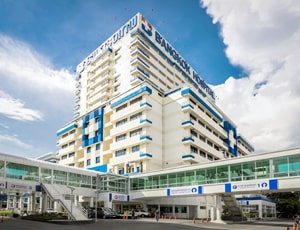
At Sikarin Hospital, Low Anterior Resection is performed using specialized colorectal surgical techniques and comprehensive cancer staging and preoperative assessment. Established in 1979, this JCI accredited hospital in Bangkok, Thailand has 354 beds and offers advanced colorectal surgery, minimally invasive procedures, gastroenterology, and surgical oncology services.
Low Anterior Resection may be considered for patients with tumors or other disease affecting the middle or upper rectum when the anal sphincter can be safely preserved. Before surgery, investigations such as colonoscopy, pelvic MRI, CT imaging, and other staging tests may be performed depending on the diagnosis. During the procedure, the affected rectal segment and surrounding tissues are removed, and the bowel is reconnected when appropriate.
Kasemrad Ramkhamhaeng Hospital offers advanced Low Anterior Resection using modern colorectal and minimally invasive surgical techniques and individualized gastrointestinal care plans. Established in 1992, the JCI accredited hospital is located in Bangkok, Thailand and has 120 beds, providing comprehensive colorectal, gastrointestinal, and surgical oncology care for local and international patients.
Low Anterior Resection is a surgical procedure used to remove the diseased portion of the rectum while preserving the anal sphincter when medically appropriate. It is commonly performed for selected cases of rectal cancer and certain other rectal conditions. After removing the affected section, the surgeon reconnects the remaining colon to the rectum or anal canal to maintain the natural route of bowel movement. In some cases, a temporary diverting ileostomy may be created to protect the surgical connection during healing.
Choosing Piyavate Hospital for Low Anterior Resection gives patients access to experienced colorectal surgeons, advanced pelvic imaging, laparoscopic and robotic surgical systems, specialized anesthesia services, and structured postoperative and stoma care. Established in 1993, the JCI, ISO accredited hospital in Bangkok, Thailand has 150 beds and provides specialized treatment for rectal and colorectal conditions.
Low Anterior Resection is performed under general anaesthesia using a surgical approach selected according to the location and extent of disease and the patient's overall condition. After the affected section is removed, the surgeon creates a colorectal or coloanal anastomosis when feasible. A temporary ileostomy may be recommended in selected patients to reduce the consequences of a potential leak while the anastomosis heals. Postoperative monitoring includes bowel function, infection, bleeding, anastomotic leakage, and other potential complications.
At MALI Interdisciplinary Hospital, Low Anterior Resection is performed using specialized colorectal surgical techniques and comprehensive cancer staging and preoperative assessment. Established in 2021, this NABH, JCI, CBAHI, AACI accredited hospital in Bangkok, Thailand has 100 beds and offers advanced colorectal surgery, minimally invasive procedures, gastroenterology, and surgical oncology services.
Low Anterior Resection may be considered for patients with tumors or other disease affecting the middle or upper rectum when the anal sphincter can be safely preserved. Before surgery, investigations such as colonoscopy, pelvic MRI, CT imaging, and other staging tests may be performed depending on the diagnosis. During the procedure, the affected rectal segment and surrounding tissues are removed, and the bowel is reconnected when appropriate.