Browse verified doctors or let our care team help you find the doctor best suited to your condition, treatment goals, and budget.

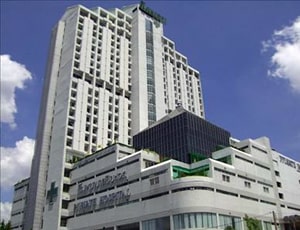
At Bangkok Hospital, Laparoscopic Colon Resection is performed using specialized laparoscopic colorectal techniques and comprehensive diagnostic assessment. Established in 1972, this JCI accredited hospital in Bangkok, Thailand has 580 beds and offers advanced colorectal surgery, gastrointestinal oncology, minimally invasive surgery, and postoperative rehabilitation services.
Laparoscopic Colon Resection may be considered when a section of the colon requires surgical removal because of cancer, persistent inflammation, obstruction, diverticular disease, or other significant conditions. Before surgery, imaging, colonoscopy, laboratory testing, and other assessments may be used to determine the location and extent of disease. During the procedure, the affected portion of the colon is removed through small incisions, followed by reconnection of the bowel or creation of a temporary or permanent stoma when clinically necessary.
At Vejthani Hospital, Laparoscopic Colon Resection is performed using specialized laparoscopic colorectal techniques and comprehensive diagnostic assessment. Established in 1994, this JCI accredited hospital in Bangkok, Thailand has 263 beds and offers advanced colorectal surgery, gastrointestinal oncology, minimally invasive surgery, and postoperative rehabilitation services.
Laparoscopic Colon Resection may be considered when a section of the colon requires surgical removal because of cancer, persistent inflammation, obstruction, diverticular disease, or other significant conditions. Before surgery, imaging, colonoscopy, laboratory testing, and other assessments may be used to determine the location and extent of disease. During the procedure, the affected portion of the colon is removed through small incisions, followed by reconnection of the bowel or creation of a temporary or permanent stoma when clinically necessary.
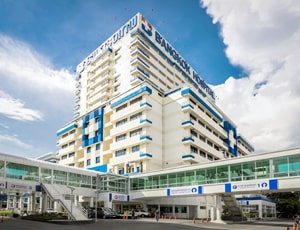
Choosing Bangpakok 9 International Hospital for Laparoscopic Colon Resection gives patients access to experienced colorectal surgeons, advanced laparoscopic and robotic surgical systems, high-quality abdominal imaging, specialized anesthesia services, and structured postoperative care. Established in 2003, the JCI, GHA accredited hospital in Bangkok, Thailand has 300 beds and provides specialized treatment for complex colorectal conditions.
Laparoscopic Colon Resection is performed under general anaesthesia through small abdominal incisions. A camera provides visualization of the abdominal cavity while specialized instruments are used to mobilize and remove the affected section of the colon. Depending on the underlying condition, the surgeon may perform a bowel-to-bowel anastomosis or create a stoma. After surgery, patients are monitored for bleeding, infection, bowel leakage, obstruction, changes in bowel function, and other potential complications.
Choosing Phyathai 2 International Hospital for Laparoscopic Colon Resection gives patients access to experienced colorectal surgeons, advanced laparoscopic and robotic surgical systems, high-quality abdominal imaging, specialized anesthesia services, and structured postoperative care. Established in 1987, the JCI accredited hospital in Bangkok, Thailand has 550 beds and provides specialized treatment for complex colorectal conditions.
Laparoscopic Colon Resection is performed under general anaesthesia through small abdominal incisions. A camera provides visualization of the abdominal cavity while specialized instruments are used to mobilize and remove the affected section of the colon. Depending on the underlying condition, the surgeon may perform a bowel-to-bowel anastomosis or create a stoma. After surgery, patients are monitored for bleeding, infection, bowel leakage, obstruction, changes in bowel function, and other potential complications.
Yanhee International Hospital offers advanced Laparoscopic Colon Resection using modern minimally invasive colorectal surgical techniques and individualized gastrointestinal care plans. Established in 1984, the ISO, JCI accredited hospital is located in Bangkok, Thailand and has 400 beds, providing comprehensive colorectal, gastrointestinal, and surgical oncology care for local and international patients.
Laparoscopic Colon Resection is a minimally invasive surgical procedure used to remove a diseased or damaged portion of the colon. It may be performed for conditions such as colon cancer, diverticular disease, inflammatory bowel disease, polyps that cannot be removed endoscopically, or other structural problems. The surgeon removes the affected segment through small abdominal incisions and reconnects the remaining sections of the intestine when appropriate.
Choosing Sikarin Hospital for Laparoscopic Colon Resection gives patients access to experienced colorectal surgeons, advanced laparoscopic and robotic surgical systems, high-quality abdominal imaging, specialized anesthesia services, and structured postoperative care. Established in 1979, the JCI accredited hospital in Bangkok, Thailand has 354 beds and provides specialized treatment for complex colorectal conditions.
Laparoscopic Colon Resection is performed under general anaesthesia through small abdominal incisions. A camera provides visualization of the abdominal cavity while specialized instruments are used to mobilize and remove the affected section of the colon. Depending on the underlying condition, the surgeon may perform a bowel-to-bowel anastomosis or create a stoma. After surgery, patients are monitored for bleeding, infection, bowel leakage, obstruction, changes in bowel function, and other potential complications.
At Kasemrad Ramkhamhaeng Hospital, Laparoscopic Colon Resection is performed using specialized laparoscopic colorectal techniques and comprehensive diagnostic assessment. Established in 1992, this JCI accredited hospital in Bangkok, Thailand has 120 beds and offers advanced colorectal surgery, gastrointestinal oncology, minimally invasive surgery, and postoperative rehabilitation services.
Laparoscopic Colon Resection may be considered when a section of the colon requires surgical removal because of cancer, persistent inflammation, obstruction, diverticular disease, or other significant conditions. Before surgery, imaging, colonoscopy, laboratory testing, and other assessments may be used to determine the location and extent of disease. During the procedure, the affected portion of the colon is removed through small incisions, followed by reconnection of the bowel or creation of a temporary or permanent stoma when clinically necessary.
Piyavate Hospital is a trusted healthcare provider for Laparoscopic Colon Resection, offering advanced minimally invasive colorectal surgery supported by experienced colorectal surgeons, gastroenterologists, surgical oncologists, anesthesiologists, radiologists, and multidisciplinary care teams. Established in 1993, the JCI, ISO- accredited hospital is situated in Bangkok, Thailand and has 150 beds.
Laparoscopic Colon Resection involves accessing the abdominal cavity through several small incisions using a camera and specialized surgical instruments. The surgeon identifies and removes the affected section of the colon along with surrounding tissues when required. For cancer treatment, nearby lymph nodes may also be removed for pathological assessment. The remaining bowel is generally joined together to restore intestinal continuity when it is considered safe and appropriate.
MALI Interdisciplinary Hospital is a trusted healthcare provider for Laparoscopic Colon Resection, offering advanced minimally invasive colorectal surgery supported by experienced colorectal surgeons, gastroenterologists, surgical oncologists, anesthesiologists, radiologists, and multidisciplinary care teams. Established in 2021, the NABH, JCI, CBAHI, AACI- accredited hospital is situated in Bangkok, Thailand and has 100 beds.
Laparoscopic Colon Resection involves accessing the abdominal cavity through several small incisions using a camera and specialized surgical instruments. The surgeon identifies and removes the affected section of the colon along with surrounding tissues when required. For cancer treatment, nearby lymph nodes may also be removed for pathological assessment. The remaining bowel is generally joined together to restore intestinal continuity when it is considered safe and appropriate.