3 Hospitals
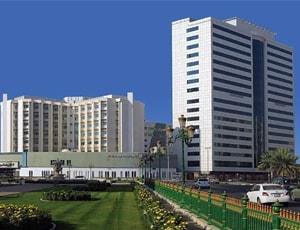
NMC Royal Hospital Sharjah is a premier healthcare facility that provides high-quality care. The NMC Royal Hospital Sharjah has 137 beds for acute care (including 9 ICU and 12 NICU beds). The number of employees exceeds 1250. This figure includes over 170 doctors. The hospital provides world-class healthcare to all patients. The hospital offers Emergency Medicine and Critical Care in Cardiology. The hospital is equipped with amazing technology, and its medical staff is knowledgeable about the best global healthcare practices.
Over the last two decades, NMC Healthcare has done ground-breaking work in cardiology and cardiac surgery. Surgeons are well-known around the world for their novel approaches, which they developed and refined through regular cardiac procedures. The ultramodern 24-hour Cardiac unit offers adult heart care services such as Coronary, Structural, and Peripheral vascular diseases, electrophysiology, and device therapies. ICUs (Intensive Care Units) are constantly managed and monitored. The hospital has an excellent cardiac rehab process that depends on post-operative care for cardiac patients who have undergone procedures such as Atrial Septal Repair. Dr. Adel Abushi, Dr. Adel Y. Al Eryani, and Dr. Ahmed Mohammed Al Kamali are some of the cardiac specialists at NMC Royal Hospital Sharjah.
- Accreditation

Please Enquire

- Best Hospital in Sharjah (Sharjah Economic Excellence Awards)
- Best Hospital in the UAE (Healthcare Asia Awards)
- Best Hospital for Patient Experience in the UAE (International Hospital of the Year Awards)
- Best Hospital for Quality and Excellence in the UAE (Arabian Business Awards)
- Best Hospital for Clinical Excellence in the UAE (MEED Quality Awards for Projects)
- Accreditation

When a healthcare provider listens to the heart with a stethoscope and hears a whooshing sound, atrial septal defects are diagnosed at Zulekha Hospital before or shortly after a child is born (heart murmur). An atrial septal defect is diagnosed using an echocardiogram, a chest X-ray, an electrocardiogram (ECG or EKG), a cardiac magnetic resonance imaging (MRI) scan, and a computed tomography (CT) scan. Zulekha Hospital's Cardiology Department is equipped with best-in-class technology and can perform both invasive and non-invasive tests.
The department performs Coronary and Peripheral Angioplasty with stenting, as well as Balloon Valvuloplasty for all Valvular Lesions, in addition to routine diagnostic invasive procedures such as Angiography and Catheterization studies. PDA device and coil closure, as well as ASD device closure, have been performed on patients of all ages. The hospital offers minimally invasive heart surgery, which involves making small incisions between your ribs on the right side of your chest to reach the heart rather than cutting through your breastbone as in open-heart surgery. Dr. Jayachandran Thejus and Dr. Krupal Reddy are some of the cardiac surgeons at Zulekha Hospital.
- Accreditation

Ask your healthcare adviser for the best multiple options and choose the one that meets your expectations
Request for an Expert Opinion

Outcomes of Atrial Septal Defect (ASD) Repair
| Speciality | Cardiac Sciences |
| Procedure | Atrial Septal Defect (ASD) Repair |
| Success Rate | 90-95% |
| Recovery Time | 2 to 4 weeks |
| Treatment Time | 2 - 2.5 hours |
| Chances of Recurrence | 4 - 6% |
What is an Atrial Septal Defect (ASD) Repair and how does it work?
ASD Repair is a surgical procedure used to repair a hole in the atrial septum, the wall that separates the upper chambers of the heart. The defect is closed with sutures or a patch during the procedure. It can be done with open-heart surgery or with minimally invasive techniques like cardiac catheterization.
What medical conditions can be treated through Atrial Septal Defect (ASD) Repair?
Atrial Septal Defect (ASD) Repair is primarily used to treat atrial septal defects, which are congenital heart conditions characterized by abnormal openings between the atria. These defects can lead to the mixing of oxygenated and deoxygenated blood, potentially causing strain on the heart and lungs. The procedure helps restore proper blood flow and relieves related symptoms by fixing the defect.
What is the recovery process after an Atrial Septal Defect (ASD) Repair?
After Atrial Septal Defect (ASD) Repair, the recovery period varies based on the surgical technique used and the patient in question. Patients should typically anticipate spending a few days in the hospital following the procedure. Medication may be prescribed to manage pain and prevent infection. Physical activity and strenuous exercise should be limited for several weeks, and follow-up appointments will be scheduled to monitor healing and overall cardiac health. With proper care and adherence to the recommended recovery guidelines, most patients can resume normal activities within a few months.
Frequently Asked Questions
It's a fact that while ranking a hospital, certain factors need to be considered. To rank these hospitals in Sharjah for Atrial Septal Defect (ASD) Repair, take the following aspects into account- Infrastructure, procedure accessibility, procedure popularity, Technology, Cost-effectiveness, Experienced Doctors, Patient-care Facilities, and Success Rate
MediGence puts forth a lot of effort to make your medical travel of the finest quality, convenient, and affordable for you. We make sure that your healthcare journey should be easy and hassle-free while receiving treatment overseas. Some of the top caregiving services available include Hotel stays, Dedicated Case Coordinator, Recovery packages, Online Consultation, round-the-clock assistance, and customized packages with discounts of up to a 30%. We also provide several additional advantages to help you receive first-rate medical care.
Absolutely! Yes. Before you plan medical travel to Sharjah, you can benefit from an efficient & helpful online consultation with the chosen specialist there. When our patient advisors connect with you regarding your query, you can place your request of having an online consultation with the specialist. They will check the doctor's availability, send the payment link to you, and finalize your appointment.
Atrial Septal Defect (ASD) Repair in Sharjah is trusted by many people across the world due to the high rate of successful outcomes and world-class hospital infrastructure. Atrial Septal Defect (ASD) Repair is the best option when it comes to Sharjah for a variety of reasons including:
- Skilled and Qualified specialists
- Affordable treatment plans
- Transparency and data privacy
- Internationally recognised hospitals
- Modern healthcare technologies
Depending on the patient's health and the complexity of the treatment, different procedures have different recovery times. In addition, post-treatment rehabilitation is extremely important for speeding up recovery and minimizing recovery time. Patients must also visit for follow-ups post-surgery to ensure proper healing and speed up the recovery process.