3 Hospitals

- Best Private Hospital in Saudi Arabia at the Middle East Healthcare Awards in 2017
- Best Hospital in Riyadh at the Global Brands Magazine Awards in 2019
- Excellence in Patient Experience at the Healthcare Asia Awards in 2020
- Best Obstetrics and Gynaecology Hospital at the International Hospital of the Year Awards in 2019
- Best Hospital for Medical Tourism at the Arab Health Awards in 2020.
- Accreditation

Please Enquire

- Accreditation
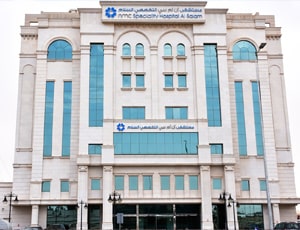
- Best Hospital for Obstetrics and Gynecology in 2020 - Awarded by the Arab Health Awards for the hospital's exceptional care and support for women's health.
- Best Hospital for Patient Experience in 2019 - Awarded by the International Hospital Federation for the hospital's focus on providing exceptional patient experience and personalized care.
- Excellence in Patient Service Award in 2018 - Awarded by Healthcare Asia for the hospital's exceptional patient service, commitment to quality care, and innovative medical services.
- Best Hospital for Medical Tourism in 2017 - Awarded by the Middle East & North Africa Healthcare Awards for the hospital's focus on providing international patients with world-class medical treatments and personalized care.
- Outstanding Hospital of the Year in 2016 - Awarded by the Global Health & Pharma for the hospital's exceptional standards in patient care and medical services.
- Accreditation

Ask your healthcare adviser for the best multiple options and choose the one that meets your expectations
Request for an Expert Opinion

Outcomes of Angiography (Including Non-Ionic Contrast)
| Speciality | Cardiac Sciences |
| Procedure | Angiography (Including Non-Ionic Contrast) |
| Success Rate | 90% |
| Recovery Time | few hours |
| Treatment Time | 30 mins - 1 hour |
| Chances of Recurrence | Moderate |
What is Angiography (Including Non-Ionic Contrast), and how does it work?
Angiography is an interventional procedure performed by skilled interventional cardiologists. The procedure is done to check the health of your blood vessels and how blood flows through them. During this procedure, the patient is usually given a local anesthetic to numb the area (groin or wrist). A small cut is made, and a catheter- a thin, long tube- is inserted into the artery to examine the blood vessels and blood flow. In most cases, a dye is injected into the blood vessels to better visualize them. A series of X-rays are taken and studied. After the procedure, the doctors cover the area with bandages and stitches. Patients are usually discharged on the same day of the procedure.
What medical conditions can be treated through Angiography (Including Non-Ionic Contrast)?
Angiography, including non-ionic contrast, is a valuable diagnostic tool used to identify various problems affecting the blood vessels. This may include diagnosing conditions such as atherosclerosis, a narrowing of the arteries that increases the risk of stroke or heart attack. Furthermore, angiography can detect brain aneurysms and assess peripheral arterial disease, which affects the blood supply to leg muscles, potentially preventing life-threatening complications. Angina, a chest pain caused by decreased blood flow to the heart muscles, blood clots, and pulmonary embolisms, which affect the artery supply to the lungs, are some of the other conditions that can be diagnosed using angiography. Angiography also aids in the detection of blockages in the blood supply to vital organs such as the kidneys. Angiography may also be used to aid in treatment planning for some of these conditions.
What is the recovery process after an Angiography (Including Non-Ionic Contrast)?
Angiography is an outpatient procedure. The patient is usually discharged on the same day of the procedure. There might be some bleeding and discomfort immediately after a catheter is removed. Your doctor may advise you to rest for a few days. You might also increase your water intake for a few days after the procedure to flush out any contrast agents from your body. Heavy lifting and strenuous activities must be avoided for a few days after the procedure. Soreness and bruising are common after the procedure for a few days. It gets better after 2-3 days.
Frequently Asked Questions
A number of determining factors can be used to rank hospitals for your suitable procedure. While categorizing hospitals for Angiography (Including Non-Ionic Contrast) in Riyadh, some of the important factors are Popularity of the procedure, Infrastructure, Availability of the treatment, Skilled Medical Professionals, Technology employed, Cost, Facilities Offered, and Success Rate.
MediGence offers a blend of high-quality medical care, convenience, and cost-savings for patients across the world. We keep your health a priority and make sure you receive a hassle-free medical journey with some unmatched benefits & services. Just a few of our unmatched caregiving services & benefits are Accommodation or hotel stays, Airport transfers, Care Packages for Recuperation, 24/7 help, Online Consultation, Dedicated Case Manager, and Customized Treatment Packages with an ensured 30% savings. Along with all these, MediGence offers many other unmatched services for giving you the most stress-free healthcare experience.
That's Correct. Before you decide on to travel for a medical purpose, you can avail a video consultation with the specialist. When having a conversation with one of our patient advisors, you can ask them to book your video consultation with the specialist. They will get in touch with the doctor to check his/her availability. After receiving confirmation, the appointment will be scheduled and you will receive a payment link to book your session.
Riyadh is becoming a prime destination for many people across the world for Angiography (Including Non-Ionic Contrast) because of high success rates and modern infrastructure. There are many additional factors making Riyadh the preferred choice for Angiography (Including Non-Ionic Contrast) including:
- Affordable treatment plans
- Experienced and certified specialists
- Accredited hospitals
- Latest medical technologies
- Transparency and data privacy
The recovery time for a procedure varies based on the condition of the patient and the complexity of the surgery. The patient should make sure to take all rehabilitation sessions and follow postoperative care protocols, among other things, to reduce their recovery time. Patients must go back for follow-up appointments after surgery in order to ensure proper healing and speed up the healing process.