Spondylolisthesis Treatment in India
- Top Accredited Hospitals
- Global Medical Standards
- Cutting-Edge Technology
- Proven Treatment Options
- High Success Rate
- Trusted by Millions

What is Spondylolisthesis?
Spondylolisthesis occurs when one of your spine's vertebrae shifts out of alignment, applying pressure to the vertebra beneath it.
Your spine consists of 33 stacked bones known as vertebrae (plural). Although connected, vertebrae can shift somewhat as your body moves and your posture changes.
What is the Importance of Timely Treatment?
Treating spondylolisthesis as soon as possible minimises discomfort, prevents nerve injury, and stops additional spinal degradation. Physical therapy, medicine, or surgery are all examples of early intervention that can assist in preserving mobility, restoring function, and enhancing recovery results. Early treatment of the illness improves long-term spine health by lowering the likelihood of complications and long-term disability.
What are the Common Symptoms of Spondylolisthesis?
The following are common symptoms of spondylolisthesis:
- Lower Back Pain: The most common symptom is lower back pain, which may worsen with movement or prolonged sitting.
- Leg pain includes tingling, numbness, or pain in the legs, especially when standing or walking.
- Muscle weakness: Weakness in the legs or difficulty walking.
- Stiffness: Decreased range of motion or flexibility in the lower back.
- Tenderness: Pain when applying pressure to the affected area or lower back.
- Postural changes are defined as conspicuous changes in posture, such as tilting the pelvis forward or a change in gait.
Causes and Risk Factors of Spondylolisthesis
Causes
- There are many causes of spondylolisthesis, which include the following:
- Degenerative joints and discs with age.
- Congenital defects are when there is a misaligned or weak spine.
- Stress fractures in the spine most often occur due to athletic performance.
- Trauma such as from direct blows, motor vehicle accidents, or falls.
- Rapid growth in children and adolescents compromises the strength of their spine.
- Osteoporosis is a condition that causes bones to weaken and, thus, fracture and slip.
Risk Factors
- Age
- Genetics
- Sports
- Gender
- Bone disorders
- Previous spinal injuries
- Rapid growth in youth
- Obesity
Connect with our advisor for a PRIORITY response
Latest Research and Technologies in the Treatment of Spondylolisthesis in India
Recent studies show that fusion surgery is still the first line of treatment for degenerative spondylolisthesis, and surgical management of the disease is still established. However, although decompression surgery has been shown to have promising outcomes in symptom reduction, especially for patients with slight spinal instability, fusion is still the keystone of the disease's treatment to ensure the maintenance of spinal stability.
Spondylolisthesis Prevention Tips
Proper prevention of spondylolisthesis would begin with reducing the causes that can cause vertebral slippage and keeping the spine healthy. Here are some of the essential preventative tips:
Keep Good Posture: Reducing the burden on the spine calls for good posture while standing, sitting, and lifting.
Regular exercise includes yoga, pilates, or strength training exercises that strengthen your back and core muscles.
Avoid Heavy Lifting: To reduce strain on the spine, adopt safe lifting techniques and avoid carrying heavy loads alone.
Maintain a Healthy Weight: Excessive weight strains the spine and increases the risk of spondylolisthesis. Maintain a healthy diet and regular exercise.
Treatment options for Spondylolisthesis
Spinal Fusion: The main aim of spinal fusion for spondylolisthesis is to fuse two or more vertebrae to stabilise the spine permanently. The objectives are to give stability, decrease pain, and prevent the further slipping of the vertebrae.
Cost Start From USD 6500 - USD 9500Explore Options
The main instrument is an X-ray, which demonstrates the alignment and slippage of the vertebrae. Dynamic X-rays are often used to assess instability.
MRI: This procedure offers detailed images of soft tissues, including discs and nerves, and helps detect damage and nerve compression.
CT Scan: It gives thorough images of the bones, and one can use a CT scan to examine vertebral abnormalities or fractures.
Bone Scan: It identifies stress fractures or inflammation in the spine, especially when spondylolysis is present.
Myelogram: Contrast dye is injected to visualise spinal structures and measure nerve compression.
MediRehab (chain of Rehab centres - Part of MediGence) provides comprehensive rehabilitation services designed to support spondylolisthesis patients in India. These services include:
- Physical Therapy
- Stretching exercises reduce muscular stiffness and increase flexibility in the legs and back.
- Exercises that strengthen the back and core muscles, which help stabilise the spine and prevent further slippage, must be emphasised.
- Postural training: This is to encourage good posture and lessen spinal strain.
- Depending on the situation, your healthcare professional may prescribe medicine to help control your symptoms and support the treatment plan.
Instantly Connect with our Specialists


Hospitals for Spondylolisthesis in India

Fortis Hospital, Shalimar Bagh
Delhi, India
- Fortis Hospital, Shalimar Bagh, New Delhi, is a leading multi-super-speciality hospital established in 2010, known for advanced medical technology and compassionate patient care.
- The hospital has 375 beds, including 166 ICU beds, and features 10 modular operating theatres along with specialised ICUs and Level III NICU/PICU. Fortis Shalimar Bagh offers care across Cardiology, Neurosciences, Oncology, Orthopaedics, Transplants, Urology, and Mother & Child Health, supported by NABH and NABL accreditation.
- Equipped with cutting-edge technology like the Da Vinci Surgical Robot, PET-CT Scanner, and CORI Robotic System, the hospital is recognised for excellence in treatment outcomes, patient comfort, and multidisciplinary care, making it a trusted destination for both domestic and international patients.
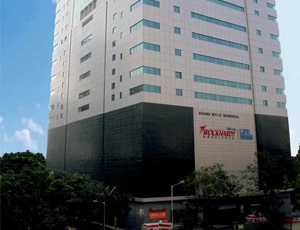
Wockhardt Hospital - A new Age Hospital
Mumbai, India
Wockhardt Hospital - A New Age Hospital located in Mumbai, India is accredited by NABH. Also listed below are some of the most prominent infrastructural details:
- 20-storeyed building at Mumbai Central (South Mumbai)
- Capacity of 350-beds
- Two highly-advanced cath labs with ultra-modern technologies to perform high risk coronary procedures and neurological surgeries
- 8 Operation Theatres- Cardiac, Joint Replacement, Neurology, Oncology, MAS and Organ Transplantation
- 100 beds dedicated to Critical Care, which are connected to IntelliSpace Critical Care & Anaesthesia (ICCA) system
- Largest Paediatric Cardiac Unit
- It has the largest Intelligent ICCA System
- Possess Hi-tech GPS-enabled Ambulances and largest state-of-the-art Accident & Emergency unit in South Mumbai
- As far as accommodation facility is considered, the Hospital makes it easily accessible for the patients in nearby hotels/lodges

Seven Hills Hospital
Mumbai, India
Seven Hills Hospital located in Mumbai, India is accredited by JCI, NABH, NABL. Also listed below are some of the most prominent infrastructural details:
- It is spread over an area of 17 acres.
- There is also an academic institute with research facilities.
- SevenHills Hospital has excellent diagnostic services including a laboratory and a provision for various tests.
- Given that their are specific departments for various kinds of diagnostsic. Tests like PET Scan, MRI, CT scan and biopsies are completed regularly.
- Biochemistry, Hematology, Microbiology are some of the important diagnostic departments.
- Endoscopies as well as non-invasive procedures are done through their respective departments.
- Day care specialty services are available for those kinds of requirements.
- Health Check up packages are also present as are the collaborations with many insurance organisations.
- There are professionally managed in-patient and out-patient facilities.
- There are more than 30 super specialties in Seven Hills Hospital Mumbai.
- There are also Centres of Excellence in Cardiac Care, Neurosciences, Bone & Joint Care, Cancer Care, Nephrology and Cosmetic Dermatology.
- International patient care services are also implemented for the best assistance to overseas patients.
Our Services to better your experience
Opinion & Option
We submit the most accurate opinion and options from one or more countries for your review
Consult Privately
Consult with a certified specialist privately on our telemedicine platform even before you decide to travel
Logistics
We handle flights, visas, transfers, and accommodation—so you can focus on your health.
Recovery
Our In-house rehabilitation service packages to better your recovery and treatment outcome
Why Choose India for Spondylolisthesis Treatment?
India is an excellent destination for treating spondylolisthesis due to good medical care, low costs, and state-of-the-art technology. Compared to other countries, it provides more minimally invasive procedures, more skilled surgeons, and a much shorter waiting time.
Frequently Asked Questions
There are many types of spondylolisthesis:
Degenerative spondylolisthesis: The most common form, degenerative spondylolisthesis, is due to wear and tear of the disks associated with advancing years and leads to increasing intervertebral space and slippage.
Congenital spondylolisthesis (dysplastic): Dysplastic, also known as congenital, is a condition in which a baby's spine is malformed at birth. The vertebrae are out of line and could later present a problem.
Isthmic spondylolisthesis: The slippage of a vertebra is caused by an isthmial spondylolisthesis caused by a bone fracture connecting two vertebrae.
Traumatic spondylolisthesis is caused when a bony force in an accident or spine injury dislocates a vertebra.
Pathological spondylolisthesis causes vertebral slippage due to weakening bones through diseases such as osteoporosis or malignancies.
Postsurgical spondylolisthesis: One uncommon type of spondylolisthesis that can occur as an after-effect of spinal surgery is postsurgical spondylolisthesis.
Yes, spondylolisthesis can often be treated without surgery in mild and moderate cases. Non-surgical treatments include:
Physical therapy will increase core muscle strength, improve flexibility, and correct posture, which may help reduce pain.
Medications: Prescription muscle relaxants or over-the-counter pain relievers like NSAIDs can help alleviate symptoms.
Bracing: A back brace can stabilise the spine and reduce motion.
Lifestyle changes: Maintaining a healthy weight, avoiding heavy lifting, and doing low-impact exercises may help control symptoms.
Heat/cold therapy: Applying heat or cold to the back may help reduce inflammation around the affected nerves.
Surgery for spondylolisthesis aims to relieve nerve compression, stabilise the spine, and reduce discomfort related to vertebral slippage. Its objectives also include improving spine function, restoring appropriate vertebral alignment, and increasing mobility, especially when conservative treatments have failed or when there is significant nerve involvement or instability.
Recovery after surgery for spondylolisthesis typically takes six weeks to several months, depending on the procedure and the patient's general condition. In the first stages of recovery, the patient might be required to wear a back brace, avoid physically demanding activities, and rest. Regaining strength and mobility could take three to six months or longer. Physical therapy is often recommended to help the patient achieve greater strength and flexibility and heal.
Yes, if the vertebral slippage compresses or irritates the spinal nerves, spondylolisthesis may lead to nerve injury. This can cause symptoms often referred to as sciatica, including pain, numbness, tingling, or paralysis in the legs. In extreme situations, prolonged nerve compression may cause more permanent damage that affects function and movement. Nerve injury can be prevented or minimised with early therapy.
Yes, spondylolisthesis can occur in youngsters, especially in isthmic or congenital spondylolisthesis. Congenital conditions cause misplaced vertebrae because the spine does not develop properly before birth. Children and teenagers with growth spurts frequently develop isthmic spondylolisthesis, mainly if they play sports that strain their spines.
The following lifestyle changes can be helpful in the management of spondylolisthesis:
- Maintain proper posture to reduce the stress on your spine.
- Low-impact exercises such as walking or swimming can help strengthen your back.
- To enhance spinal support, strengthen your core muscles.
- Avoid hard lifting to prevent your spine from being more stressed.
- Maintain a healthy weight and stretch frequently to increase flexibility and reduce tightness.

Reviewer

Dr Sonal Gupta
Neurosurgeon
29 Years of Experience
Dr. Sonal Gupta has an experienced neurosurgeon with more than 29+ years of clinical expertise. She is currently the Director, Neuro & Spine Surgery at Fortis Hospital, Shalimar Bagh. Before joining Fortis, she has been associated with various organizations such as Maharaja Agrasen Hospital, Action Balaji Hospital, and Max Hospital. View More
Last Reviewed - January 2026