Spondylitis Treatment in India
- Top Accredited Hospitals
- Global Medical Standards
- Cutting-Edge Technology
- Proven Treatment Options
- High Success Rate
- Trusted by Millions

What is Spondylitis?
Spondylitis is an inflammatory disease that primarily affects the spine and is characterised by pain, rigidity, and discomfort. The vertebrae, the bones that form the spine, become inflamed, leading to new bone growths that eventually fuse parts of the spine. This fusion can reduce mobility and chronic pain as the spine's flexibility is reduced.
The most common form of spondylitis is ankylosing spondylitis (AS), which predominantly affects the lower back and the sacroiliac joints, where the spine and pelvis connect.
What is the Importance of Timely Treatment?
Spondylitis should be treated quickly to prevent spinal fusion, joint injury, and abnormalities. Early treatment improves quality of life, maintains mobility, and reduces pain. It also slows the progression of the disease, increases the effectiveness of treatment, and reduces the risk of complications in other organs. Thus, early treatment can maintain function, prevent permanent disability, and improve long-term outcomes.
What are the Common Symptoms of Spondylitis?
The lower back and pelvis are common chronic pain sites, primarily upon waking or following rest periods.
Stiffness: The stiffness may decrease with activity, such as stretching or exercise, especially in the lower back, hips, and spine.
Less flexibility: The spine can't bend or twist because of stiffness.
Fatigue: A common symptom of inflammatory diseases is being particularly tired or lacking in energy.
Postural Changes: Kyphosis is a forward curvature of the spine that can develop over time and affect posture.
Spine Tenderness: Pain or tenderness when certain spine areas are affected.
Causes and Risk Factors of Spondylitis
Causes
- Although the cause of ankylosing spondylitis is not established, there is a genetic component. People with the gene HLA-B27 are significantly more likely to develop the condition, but only a tiny percentage of those with the gene do so.
Risk Factors
The following are the significant risk factors for spondylitis:
- Age: It usually starts manifesting around the age of forty.
- Genetics: A family history of spinal problems increases the risk.
- Gender: Women may have worse symptoms later in life, whereas men are more likely to have it earlier.
- Repetitive Stress: Workplaces or activities that require twisting or heavy lifting might hasten the deterioration of the spine.
- Poor Posture: Wrong sitting posture or slouching might elevate spinal deterioration.
- Obesity: Extra weight strains the spine.
- Prior Spine Injuries: Prior injuries may elevate the risk of degeneration.
- Sedentary Lifestyle: Not exercising weakens muscles and puts more strain on the spine.
- Smoking accelerates disc degeneration by lowering the blood supply to the spine.
Connect with our advisor for a PRIORITY response
Latest Research and Technologies in the Treatment of Spondylitis in India
New advances in the treatment of AS (Ankylosing Spondylitis) in India include: In addition to reducing inflammation and possibly retarding the disease process, MSCs are currently used to replace damaged tissue. Another minimally invasive intervention that is under investigation is exosome therapy.
Spondylitis Prevention Tips
The following valuable tips can help prevent spondylitis, especially ankylosing spondylitis (AS):
Maintain Good Posture: Adopt good posture to reduce joint and spine strain.
Keep Moving: Regular exercise, such as strengthening and stretching, can increase flexibility and reduce stiffness.
Control Weight: Maintaining your weight within a healthy range eases the strain on your spine.
Avoid Smoking: Smoking increases the risk of spinal problems and worsens symptoms.
Ergonomics: Spinal strain happens during day-to-day activities, so utilise an ergonomic workstation and furniture.
Early Diagnosis and Treatment: Seek medical attention immediately to control the inflammation and halt its progression in case of experiencing symptoms.
Treatment options for Spondylitis
Spinal Fusion: Ankylosing Spondylitis (AS) is commonly treated through spinal fusion, a surgical procedure during this condition when it has progressed to severe pain in the spine, deformation, or injury.
Cost Start From USD 6500 - USD 9500Explore Options
Osteotomy: An osteotomy is a surgical procedure that involves the realignment and cutting of bones to correct abnormalities caused by conditions such as spondylitis.
Cost Start From USD 3500 - USD 4500Explore Options
- Clinical assessment:
Physical Examination: A medical professional will evaluate posture, pain thresholds, spinal flexibility, and joint mobility. They could also run some tests to look for stiffness or inflammation in the joints and spine.
Blood tests that determine inflammation, which may be elevated in spondylitis, include the C-reactive protein (CRP) and Erythrocyte Sedimentation Rate (ESR).
HLA-B27 Test: A blood test to check for the presence of the HLA-B27 gene. This gene is strongly associated with ankylosing spondylitis, though not all AS patients have it.
- Imaging Tests:
X-rays: Ankylosing spondylitis can be detected with X-rays of the spine and pelvis, showing early signs of bone abnormalities, fusion of vertebrae, or joint inflammation.
MRI: Before such severe damage occurs, MRI is more sensitive than X-rays to detect early inflammation, especially in the spine and sacroiliac joints.
CT: A CT scan can provide more details regarding the spine and the joints of the patient in particular conditions, especially when looking for structural damage
MediRehab (chain of Rehab centres - Part of MediGence) provides comprehensive rehabilitation services designed to support spondylitis patients in India. These services include:
- Physical Therapy
- Stretchingexercises can help relieve stiffness and increase spinal flexibility. Focus on your shoulders, hips, and lower back.
- Exercises for Strengthening the Core: By strengthening the core muscles, you may improve posture, lessen joint stress, and support your spine.
- Posture Training: Pain management and prevention of more spinal deformities can be achieved by education on proper posture.
- Joint mobilisation: Methods to increase the afflicted joints' range of motion to lessen stiffness and pain.
- Depending on the situation, your healthcare professional may prescribe medicine to help control your symptoms and support the treatment plan.
Instantly Connect with our Specialists


Hospitals for Spondylitis in India
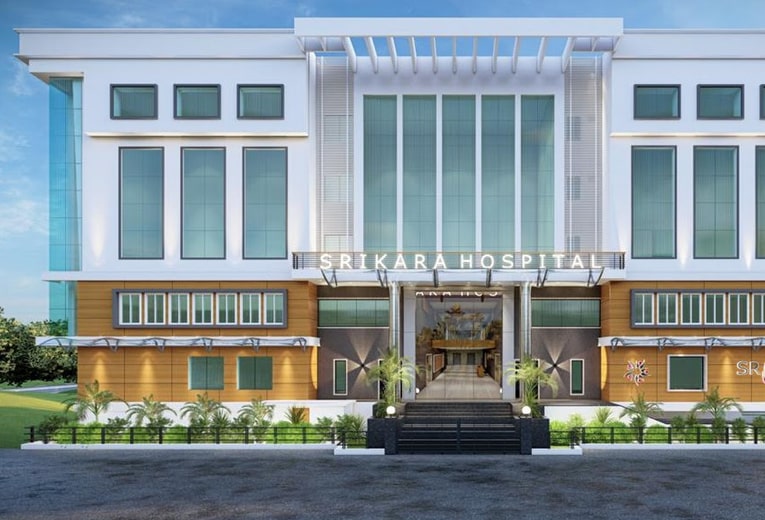
Srikara Hospital, RTC Cross Roads
Hyderabad, India
Srikara Group of Hospitals is an 850-Bedded Tertiary Care healthcare facility, spread over 7 branches and two states in Southern India. 6 out of these 7 branches are situated in the twin city of Hyderabad- Secunderabad and 1 branch is at Vijayawada, Andhra Pradesh. As the ultimate combination of benefits a hospital can provide, Srikara Ortho & Multi-Specialty Hospitals represents the infusion of quality, knowledge, technical proficiency, international standards, compassion, and reasonably priced care. Srikara Hospital is known for its excellence in Orthopedic as well as Neuro-Spine Surgeries. With top-of-the-chart technical proficiency, quality, and skills; Srikara is the destination of choice for patients from not only India but across the globe. Srikara Hospitals are the pioneers in doing Robotics-assisted Joint Replacements in Southern India. These hospitals have been using technologies like Computer Navigation and I-Suite theaters since their inception. Three of its 7 branches offer minimally Invasive Spine surgeries done with the use of top quality Operating microscopes. For patients from other countries seeking treatment at its facilities, Srikara has established a separate unit. By partnering with hospitals and institutions that share its commitment to and passion for ‘Patient Care’, it now hopes to expand its surgical expertise throughout the country and the world.
International quality care at affordable prices is what the Srikara Group of Hospitals strives for. The quality & compassion in care can be bought in only by the human skills behind world-class technology. Rich in human skills & experience, the team of doctors at Srikara Hospitals is decorated with a collective experience of more than 23000 Knee Replacement Surgeries over a period of two decades. 5000+ of these Knee Replacements were Robotic-assisted Knee Replacement surgeries. The team of surgeons and the Sports Medicine Unit at SRIKARA Group of Hospitals hold experience in doing more than 5500 Knee Ligament surgeries. The team of Neuro-spine surgeons holds a collective experience of 11+ years and offers various surgical remedies with and without the assistance of an Operating Microscope. Srikara Group of Hospitals offers a wide array of specialties like Orthopaedics, Neuro-spine, Urology, Laparoscopy, Cardiology, Cosmetic Surgery, etc. with the help of nationally and internationally acclaimed doctors.
To expand their healthcare services globally and for the ease of their patients, the doctors at Srikara Group of Hospitals are also providing Online Consultations to individuals who are unable to visit in person but are in need of medical attention. Srikara Group of Hospitals looks forward to continuing to cater to its domestic as well as overseas patients with compassion and evidence-based healthcare services. All the hospitals of Srikara Group are built in accordance to provide relaxing, serene surroundings, greenery, and a hygienic setting to the patients & visitors. With a large influx of people seeking the best care and facilities in Hyderabad, it is well renowned for its dedication to providing unique and evidence-based healthcare services.

Venkateshwar Hospital
Delhi, India
Venkateshwar Hospital located in New Delhi, India is accredited by NABH. Also listed below are some of the most prominent infrastructural details:
- The hospital has the latest healthcare facilities and world class infrastructure.
- It has a 325 bed capacity and 100 beds for critical care.
- There are as many as 10 operation theatres.
- The Intensive Care Unit and blood bank is also present within the hospital.
- There is complete support for international patients with facilities such as transfers, assistance for visa and accommodation, translators and insurance related assistance.
- Some of the departments in which medical services are available are Plastic and Reconstructive Surgery, Orthopedics, Gynecology, Cardiology, Neurology and Oncology.
- The hospital also provides treatment for infertility, weight loss and has physiotherapy and pain management services.
Artemis Health Institute
Gurgaon, India
Artemis Hospital, established in 2007 in Gurgaon, India, is a 750+ bed, state-of-the-art multi-speciality hospital and the first in Gurgaon accredited by JCI and NABH. A flagship of the Apollo Tyres Group, it offers advanced care across cardiology, oncology, orthopaedics, neurology, and transplant medicine, supported by modern infrastructure and 60+ world-class operating theatres. Its Centres of Excellence span critical areas like heart, cancer, neurosciences, orthopaedics, and women & child care. Guided by values of Service, Compassion, and Integrity, Artemis combines innovation, technology, and affordability, making it a trusted international healthcare destination for comprehensive and compassionate patient care.
Our Services to better your experience
Opinion & Option
We submit the most accurate opinion and options from one or more countries for your review
Consult Privately
Consult with a certified specialist privately on our telemedicine platform even before you decide to travel
Logistics
We handle flights, visas, transfers, and accommodation—so you can focus on your health.
Recovery
Our In-house rehabilitation service packages to better your recovery and treatment outcome
Why Choose India for Spondylitis Treatment?
India is also popular for treating spondylitis due to its modern medical facilities and affordable yet excellent healthcare services. The country offers access to highly qualified physicians, state-of-the-art therapies such as spinal fusion, and contemporary medical tourism infrastructure. It is the most preferred option for those seeking holistic treatment, as patients get tailor-made treatment plans, effective treatment plans, and the latest treatments at a reasonable cost compared to Western countries.
Frequently Asked Questions
Ankylosing spondylitis (AS) is an inflammatory arthritis that primarily affects the sacroiliac joints, which connect the spine and pelvis. Chronic inflammation results in pain, stiffness, and, in some cases, fusion of the spinal vertebrae, which reduces movement.
Spondylitis, more specifically ankylosing spondylitis, can be a hereditary disease. A family history of AS may increase the chances of developing it, and it is closely linked to the illness caused by the HLA-B27 gene. Nevertheless, environmental factors may also play a role, and not everyone bearing this gene will develop spondylitis.
In extreme cases, joint damage or abnormalities may need surgical intervention, like spinal fusion.
Here are some tips to manage spondylitis pain:
Corticosteroids, biologics, or NSAIDs can be used to decrease pain and inflammation.
Physical therapy: Regular stretching, posture training, and strengthening exercises to enhance range of motion and reduce stiffness.
Lifestyle Changes: Maintain a healthy weight, exercise at a low-impact level, and carefully care for your posture.
Apply heat to relax muscles and cold to reduce inflammation in hot/cold therapy.
Alternative Therapies: Explore pain management techniques such as yoga, acupuncture, and breathing.
Spondylitis, especially ankylosing spondylitis (AS), can affect the hips, shoulders, eyes (causing uveitis), heart (resulting in problems with the aortic valve), lungs (reducing lung capacity), and peripheral joints (such as knees and ankles).
An anti-inflammatory diet is rich in fruits, vegetables, whole grains, and omega-3 fatty acids (from fish and flaxseeds) for people with spondylitis. Lean proteins are also helpful and ensure that people get enough vitamin D.
Spondylitis, especially ankylosing spondylitis (AS), usually develops gradually. Lower back discomfort and stiffness can progress to joint degeneration and spinal fusion, which results in altered posture and decreased flexibility. It may also affect other joints, such as the shoulders and hips.
Yes, if left untreated or not well-managed, spondylitis, especially ankylosing spondylitis (AS), can lead to permanent disability. Chronic inflammation will eventually cause restricted mobility, spinal fusion, and joint degeneration, making simple daily activities challenging.

Reviewer

Dr Sonal Gupta
Neurosurgeon
29 Years of Experience
Dr. Sonal Gupta has an experienced neurosurgeon with more than 29+ years of clinical expertise. She is currently the Director, Neuro & Spine Surgery at Fortis Hospital, Shalimar Bagh. Before joining Fortis, she has been associated with various organizations such as Maharaja Agrasen Hospital, Action Balaji Hospital, and Max Hospital. View More
Last Reviewed - January 2026