Spinal Cord Compression Treatment in India
- Top Accredited Hospitals
- Global Medical Standards
- Cutting-Edge Technology
- Proven Treatment Options
- High Success Rate
- Trusted by Millions

What is Spinal Cord Compression?
Spinal cord compression occurs when surrounding structures or abnormal tissue squeeze or compress the spinal cord. It can develop in the cervical, thoracic, or lumbar regions of the spine, although clinically significant spinal cord compression is most often associated with the cervical and thoracic spine. Depending on location and severity, it may cause pain, numbness, weakness, difficulty walking, coordination problems, or bladder and bowel issues.
What is the Importance of Timely Treatment?
Timely treatment of spinal cord compression helps identify the underlying cause, relieve pressure on the spinal cord, preserve neurological function, and reduce the risk of permanent weakness or disability. Prompt evaluation is especially important when symptoms such as progressive weakness, difficulty walking, loss of sensation, or bladder and bowel changes develop.
What are the Common Symptoms of Spinal Cord Compression?
- Neck or Back Pain: Pain may occur near the affected part of the spine and can sometimes spread to the limbs.
- Numbness or Tingling: Compression can cause altered sensation in the arms, hands, legs, or other areas.
- Muscle Weakness: Weakness may develop in the arms or legs and can progressively affect movement.
- Difficulty Walking: Patients may experience balance problems, unsteady walking, or reduced coordination.
- Loss of Coordination: Fine motor activities, such as buttoning clothes or handling objects, may become difficult.
- Bladder or Bowel Changes: Severe spinal cord compression may affect bladder or bowel control and requires urgent medical evaluation.
Causes and Risk Factors of Spinal Cord Compression
Causes
- Herniated Disc: A displaced spinal disc can press against the spinal cord or nearby neural structures.
- Spinal Stenosis: Narrowing of the spinal canal can reduce the available space around the spinal cord.
- Spinal Tumors: Tumors inside or around the spine can cause direct or indirect pressure on the spinal cord.
- Spinal Fractures: Vertebral fractures or displaced bone fragments can compress the spinal cord.
- Infections: Spinal infections or epidural abscesses may produce pressure around the spinal cord.
- Degenerative Changes: Arthritis, bone spurs, and other age-related changes can contribute to spinal canal narrowing.
- Spinal Deformities: Abnormal curvature or structural changes may reduce space around the spinal cord.
Risk Factors
- Older Age: Degenerative spinal conditions become more common with increasing age.
- Previous Spinal Injury: Earlier trauma may increase the risk of structural changes or instability.
- Degenerative Spine Conditions: Arthritis and spinal stenosis can increase the likelihood of compression.
- Cancer: Certain cancers can spread to or develop around the spine.
- Osteoporosis: Weakened bones can increase the risk of vertebral fractures.
- Spinal Infections: Certain infections can affect the vertebrae or tissues surrounding the spinal cord.
- Congenital Spinal Abnormalities: Structural abnormalities present from birth may predispose some individuals to compression.
Latest Research and Technologies in the Treatment of Spinal Cord Compression in India
Recent advances in spinal cord compression management include high-resolution MRI, advanced spinal imaging, intraoperative navigation, neuromonitoring, minimally invasive spinal procedures, and computer-assisted surgical planning. Depending on the underlying cause, these technologies can help specialists accurately identify compression, plan treatment, decompress the spinal cord, and improve surgical precision while supporting neurological preservation and recovery.
Treatment options for Spinal Cord Compression
Treatment depends on the cause, location, severity of compression, neurological symptoms, and overall health. Options may include:
Conservative Management: Activity modification, physiotherapy, and symptom management may be considered for selected patients with mild or stable compression.
Epidural or Image-Guided Injections: Selected patients may benefit from injections to manage symptoms when clinically appropriate.
Spinal Decompression : Surgery may be required to relieve pressure on the spinal cord.
Cost Start From 6500Explore Options
Discectomy (microdiscectomy): Removal of a damaged or herniated disc may relieve compression in selected cases.
Laminectomy : Removal of part of the vertebral bone can create additional space around the spinal cord.
Cost Start From 5500Explore Options
Spinal Fusion : Fusion may be performed when spinal instability or structural problems require stabilisation.
Cost Start From 7000Explore Options
Tumor or Abscess Removal: Surgery may be required when a tumor, abscess, or other mass is causing compression.
Fracture Stabilisation: Surgical stabilisation may be required when spinal trauma causes instability or neurological compression.
Minimally Invasive Spine Surgery: Selected patients may be treated through smaller surgical approaches depending on the cause and location of compression.
Clinical assessment:
- Medical History: Evaluation of pain, weakness, sensory changes, mobility, previous injuries, and underlying conditions.
- Neurological Examination: Assessment of muscle strength, sensation, reflexes, and coordination.
- Gait Assessment: Evaluation of walking pattern, balance, and coordination.
- Spinal Examination: Assessment of spinal movement, tenderness, posture, and functional limitations.
- Motor Function Assessment: Evaluation of muscle strength and movement in affected limbs.
- Bladder and Bowel Assessment: Evaluation of changes in bladder or bowel function when present.
Imaging Tests:
- MRI Scan: Provides detailed images of the spinal cord, discs, nerves, and surrounding soft tissues.
- CT Scan: Provides detailed images of the vertebrae and can help evaluate fractures and bony abnormalities.
- X-rays: Help assess spinal alignment, fractures, and structural or degenerative changes.
- CT Myelography: May be used when MRI is unsuitable or additional information about spinal canal compression is required.
- Dynamic X-rays: Selected patients may undergo movement-based X-rays to evaluate spinal instability.
MediRehab (a chain of Rehab centres, part of MediGence) provides comprehensive rehabilitation services designed to support Spinal Cord Compression patients in India. These services include:
- Physiotherapy may include range-of-motion exercises, muscle strengthening, gait and balance training, posture correction, mobility exercises, and gradual return to daily activities.
- Medicines may help manage pain and inflammation associated with spinal cord compression. Depending on the cause and symptoms, treatment may include analgesics, anti-inflammatory medicines, muscle relaxants, or medicines for nerve-related pain. Medicines do not directly remove significant spinal cord compression, so patients with neurological deterioration may require surgical evaluation.
Instantly Connect with our Specialists


Hospitals for Spinal Cord Compression in India
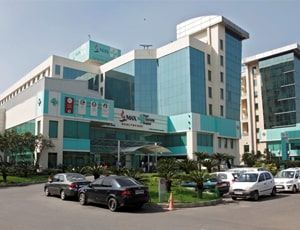
Max Super Speciality Hospital, Saket
Delhi, India
Max Smart Super Speciality Hospital, Saket, is a 250-bed tertiary care hospital awarded NABH accreditation, which provides advanced medical care in various specialities such as Cardiac Sciences, Orthopaedics, Neurology, Urology, Kidney Transplant, Paediatrics, and Obstetrics & Gynaecology. The hospital provides quality, safe, integrated, and patient-centric medical care using modular OTs, ICUs, Cath Labs, CT, MRI and Dialysis units.

Manipal Hospital, Hebbal
Bangalore, India
Manipal Hospitals, a group of Manipal Education Medical Group, is India’s leading multi-speciality network, comprising over 650 beds. Dedicated to clinical excellence, patient-centric care and ethical practices, it provides sophisticated diagnostics, surgery and home care services to both domestic and international patients, while also improving access to affordable healthcare for underprivileged communities.

Clear Medi Hospital, Karkardooma
Delhi, India
Clear Medi Hospital, Karkardooma located in New Delhi, India is accredited by ISO. Also listed below are some of the most prominent infrastructural details:
- There are 12 Linear Accelerators in all hospitals of Clear Medi Hospital, Delhi, India and more in the development stage.
- Over 25 surgical and medical specialties across all Clear Medi Hospitals
- Care Medi is one of the biggest Oncology care organisations in India.
- Hospital management solutions provided to over 15 partner healthcare organisations managing more than 300 beds.
- The organisation consists of offerings such as clinical manpower management and equipment management.
- Advanced radiology and nuclear medicine centres
- Professionally managed international patient care
- Clear Medi Hospital, Delhi has a capacity of 100 beds.
- Clear Medi is a multispecialty hospital.
- It is a NABH (National Accreditation Board for Hospitals & Healthcare providers) certified hospital.
- It has Oncology and Cardiac departments with an Intensive Care Unit.
- It also has fully equipped Operation Theatres.
- Clear Medi Hospital ensures coordination with patients and International Patient assistance
- It has an online Tumor Board with a number of Medical, Surgical and Radiation Oncologists.
Our Services to better your experience
Opinion & Option
We submit the most accurate opinion and options from one or more countries for your review
Consult Privately
Consult with a certified specialist privately on our telemedicine platform even before you decide to travel
Logistics
We handle flights, visas, transfers, and accommodation—so you can focus on your health.
Recovery
Our In-house rehabilitation service packages to better your recovery and treatment outcome
Why Choose India for Spinal Cord Compression Treatment?
- Experienced Spine Specialists: India has experienced neurosurgeons, orthopedic spine surgeons, neurologists, and rehabilitation specialists who manage a range of spinal conditions.
- Advanced Diagnostic Facilities: Many leading hospitals offer MRI, CT, advanced spinal imaging, and neurological assessment facilities.
- Modern Surgical Techniques: Eligible patients may have access to minimally invasive spine surgery, decompression, navigation-assisted procedures, and spinal stabilisation.
- Multidisciplinary Care: Complex cases can be evaluated by specialists from neurosurgery, orthopedics, neurology, oncology, rehabilitation, and other relevant disciplines.
- Personalised Treatment: Treatment plans are developed according to the cause, severity, neurological status, and individual needs of the patient.
- Comprehensive Rehabilitation: Physiotherapy and functional rehabilitation can support recovery of mobility and independence.
- International Patient Support: Many hospitals and healthcare providers offer assistance with appointments, treatment coordination, travel, accommodation, and follow-up for international patients.