Osteoarthritis Treatment in India
- Top Accredited Hospitals
- Global Medical Standards
- Cutting-Edge Technology
- Proven Treatment Options
- High Success Rate
- Trusted by Millions

What is Osteoarthritis?
Osteoarthritis is the most common condition that affects the joints. Medical professionals also refer to it as degenerative arthritis or osteoarthrosis. It occurs when the cartilage that lines the joints wears away over time, causing the bones to rub together when the affected joints are used.
Although osteoarthritis can cause damage to any joint, it most commonly affects the hands, knees, hips, and spine.
What is the Importance of Timely Treatment?
Osteoarthritis must be treated on time to minimise symptoms, enhance quality of life, and avoid further joint damage. Early management can help reduce pain, inflammation, and stiffness, allowing patients to remain mobile and functional. Addressing the problem early can limit the progression of joint degeneration, reduce the chance of disability, and improve long-term outcomes.
Furthermore, the timely treatment of Osteoarthritis can be controlled to a certain degree through timely medication, physical therapy, and lifestyle adjustments so that daily activities can be carried out without a more invasive procedure like surgery.
What are the Common Symptoms of Osteoarthritis?
The symptoms of osteoarthritis typically develop gradually and worsen over time. Signs and symptoms of osteoarthritis include:
- Pain: Your joints may hurt during or after the activity.
- Stiffness: Your joints may feel stiffer when you first get up or after sitting for a long time.
- Tenderness: Light pressure on or near your joint may be painful.
- Loss of flexibility: You may be unable to move your joint through its full range of motion.
- A grating feeling: When you use the joint, you can have severe feelings and hear cracking or popping.
- Bone spurs: These additional bone pieces that feel like hard lumps grow around the joint.
- Swelling: This can be due to soft tissue inflammation around the joint.
Causes and Risk Factors of Osteoarthritis
Causes
- The causes of Osteoarthritis increase with age as the cartilage naturally breaks down in the joint.
- Congenital or developmental joint defects can also increase the risk of osteoarthritis, as defects often alter joint mechanics.
- Excess body weight causes increased stress on weight-bearing joints such as the knees and hips, accelerating cartilage wear and tear.
Risk Factors
- Older age
- Sex
- Obesity
- Joint injuries
- Repeated stress on the joint
- Genetics
- Certain metabolic disease
Connect with our advisor for a PRIORITY response
Latest Research and Technologies in the Treatment of Osteoarthritis in India
- According to the National Institutes of Health (NIH), recent developments in osteoarthritis (OA) treatment aim to improve pain management, promote joint health, and improve patients' long-term prognosis.
- According to a recent study, nutraceuticals have gained popularity in India as complementary treatments for knee osteoarthritis (OA), emphasising pain management, inflammation reduction, and joint health improvement. The National Institutes of Health (NIH) has identified many nutraceuticals routinely utilised in osteoarthritis therapy.
Osteoarthritis Prevention Tips
Here are a few steps to help prevent osteoarthritis or slow its progression.
- Maintaining a healthy weight minimises joint stress and decreases the risk of OA.
- Regular exercise helps to strengthen muscles, increase flexibility, and reduce pain.
- Eat right, including Omega-3 and Vitamin D.
Treatment options for Osteoarthritis
Osteotomy: Surgery that realigns the bones of a joint to decrease stress and enhance function.
Cost Start From USD 3500 - USD 4500Explore Options
JointReplacementSurgery is common in advanced cases. In this procedure, severely damaged joints, such as knee or hip joints, are replaced with prosthetics.
Stem Cell Therapy: A regenerative treatment focused on repairing damaged cartilage using stem cells.
Cost Start From USD 18000 - USD 36000Explore Options
- Clinical assessment:
- Physical Exam: This includes the evaluation of the patient's posture, gait, and any evident spinal deformities. Around the affected area, the doctor examines for any signs of muscular spasms, soreness, or spinal deformities.
- Range-of-motiontests: The doctor will check your spine's movement and flexibility, particularly in the lumbar region. A restricted range of motion, such as the inability to fully extend (lean backward) or flex (bend forward), might indicate damage to the spinal area or instability.
- Imaging Tests:
- X-rays:Identify joint space narrowing, bone spurs, and evidence of loss of cartilage.
- MRI Scans Provide detailed views of cartilage, soft tissues, and bone marrow alterations, allowing you to estimate the severity of joint degeneration.
- Ultrasound shows joint inflammation, fluid buildup, and soft tissue injury.
- Other diagnostic:
- Weight-bearing and walking assessment: Assessing the capacity to bear weight on the affected joint, identifying discomfort and mobility limitation areas.
- Balance Test: Evaluating neuromuscular function and how osteoarthritis impacts balance and coordination.
MediRehab (chain of Rehab centres - Part of MediGence) provides comprehensive rehabilitation services designed to support Osteoarthritis patients in India. These services include:
Personalised Therapy Plans: Improved mobility, pain management, improvement in strength, and reduction in inflammation.
Post-operative rehabilitation: Physical therapy sessions aimed at regaining joint strength and function.
- Depending on the situation, your healthcare professional may prescribe medicine to help control your symptoms and support the treatment plan.
Instantly Connect with our Specialists


Hospitals for Osteoarthritis in India

Fortis Hospital, Mulund
Mumbai, India
Fortis Hospital Mulund, located in Mulund West, Mumbai, is a premier healthcare facility providing excellence in multi-speciality healthcare for over 20 years. The global leader in advancing medical technology and clinical expertise, the hospital offers specialities including Cardiology, Neurosciences, Oncology, Transplants, and Orthopaedics. The hospital is well-known for being the largest transplant center in Maharashtra and offers advanced treatment options, including Transcatheter Aortic Valve Implantation (TAVI) and stereotactic precision radiotherapy for cancer. Fortis Mulund is equipped with a 24/7 Emergency Department and International Patient Unit to provide world-class patient-centric care.

Manipal Hospital, Hebbal
Bangalore, India
Manipal Hospitals, a group of Manipal Education Medical Group, is India’s leading multi-speciality network, comprising over 650 beds. Dedicated to clinical excellence, patient-centric care and ethical practices, it provides sophisticated diagnostics, surgery and home care services to both domestic and international patients, while also improving access to affordable healthcare for underprivileged communities.
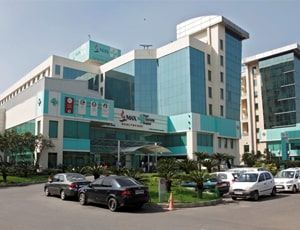
Max Super Speciality Hospital, Saket
Delhi, India
Max Smart Super Speciality Hospital, Saket, is a 250-bed tertiary care hospital awarded NABH accreditation, which provides advanced medical care in various specialities such as Cardiac Sciences, Orthopaedics, Neurology, Urology, Kidney Transplant, Paediatrics, and Obstetrics & Gynaecology. The hospital provides quality, safe, integrated, and patient-centric medical care using modular OTs, ICUs, Cath Labs, CT, MRI and Dialysis units.
Our Services to better your experience
Opinion & Option
We submit the most accurate opinion and options from one or more countries for your review
Consult Privately
Consult with a certified specialist privately on our telemedicine platform even before you decide to travel
Logistics
We handle flights, visas, transfers, and accommodation—so you can focus on your health.
Recovery
Our In-house rehabilitation service packages to better your recovery and treatment outcome
Why Choose India for Osteoarthritis Treatment?
Here are some significant reasons to consider India for treatment:
Affordable Treatment: Compared to Western countries, high-quality care is offered at a low cost.
Advance Medical Centers: Modern hospitals have the latest diagnostic and treatment facilities.
Experienced specialists: Orthopaedic surgeons and rheumatologists are readily available.
Advanced therapies include stem cell treatment, platelet-rich plasma, and minimally invasive surgery.
Comprehensive Care: This approach involves surgery, physiotherapy, and pain management.
Rehabilitation and Recovery: Our facility, MediRehab, is an integral part of MediGence in India and offers speciality rehabilitation services to restore joint function and overall quality of life in osteoarthritis patients.
Frequently Asked Questions
Recovery from osteoarthritis varies depending on its severity and treatment. Improvement can occur within weeks to months with non-surgical treatments such as physical therapy and medications. However, Continuous management is required.
Recovery from joint replacement surgery usually takes 6-12 weeks, but full recovery can take up to a year. Consistent treatment and lifestyle changes are key to managing symptoms and improving quality of life.
Yes, you can walk with osteoarthritis, but the degree of comfort and mobility depends on the severity of the condition. For mild to moderate Osteoarthritis, walking can help to maintain joint function and reduce stiffness.
Still, it is recommended that you pace yourself, avoid high-impact activities, and wear supportive shoes. Physical therapy or assistive devices such as a cane or walker may be suggested to increase stability and reduce pain while walking.
Yes, Indian hospitals are equipped with modern technology for treating osteoarthritis. Most leading hospitals in India have modern diagnostic tools, such as MRI, X-rays, and ultrasound, for precise joint evaluation.
Treatment includes modern therapies such as stem cell treatment, PRP injections, and minimally invasive surgeries such as knee and hip replacement.
Most hospitals in India offer the following:
- Assistance in obtaining visas.
- Airport Service to and from the hospitals.
- Multilingual experts and Best accommodations services.
Before selecting hospitals in India, always look for the following:
- Search for experienced orthopaedic specialists or rheumatologists with the necessary certifications and expertise in Osteoarthritis.
- Check accredited hospitals (NABH, JCI) having specialised orthopaedic or rheumatology departments.
- Ensure the hospital offers modern treatments for Osteoarthritis, like joint replacement, stem cell therapy, and physiotherapy.
- Choose the hospitals which provide excellent care, individualised plans, and supportive recovery processes.
Yes, osteoarthritis can severely affect the quality of life due to chronic pain, loss of mobility, and the inability to perform everyday activities. It may decrease physical activity, affecting independence and mental well-being. Proper therapy and management can improve function while minimising the impact on daily life.
Yes, stem cell and PRP (Platelet-Rich Plasma) therapy for osteoarthritis is available in India. Many of the country's leading hospitals and specialised clinics offer these therapies.
Yes, losing weight can help with osteoarthritis symptoms, especially in weight-bearing joints like the knees and hips. It reduces the stress on those joints, removes pain or discomfort, improves mobility, and slows the disease's progression.
Surgery for osteoarthritis is generally an option when conservative management, such as medication, physical therapy, or injections, no longer provides relief from pain or improves range of motion.
Treatment is usually recommended if the joint damage is severe, causing intractable pain, loss of function, or significant stiffness that interferes with one's activities. In this scenario, joint replacement or surgery is necessary to enhance the quality of life.

Reviewer

Dr. Akash Khandelwal
Hematologist
9 Years of Experience
Dr. Akash Khandelwal is a distinguished Hematologist, Hemato-oncologist, and Bone Marrow Transplant (BMT) Physician with extensive training from the prestigious AIIMS New Delhi. His expertise encompasses a wide range of specialized techniques in bone marrow transplantation, including autologous and allogeneic transplants such as matched sibling donors, matched unrelated donors (MUD), and haploidentical donor transplants. Dr. Khandelwal has personally supervised and conducted over 100 bone marrow transplants. View More
Last Reviewed - January 2026