Obstructive Jaundice Treatment in Thailand
- Top Accredited Hospitals
- Global Medical Standards
- Cutting-Edge Technology
- Proven Treatment Options
- High Success Rate
- Trusted by Millions

What is Obstructive Jaundice?
When bile cannot pass from the liver to the intestines due to a blockage in the bile ducts, it will result in obstructive jaundice. This obstruction results in an accumulation of the yellow pigment bilirubin in the blood, giving the skin and eyes a distinctive yellowing.
What is the Importance of Timely Treatment?
The treatment of obstructive jaundice is beneficial for several reasons:
- Preventing Complications: Early care can prevent serious complications, such as liver damage and infections in the bile duct and other parts of the organs due to blocked bile flow.
- Reducing symptoms: Early treatment can improve a patient's quality of life by reducing abdominal pain, discomfort, weight loss and yellowing of the skin and eyes.
- Avoiding further medical interventions: Treatment on time lessens the need for long-term medications and their side effects associated with the long-term medication. More invasive surgical procedures might be avoided with early management.
What are the Common Symptoms of Obstructive Jaundice?
Obstructive Jaundice can cause a set of common symptoms
- Yellowing of the Skin and Eyes (Jaundice)
- Dark Urine
- Pale Stools
- Abdominal Pain
- Itching (Pruritus)
- Loss of Appetite
- Nausea and Vomiting
- Fever
- Weight Loss
Causes and Risk Factors of Obstructive Jaundice
Causes
- Gallstones
- Tumors
- Inflammation
- Structural Issues
- Parasitic Infections
- Pancreatitis
- Iatrogenic Causes
Risk Factors
- Age
- Gender
- Family History
- Obesity
- Certain Medications
- Liver Diseases
Connect with our advisor for a PRIORITY response
Latest Research and Technologies in the Treatment of Obstructive Jaundice in Thailand
- Preoperative Biliary Drainage: It is frequently used to treat cholangiocarcinoma, pancreatic cancer, and hepatobiliary malignancies by relieving biliary blockage before surgery for malignant obstructive jaundice (MOJ).
- Endoscopic biliary drainage (EBD): It is commonly used to treat benign and malignant biliary blockages and is mainly carried out using endoscopic retrograde cholangiopancreatography (ERCP).
- Endoscopic Cholangioscopy: It diagnose and treat congenital bile duct anomalies. It makes it possible to see the bile ducts directly, makes targeted biopsies easier, and helps with accurate treatment procedures.
Obstructive Jaundice Prevention Tips
While there is no promising way to prevent Obstructive Jaundice, A few lifestyle modifications and practices can lower your risk and improve your overall liver health in general :
- Maintain a balanced diet rich in fibres that include fruits, vegetables, and whole grains to aid liver processing waste efficiently, have lean proteins like meat, beans, an legumes, and avoid uncontrolled consumption of saturated fats and refined sugars.
- Staying physically active is a key to maintaining a healthy weight that also reduces liver fat. Swimming, cycling and walking are absolute aerobic activities for maintaining a healthy weight.
- Limit exposure to harmful chemicals, cleaning products and insecticides.
- Avoid smoking
- Monitor liver function through regular Blood tests that identify liver problems early and enable timely treatment.
- Follow Medical Advice if you have any family history of Liver disease or other risk factors.
Treatment options for Obstructive Jaundice
Endoscopic Retrograde Cholangiopancreatography (ERCP): It uses an endoscope to remove clogged bile ducts to open up by placing stents.
Cost Start From USD 1000Explore Options
Cholecystectomy: It can be performed in case of obstruction of the gallbladder, infection and gallstone if the patient already has jaundice complication.
Cost Start From USD 3000 - USD 5500Explore Options
Laboratory Tests
- Liver Function Test (LFTs): It can detect the measurement o bilirubin, alkaline phosphatase(ALP), aspartate aminotransferase (AST), and alanine aminotransferase (ALT) to access Liver function and obstructions in suspected patients.
- Complete Blood Count(CBC)
- Prothrombin Time (PT)
Endoscopic Procedures
- Endoscopic Retrograde Cholangiopancreatography (ERCP) {ercp-diagnostic} : Utilizes an endoscope to inject dyes into the bile duct, to observe medical images X-rays to visualize obstructions in the bile duct.
- Choledochoscopy: A tiny camera is inserted into the bile ducts using an endoscope for direct visual examinations.
Imaging Studies
- Ultrasound (USG)
- Magnetic Resonance Cholangiopancreatography (MRCP)
- Computed Tomography (CT) Scan
- Endoscopic Ultrasound (EUS)
Other Diagnostic Tests
- Narrow Band Imaging (NBI): It increases the visualisation of bile ducts during the endoscopy.
- Probe-Based Confocal Endomicroscopy: Bile ducts can be visualised at microscopic levels through high-resolution images provided by probe based confocal endoscopy.
MediRehab (chain of Rehab centres - Part of MediGence provides comprehensive rehabilitation services designed to support Obstructive Jaundice patients in Thailand. These services include:
Lifestyle changes and modification: Dietary adjustments and supplements should be made, and tailored meal plans to control symptoms and guarantee adequate nourishment. Treating Vitamins and minerals deficiency if detected in obstructive jaundice patients. To enhance health and well-being, lifestyle adjustments and modifications involve modifying long-term habits, especially nutrition, exercise, avoiding alcohol, quitting smoking, and managing stress.
Depending on the circumstances, your doctor might recommend medication to help manage your symptoms and complement the course of treatment.
Instantly Connect with our Specialists


Hospitals for Obstructive Jaundice in Thailand
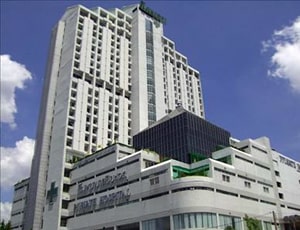
Piyavate Hospital
Bangkok, Thailand
Piyavate Hospital located in Bangkok, Thailand is accredited by JCI. Also listed below are some of the most prominent infrastructural details:
Medicine Centre: Piyavate Hospital provides advanced holistic treatment for their patients. They offer a complete range of services and physicians that specialize in various fields like the endocrine system, the nervous system, kidney function, cardiovascular care, respiratory and digestive system. They pride themselves for the familial care that they provide to their patients.
Fertility and In-Vitro Fertilization Centre: Helping the couples who walk into the Piyavate Hospital to achieve their dream of having a family. They have a medical team that specializes in male and female fertility. They offer consultation services, fertility check-up for both men and women and complete IVF services. They have advanced IVF cycle treatment facilities that offer a high rate of success.
Bone and Joint Institute: Piyavate Hospital houses one of the frontrunners in Orthopaedic health care in all of SouthEast Asia. They offer a wide range of services and surgeries in their bone and joint institute that include hand surgery, hip and knee replacement surgery, spinal cord surgery, upper extremity surgery, arthroscopic surgery and sports medicine.
Eye and Lasik Centre: Piyavate Hospital is fully equipped with the latest and most advanced technology for eye care and houses highly skilled ophthalmologists, sub-specialists and qualified nurses.
Physical Therapy and Rehabilitation Centre: One of the first hospitals to be equipped with the Hybrid Assistive Limb technology that will help a neurologically challenged patient to control the rehabilitation robot limb with a signal from their brain. The Physical Therapy and Rehabilitation Centre at Piyavate Hospital uses this system encourage patients to regain muscle memory to walk and function normally.
Amenities for Patient’s Family:
Piyavate Hospital also offers additional apartment facilities to house the kin of the patients who come to visit them from distant places. A restaurant, a flower shop and a café are a few of the other amenities provided by the hospital.
These are the most popular services offered by the Piyavate Hospital in Bangkok, Thailand. They also provide a plethora of other medical services that are listed below:
Diabetic Foot Centre
Check-up centre
Urology Centre
Heart Institute
Paediatric Centre
Obstetrics and Gynaecology Centre
Surgery Centre
Ear Nose Throat Centre
Haemodialysis Centre
Dental Centre
X-Ray Centre
Gastroenterology Centre
Cancer Centre
Neonatal Intensive Care Unit (NICU)
Emergency Services and Centre
Tele-medicine

Bangpakok 9 International Hospital
Bangkok, Thailand
Bangpakok 9 International Hospital located in Bangkok, Thailand is accredited by JCI. Also listed below are some of the most prominent infrastructural details:
- It would be prudent to summarise the Medical Services provided at the Bangpakok 9 International Hospital (BPK 9), Bangkok, Thailand:
- Cosmetic Dentistry
- Dental Implants
- Electrocardiogram (EKG or ECG)
- Exercise Stress Test
- Health Screening
- Laser Vagina Firming
- Pediatric Physical Therapy
- Perfect Slim by Vela II
- Physical Therapy for Musculoskeletal
- Prosthodontics
- The Medical Services are also inclusive of the International Patient Services such as the ones listed here:
- Thai, English, French, Arabic, Chinese, Myanmar, Cambodia, Bangladeshi, Bahasa and Tagalog are the languages in which there are Translation services available for International Patients.
- Visa extension related assistance
- International health insurance related assistance
- Embassy and international organizations related assistance
- A variety of meals of choice for International Patients
- Email consultation services
- Transfer to either airport and/or hotels
- Prayer room
- Four different types of rooms are available such as Deluxe room, two kinds of suites, and a VIP suite.
- Hospital facilities like The Coffee shop, Food Hall, Cafe and Medical Spa.
- Complete health and safety protocols are maintained in the various Medical Centers some of whom are as follows:
- Aesthetic Center
- 24 Hour Emergency Center
- Allergy Center
- Breast Center
- bSmart Center
- Checkup Center
- Dental Center,
- Happy Long Life Center
- Medical Fitness Center
- Psychiatric Center
- Rehabilitation Center
- Sleep Disorders Center

MALI Interdisciplinary Hospital
Bangkok, Thailand
MALI Interdisciplinary Hospital located in Bangkok, Thailand is accredited by JCI. Also listed below are some of the most prominent infrastructural details:
- Operating Room
- X-Ray Department
- Laboratory
- Inpatient Department
- Emergency Department
Our Services to better your experience
Opinion & Option
We submit the most accurate opinion and options from one or more countries for your review
Consult Privately
Consult with a certified specialist privately on our telemedicine platform even before you decide to travel
Logistics
We handle flights, visas, transfers, and accommodation—so you can focus on your health.
Recovery
Our In-house rehabilitation service packages to better your recovery and treatment outcome
Why Choose Thailand for Obstructive Jaundice Treatment?
- Advanced Medical Centers: The best hospitals in Thailand with international accreditation provide modern obstructive jaundice therapies, hepatobiliary surgery, and skilled gastroenterology.
- Affordable Treatment costs: Compared to Western countries, excellent care is offered at a low cost.
- Cutting-edge technology and Minimally Invasive Treatments: Thai hospitals successfully identify and treat obstructive jaundice using cutting-edge techniques, including ERCP, EUS-BD, and SEMS.
- Comprehensive Care: Thailand hospitals follow a holistic approach to treatment, including pain management, dietary support, psychological counselling, and medical and surgical intervention.
- Fast and Efficient Medical Services: Thailand offers prompt diagnosis, same-day care, and round-the-clock foreign patient assistance from staff who know English.
- Excellent Post-Treatment Rehabilitation and Holistic Care: Thailand provides liver recovery rehabilitation through physical therapy, nutritional therapy, and traditional Thai healing.
Frequently Asked Questions
The length of recovery for mild cases of obstructive jaundice is 1-2 weeks, moderate cases are 2-4 weeks, and severe cases are many months.
Early diagnosis and treatment are essential since untreated obstructive jaundice can result in infections, failure, and irreparable liver damage.
Yes, the best hospitals in Thailand have state-of-the-art equipment for diagnosing, treating, and recovering from obstructive jaundice. These medical facilities use advanced endoscopic procedures, advanced drainage and stenting techniques, post-treatment rehabilitation, and liver care.
Most hospitals in Thailand offer the following:
- Assistance in obtaining visas.
- Airport Service to and from the hospitals.
- Multilingual experts and Best accommodations services
Obstructive Jaundice symptoms can affect day-to-day functioning by interfering with social interactions, work and productivity, emotional and psychological health, Digestive issues, abdominal pain and nutritional challenges. Many Obstructive Jaundice sufferers, however, lead happy lives when their condition is properly treated.
If medicine and lifestyle modifications don't work, surgery can be required in case of gallstones, tumors and bile duct injuries.
Absolutely. Obstructive Jaundice can remarkably impact the quality of life due to its chronic nature and the symptoms that it causes on physical impacts like chronic abdominal pain, fatigue, itching, poor quality of sleep due to itching, Digestive issues due to poor nutrition absorption, emotional and psychological impacts like stress, anxiety, social isolation, Reduced work capacity, Dietary restrictions that include careful meal plannings.
You should get medical attention right away if you have experienced persistent abdominal pain, cramping, yellowing of the skin, dark urine, pale and clay-coloured stool,fever, nausea and vomiting, confusion and changes of behaviour. If anyone experiences these symptoms, it's beneficial to get in touch with healthcare professionals for further diagnosis and treatment of obstructive Jaundice. Early interventions helps patients to manage symptoms and prevent complications.
There is no direct link between obstructive jaundice and Hepatitis B. Contact with contaminated blood or bodily fluids can result in the transmission of the viral infection known as hepatitis B, which damages the liver. However, obstructive jaundice can worsen liver damage and make the illness more complicated if the patient additionally has a Hepatitis B virus infection.
Preventing Complications: Early care can prevent serious complications, such as infections and liver damage.
Reducing symptoms: Early treatment can improve a patient's quality of life by reducing yellowing of skin and eyes, as well as abdominal pain and discomfort.
Improving overall health: Treatment on time ensures proper nutrient absorption, initially preventing weight loss by maintaining normal digestive functions.
Enhancing quality of life: Resolving obstructions in the gall bladder can improve individuals' overall well-being and energy levels.
They offer physiotherapy, nutritional counselling, liver detox programs, and follow-up imaging to aid in healing and avoid problems.
Yes, you can consult with professional hepatologists and gastroenterologists in Thailand to receive a second opinion on how to treat obstructive jaundice. Top hospitals offer professional evaluations and cutting-edge diagnostic equipment to guarantee precise treatment suggestions.

Reviewer

Dr. Pradeep Jain
General & Laparoscopic Surgeon
33 Years of Experience
Dr. Pradeep Jain has completed his MBBS, MS - General Surgery, MCh - Surgical Gastroenterology/G.I. Surgery, and MCh - Surgical Oncology. He is a GastroIntestinal Surgeon, General Surgeon, Surgical Oncologist, Bariatric Surgeon par excellence with total experience of 36 years of which about 33+ years have been as a specialist View More
Last Reviewed - January 2026