Neurofibromatosis Treatment in United Arab Emirates
- Top Accredited Hospitals
- Global Medical Standards
- Cutting-Edge Technology
- Proven Treatment Options
- High Success Rate
- Trusted by Millions

What is Neurofibromatosis?
Neurofibromatosis is a complex medical condition. It describes the emergence of tumors that can impact the brain, spinal cord, and the nerves that transmit messages from the brain and spinal cord to every other area of the body. The majority of tumors are benign (non-cancerous), while some have the potential to develop into malignant tumors.
What can I expect if my child has Neurofibromatosis?
Most children with NF1 develop many skin spots by the time they become one year old; these patches are known as café-au-lait spots due to their color. Spots that are greater than 1/4 inch (5 millimeters) across and darker than the surrounding skin . Compared to ordinary children, children with NF1 may take longer to walk, talk, and reach other developmental milestones.
Additionally, they might have
- Neurofibromas, which are lumps in and beneath the skin
- A head that appears oversized in relation to body headaches
- Difficulty learning, hyperactivity, and attention issues
- A lower height than the majority of kids their age, as well as scoliosis, or side-to-side backbone bends
- Weakness, thinning, or curvature of the lower leg or forearm bones
What are the Common Symptoms of Neurofibromatosis?
- Neurofibromas, which are lumps in and beneath the skin, and a head that appears oversized for the body
- Headaches
- Difficulties in learning
- Hyperactivity and issues with focus
- Shorter than the majority of kids their age
- Scoliosis, or side-to-side curvature in the backbone
Causes, Risk Factors and Complications of Neurofibromatosis?
Causes
A mutated gene that either develops during pregnancy or is inherited from a parent causes neurofibromatosis type 1. Chromosome 17 contains the NF1 gene. A protein termed neurofibromin, which is produced by this gene, aids in controlling cell division. Neurofibromin is lost as a result of gene alteration. This permits unchecked cell growth.
Risk Factors
A family history is the largest risk factor for neurofibromatosis type 1 (NF1). Approximately 50% of individuals with NF1 have a parent-inherited form of the disease. Individuals with NF1 who have unaffected relatives are likely to have a novel gene mutation.
The inheritance pattern for NF1 is autosomal dominant. This indicates that the mutated gene is 50% likely to be present in any child of a parent with the condition.
Complications
Even within the same family, neurofibromatosis type 1 (NF1) complications can differ. Complications usually arise when tumors strain on internal organs or damage nerve tissue.
- Neurological signs and symptoms. Learning and cognitive difficulties are the most prevalent neurological symptoms linked to NF1. Epilepsy and the accumulation of extra fluid in the brain are less frequent side effects
- Issues related to appearance. Widespread cafe au lait spots, numerous facial neurofibromas, or massive neurofibromas are all indicative of NF1. Even if they are not medically significant, they might create anxiety and emotional anguish in certain people
- Skeletal signs and symptoms: Bones in certain kids didn't form normally. Legs may bow as a result, and fractures may not always heal. NF1 may result in spinal curvature
- Vision changes: On the optic nerve, a tumor known as an optic pathway glioma can occasionally form. When this occurs, vision may be impacted
- Symptoms worsen while hormones are changing. Neurofibromas may rise as a result of hormonal changes brought on by puberty or pregnancy. Although the majority of NF1 patients have good pregnancies, they will probably require obstetrician monitoring who is knowledgeable about NF1
- Symptoms related to the heart. Individuals with NF1 are more likely to experience high blood pressure and blood vessel disorders
- Breathing difficulties. In rare cases, plexiform neurofibromas may cause airway pressure
- Cancer: Cancerous tumors can develop in some NF1 patients. These typically result from plexiform neurofibromas or neurofibromas beneath the skin. Individuals with NF1 are also more likely to develop other types of cancer. These include brain tumors, colon cancer, breast cancer, leukemia, and certain soft tissue cancers. In comparison to the general population, women with NF1 should start screening for breast cancer sooner, around age 30
- A benign tumor of the adrenal glands called a pheochromocytoma. Hormones produced by this non-cancerous tumor cause your blood pressure to rise. To eliminate it, surgery is frequently required.
Connect with our advisor for a PRIORITY response
Latest Research and Technologies in the Treatment of Neurofibromatosis in the United Arab Emirates
The treatment of neurofibromas, especially those linked to Neurofibromatosis Type 1 (NF1), has improved in the United Arab Emirates because of a combination of cutting-edge medicines and contemporary diagnostics. Medical centres use comprehensive genetic testing to find particular mutations, which helps with individualised treatment regimens. Protein inhibitors are one type of emerging therapy that has demonstrated effectiveness in shrinking tumours and easing symptoms in people with neurofibromas that cannot be operated on. Clinical trials are also being conducted to assess the potential of innovative medications to provide safer and more efficient treatment alternatives.
Neurofibromatosis Prevention Tips
Since neurofibromatosis is inherited, there are currently no recognized preventative measures.
Treatment options for Neurofibromatosis
Chemotherapy: In order to reduce neurofibromas and relieve a patient's symptoms, chemotherapy drugs function by eliminating cells that divide too quickly. The following chemotherapy medications may be recommended for neurofibromatosis: Vinblastine, carboplatin, methotrexate, ifosfamide, and doxorubicin. Since chemotherapy is systemic (treats the entire body rather than just one portion), it is frequently a good choice for treating neurofibromatosis. Chemotherapy may be a more effective alternative than focused treatments like radiation therapy since neurofibromatosis tumors can develop in numerous areas simultaneously.
Cost Start From USD 800 - USD 6000Explore Options
Radiation Therapy: Certain neurofibromatosis complications, including peripheral nerve sheath tumors (malignant tumors that develop in other parts of the body), acoustic neuromas (tumors that develop in the inner ears), and optic nerve gliomas (tumors that develop in the eyes), can be treated with radiation therapy. Although neurofibromas are noncancerous tumors that are typically left untreated unless they are extremely large or painful, they can occasionally be shrunk with radiation therapy.
A medical practitioner will first analyse a patient's personal and family medical history and do a physical examination in order to diagnose neurofibromatosis. In order to identify NF1, the patient's skin is examined for cafe au lait spots.
Additional tests include:
- Eye examination. Lisch nodules, cataracts, and vision loss may be discovered during an eye exam.
- Imaging examinations. Bone alterations, brain or spinal cord cancers, and extremely small tumors can all be detected with the use of X-rays, CT scans, or MRIs. Optic gliomas may be diagnosed with an MRI.
- Genetic examinations. The diagnosis may be supported by NF1 genetic testing. Before the baby is born, genetic testing can also be performed during pregnancy. Inquire about genetic counselling with a member of your healthcare team.
Although there is no cure for NF1, there are medicines that can help control its symptoms. A large number of NF1 patients won't need ongoing care. Some patients return home the same day of surgery, while others may need to stay in the hospital for one to three days, depending on the size and location of the neurofibromatosis. Rehab may be necessary for a full recovery, which could take six months.
Depending on the situation, your healthcare professional may prescribe medicine to help control your symptoms and support the treatment plan
Instantly Connect with our Specialists


Hospitals for Neurofibromatosis in United Arab Emirates
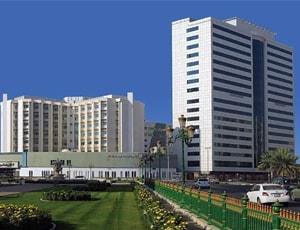
NMC Royal Hospital Sharjah
Sharjah, United Arab Emirates
NMC Royal Hospital Sharjah located in Sharjah, United Arab Emirates is accredited by JCI. Also listed below are some of the most prominent infrastructural details:
- This is a multispecialty hospital with all the latest amenities and state of the art equipment.
- It has the best of doctors, surgeons, and allied healthcare professionals who are completely dedicated to patient care.
- It comprises the below mentioned smart healthcare facilities which make getting treated at this hospital a comfortable and satisfying experience for the patients.
- High-end operation theatre
- 24*7 ambulance service which has all emergency equipment
- 24*7 emergency services
- Option of a free overnight stay for one parent for child up to 12 years of age
- International patient care center
- Special men and women health package

Aster DM Healthcare
Dubai, United Arab Emirates
Aster DM Healthcare located in Dubai, United Arab Emirates is accredited by JCI. Also listed below are some of the most prominent infrastructural details:
- Aster Hospital Dubai has 114 bed capacity
- Comprehensively fitted operating theaters are 5 in number
- Intensive Care Units (ICU) are also 5 in number and they also include an Isolation unit, Neonatal Intensive Care Unit bed capacity is 8 with an Isolation unit present
- Three kinds of rooms for all requirements such as twin sharing rooms, single rooms and VIP rooms
- Mother and child friendly hospital with Labor room, delivery suites, and a Nursery
- Unit dedicated to Day Surgery
- Fully equipped Dialysis Unit

NMC Specialty Hospital, Al Nahda
Dubai, United Arab Emirates
NMC Specialty Hospital, Al Nahda located in Dubai, United Arab Emirates is accredited by JCI. Also listed below are some of the most prominent infrastructural details:
- 72 Patient Rooms
- 10 ICU Beds
- 10 NICU Beds
- 4 Operation Theatres
- Well-equipped Laboratory
- Radiology Department
- Smaller Medical Centers and Clinics in Dubai
- Advanced Technology used by the Hospital- a patient friendly closed MRI (1.5 tesla), 64 Slice - Dual Source Siemens Definition MDCT CT scanner, 4-D Ultrasound with Color Doppler, Digital Fluoroscopy, Mammogram, and Digital X - Ray systems backed by a fully integrated PACS system
- 24-hour In-house Pharmacy
- 24-hour Ambulance services
Our Services to better your experience
Opinion & Option
We submit the most accurate opinion and options from one or more countries for your review
Consult Privately
Consult with a certified specialist privately on our telemedicine platform even before you decide to travel
Logistics
We handle flights, visas, transfers, and accommodation—so you can focus on your health.
Recovery
Our In-house rehabilitation service packages to better your recovery and treatment outcome
Why Choose the United Arab Emirates for Neurofibromatosis Treatment?
Here are some of the reasons for choosing UAE:
- Due to advancements in medical facilities, such as minimally invasive surgical techniques.
- World-class experts include highly experienced doctors and JCI-accredited healthcare institutions.
- Compared to other countries, treatment in the UAE hospitals is cost-effective.
- The UAE hospitals provide international patient services, including a multilingual support system.
- Improved treatment methods and biological therapies.
Frequently Asked Questions
There is currently no treatment that can cause the majority of neurofibromatosis to recede or go away, and the only option to get rid of them once they have grown is through surgery. For children aged two and older with NF1 who have plexiform neurofibromatosis that produces symptoms and cannot be surgically removed, the Food and Drug Administration has approved the oral drug selumetinib. A malignant plexiform neurofibroma may require chemotherapy and radiation treatment.
In UAE, neurofibromatosis is effectively treated with minimally invasive surgical procedures, targeted medication therapy such as protein inhibitors, and sophisticated genetic testing. For improved disease management, a multidisciplinary approach guarantees thorough and individualised treatment.
Yes, many UAE hospitals offer the following for neurofibromatosis treatment:
- In UAE hospitals, next-generation sequencing (NGS) is used to find NF1 mutations for precise diagnosis and individualised care.
- Skilled neurologist and oncologist for neurofibroma.
- Protein inhibitors are one type of treatment that can reduce plexiform neurofibromas and enhance patient outcomes.
- Advanced radiation and chemotherapy procedures.
- Comprehensive post-surgery care and follow-up to ensure long-term heart health.
Always consider the following factors when selecting a hospital in the UAE:
- Hospitals that are accredited (authorised by JCI).
- Patient reviews and success rates.
- Hospitals that provide seamless care to patients from abroad.
With the use of tailored medication therapy, minimally invasive surgeries, and sophisticated genetic tests, neurofibromatosis treatment in the UAE has a high success rate.
You must look for any lumps or rubbery bumps on the baby's skin and determine whether the baby is itching. A concerned physician should do a physical examination and other tests to confirm the diagnosis.
Over time, neurofibromatosis, particularly plexiform, can enlarge and press against nerves and organs, resulting in pain, weakness, or impaired function. It can result in bone deformities including scoliosis, neurological problems like eyesight or hearing loss, and malignant peripheral nerve sheath tumours (MPNSTS). Skin spots may affect one's sense of self-worth and social confidence, and the condition also raises the risk of heart issues and high blood pressure.
No, we cannot cure neurofibromatosis before birth.
Here are some ways you can take care of your child:
The majority of kids with neurofibromatosis lead everyday, whole lives with only minor symptoms. A child with neurofibromatosis requires routine examinations so that medical professionals can screen for:
- Issues with the eyes
- Issues with blood pressure
- Fresh tumors
- Tumour growth, scoliosis, and difficulties with learning
You can see the top neuro hospitals and doctors in the UAE for a second opinion on Neurofibromatosis treatment. Numerous prestigious medical facilities consult with skilled doctors who will examine your diagnosis and suggest the best course of action. You can get support by speaking with a medical tourism facilitator at MediGence to select the best doctor and facility. It provides specialised rehabilitation programs.

Reviewer

Dr. Mohit Agarwal
Medical Oncologist
14 Years of Experience
One of the finest Oncologist in New Delhi, India, Dr. Mohit Agarwal has worked with several world class multidisciplinary hospitals over the years. Dr. Mohit Agarwal has over 14+ years of experience in his field. The doctor treats and manages a wide range of conditions such as Stomach Cancer, Rectal Cancer, Breast Cancer, Brain Cancer View More
Last Reviewed - January 2026