Medulloblastoma Treatment in India
- Top Accredited Hospitals
- Global Medical Standards
- Cutting-Edge Technology
- Proven Treatment Options
- High Success Rate
- Trusted by Millions

What is Medulloblastoma?
Medulloblastoma is a malignant tumour of the central nervous system (CNS). It develops in the cerebellum, which is located near the back of the brain.
Children and teenagers under the age of sixteen are primarily affected by medulloblastoma. It can happen to adults. However, it is less common in older people. Adults diagnosed with medulloblastoma often range in age from 20 to 45.
About 437 children and adults in the United States are affected by this uncommon form of cancer yearly. However, it is the most prevalent type of childhood brain tumour. Most cases are diagnosed between the ages of five and nine.
What is the Importance of Timely Treatment?
Early therapy is essential for medulloblastoma to improve survival rates, reduce tumour spread, and maintain brain function. Early management decreases recurrence risk and improves responses to chemotherapy, radiotherapy, and surgery. In addition to enhancing long-term results and quality of life for patients, early therapy also reduces the likelihood of cognitive and developmental deficits, especially in children. Treatment delays raise the possibility of metastases, brain damage, and decreased therapeutic efficacy.
What are the Common Symptoms of Medulloblastoma?
Your age, the size of the tumour, and its stage of development are some variables that can affect the symptoms of medulloblastoma. These symptoms could be caused by a pressure buildup inside your head or the tumour's location. Some warning signs are:
- Pain in the back
- Issues with balance
- Vision changes
- Having trouble walking
- Lightheadedness
- A headache
- Vomiting and feeling sick
- Fatigue
- Incontinence of the urine or bowel (accidents with peeing and pooping)
Causes and Risk Factors of Medulloblastoma
Causes
The underlying cause of medulloblastoma is not entirely known, but it is thought to include mutations in the most essential pathways, such as TP53, SHH, and WNT. Hereditary genetic syndromes, including Li-Fraumeni syndrome, neurofibromatosis type 1, and Gorlin syndrome, predispose individuals. Environmental influences, especially radiation exposure, might also contribute. Medulloblastoma occurs more frequently in young children, particularly in males, but in most cases, there is no known cause.
Risk Factors
Risk factors for medulloblastoma are:
- Age: Most often diagnosed between the ages of 3 to 8.
- Sex: Medulloblastoma is more likely to affect boys than girls.
- Genetic Syndromes: Hereditary disorders such as Li-Fraumeni syndrome, neurofibromatosis type 1, Gorlin syndrome, and Turcot syndrome raise the risk.
- Family History: Having a family history of medulloblastoma or other brain cancers may raise the risk.
- Radiation Exposure: Earlier radiation exposure, especially to the head, increases the risk of tumour forming.
Connect with our advisor for a PRIORITY response
Latest Research and Technologies in the Treatment of Medulloblastoma in India
The most recent studies of medulloblastoma, including those conducted by the Pacific Pediatric Neuro-Oncology Consortium (PNOC), focus on personalised treatment to the molecular profile of an individual tumour. This treatment attempts to enhance efficacy while reducing side effects.
Healthcare disparities, such as challenges in India, affect treatment, although survival rates are being addressed. New findings, including possibly targeting the KCNB2 gene, provide exciting avenues for more effective treatments. Progress is generally centred on personalised and targeted therapies to improve patient outcomes worldwide and in India.
Medulloblastoma Prevention Tips
- False
Treatment options for Medulloblastoma
Surgery: If feasible, surgical tumour removal is often the initial step. The goal is to remove as much of the tumour as safely as possible to decrease the likelihood of recurrence.
Radiation Therapy: Following surgery, radiation treatment is frequently employed in an attempt to kill any residual tumour cells. Young children have specific methods used to reduce the effect on immature brain tissue since radiation has long-term side effects.
Gamma Knife Radio Surgery: A non-surgical treatment for medulloblastoma, Gamma Knife radiosurgery is employed to treat residual cancer cells following surgery or for inoperable tumours.
Cost Start From USD 4000 - USD 7000Explore Options
Cyberknife treatment: CyberKnife is an outpatient medulloblastoma treatment that accurately delivers focused radiation to tumours without surgery. It is ideal for tumours that are inoperable or in difficult-to-reach locations.
Cost Start From USD 4500 - USD 7500Explore Options
Chemotherapy: agents eliminate residual cancer cells and lower the threat of metastasis. It is administered before and after surgery or as part of treatment in the high-risk population.
Cost Start From USD 600 - USD 700Explore Options
Magnetic Resonance Imaging (MRI) is the most frequent imaging method for detecting medulloblastomas. It can deliver high-quality pictures of the spinal cord and brain, allowing for the measurement of the tumour's size, location, and potential for spreading.
Computed Tomography (CT) Scan: If a facility does not have an MRI, a CT scan can be used. It detects the tumour's location and any swelling or bleeding in the brain.
Biopsy: A tissue sample of the tumour is removed during surgery (or in exceptional instances, by needle biopsy) to ensure that the tumour is a medulloblastoma. The biopsy can be examined histologically and genetically.
Lumbar Puncture (Spinal Tap): A lumbar puncture can be performed to examine the cerebrospinal fluid (CSF) for tumour cells, which would suggest metastasis to the spinal cord or other parts of the brain.
MediRehab (chain of Rehab centres - Part of MediGence) provides comprehensive rehabilitation services designed to support Medulloblastoma patients in India. These services include:
Physical Therapy (PT): For enhancing motor function, balance, and coordination, physical therapy enables patients to strengthen and become more independent, especially following surgery or radiation involving movement.
Occupational Therapy (OT): OT aims to assist patients with activities of daily living, such as dressing, eating, and writing, particularly if motor skills or fine motor functions are compromised.
Speech and Language Therapy: This therapy assists children and adults in regaining communication skills, including speech, language, and swallowing functions, which can be affected by surgery or radiation.
Cognitive Rehabilitation: Aspects of memory, attention, and problem-solving can be impacted by treatments for medulloblastoma, so cognitive rehabilitation seeks to enhance these abilities and may include specifically designed exercises to improve academic function and daily activities.
- Depending on the severity of the condition, your healthcare professional may prescribe medicine to help control your symptoms and support the treatment plan.
Instantly Connect with our Specialists


Hospitals for Medulloblastoma in India

Max Smart Super Speciality Hospital
Delhi, India
- Max Smart Super Speciality Hospital, Saket, New Delhi, is a 250-bed tertiary care hospital known for advanced medical technology and patient-centred care.
- The hospital offers services across 22+ specialities, including Cardiac Sciences, Orthopaedics, Urology, Neurology, Neurosurgery, Paediatrics, Obstetrics, and Gynaecology.
- It is a regional hub for complex procedures such as neurovascular interventions, targeted cancer treatments, heart surgeries, kidney and liver transplants, and bariatric care.
- Equipped with a 3.0 Tesla MRI, 256 Slice CT Angio, Cath Labs, Digital Orthopaedic Suite, and advanced diagnostic tools, and supported by 275+ doctors and 606+ trained staff, Max Smart Saket provides high-quality, multidisciplinary care for domestic and international patients.
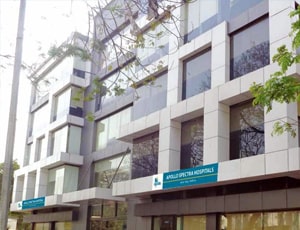
Apollo Spectra Hospital
Pune, India
Apollo Spectra Hospital located in Pune, India is accredited by JCI. Also listed below are some of the most prominent infrastructural details:
- Present in a 30000 sq. ft. area
- 5 beds are for critical care
- 5 ultra-modern modular OTs
- World class rehabilitation center
- In-house pharmacy
- Beautifully designed In-patients waiting area
- 80 plus healthcare professionals which also includes 45 specialist consultants
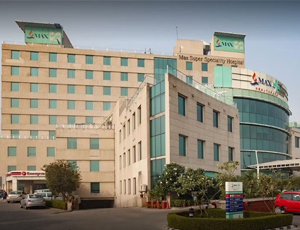
Max Super Specialty Hospital, Shalimar Bagh
Delhi, India
- Max Super Speciality Hospital, Shalimar Bagh, is a 402-bed quaternary-care hospital in New Delhi, offering advanced treatment across 37+ specialities, including Cancer, Cardiac, Neurosciences, Gastroenterology, Orthopaedics, and Renal Transplant.
- Equipped with state-of-the-art technology and a team of highly skilled doctors and nurses, the hospital provides complex procedures, minimally invasive surgeries, and targeted cancer treatments, making it one of India’s leading healthcare destinations.
Our Services to better your experience
Opinion & Option
We submit the most accurate opinion and options from one or more countries for your review
Consult Privately
Consult with a certified specialist privately on our telemedicine platform even before you decide to travel
Logistics
We handle flights, visas, transfers, and accommodation—so you can focus on your health.
Recovery
Our In-house rehabilitation service packages to better your recovery and treatment outcome
Why Choose India for Medulloblastoma Treatment?
India is growing in popularity as a place to treat medulloblastoma because of numerous essential benefits:
- Affordable Healthcare: Reduced costs of treatment relative to Western nations.
- World-Class Facilities: Cutting-edge medical equipment for diagnosis and treatment.
- Experienced Oncologists: Trained experts from the best global institutions.
- Cutting-Edge Treatments: Exposure to the newest treatments and clinical trials.
- Multidisciplinary Care: Holistic therapy by an expert team.
- Shorter Wait Times: Faster access to specialists.
Frequently Asked Questions
An essential treatment for medulloblastoma is radiation therapy, typically administered after surgery to target any remaining cancer cells and reduce the risk of recurrence. Since the tumour can spread through the cerebrospinal fluid, craniospinal irradiation (CSI) is often employed to treat the brain and spinal cord. For high-risk patients, radiation is crucial, but its application must be carefully managed, particularly in young children under three, to avoid long-term neurodevelopmental issues. When combined with surgery and chemotherapy, radiation improves survival rates and reduces the likelihood of relapse, although modern techniques aim to minimise side effects.
Medulloblastoma is often treated with chemotherapy, especially in high-risk pediatric cases. Chemotherapy is typically given after surgery and radiation therapy to target any remaining cancer cells and reduce the likelihood of recurrence. This approach is particularly important for enhancing the effectiveness of other treatments or for children who are too young to receive radiation. The combination of radiation, surgery, and chemotherapy improves overall survival rates and decreases the risk of relapse.
Factors such as age, tumour characteristics, and treatment response significantly determine the prognosis for medulloblastoma. Patients classified as high-risk tend to have a lower 5-year survival rate than those considered standard-risk, who typically have a survival rate of around 70–80%. While advancements in surgery, radiation, and chemotherapy have led to improved outcomes, challenges like relapse and long-term side effects remain prevalent. Early diagnosis and Individualized treatment plans are crucial for enhancing survival rates.
While medulloblastoma typically spreads within the central nervous system, it can also extend to other body areas. The cerebrospinal fluid (CSF) can move to various parts of the brain and spinal cord. Although less common, it can sometimes reach distant sites such as the lungs or bones. Early detection and treatment are essential to prevent this spread and improve outcomes.
A medulloblastoma tumour's molecular subgroup (WNT, SHH, Group 3, or Group 4) is based on its genetic makeup and influences therapy options. Although Group 3 needs more aggressive therapy, other subgroups, like WNT-driven tumours, are more favourable and may require less aggressive treatment. Genetic testing helps tailor therapy for better outcomes and fewer side effects.
The side effects of medulloblastoma treatment include fatigue, loss of mental function, hair loss, and coordination problems. Although radiation can affect growth and brain function, especially in very young children, surgery can lead to neurological issues. Hair loss, nausea, and a weakened immune system are all potential side effects of chemotherapy. Long-term effects include hearing loss, endocrine problems, and learning difficulties. While improvements in therapy diminish these adverse effects, they can still affect the quality of the patient's life.
With early diagnosis and treatment, medulloblastoma can be cured in most children in India. The tumour's size, type, and response to chemotherapy, radiation, and surgery all influence the likelihood of recovery. While survival is excellent for cases at average risk for relapse, long-term effects such as developmental challenges may need ongoing care and support. Regular follow-up is key to recovery management.
Medulloblastoma targets brain areas that control memory, learning, and movement, so it can affect neurological and intellectual function. Chemotherapy, radiation, and surgery can affect memory, concentration, and coordination. Tumor location and treatment can result in long-term cognitive impairment and delays in development, particularly in children.
The child's age, overall health, the nature of the treatment, and the characteristics of the tumour all influence the degree to which they recover after treatment for medulloblastoma in India. Children usually take a few months to several years to completely heal. Patients might initially require physical rehabilitation, have cognitive problems, and be tired. Side effects management, ongoing follow-up treatment, and support for learning or developmental issues are all needed for rehabilitation in the long run. Some children may take longer to recover, especially if they have complex treatment or if there are complications.

Reviewer

Dr. Mohit Agarwal
Medical Oncologist
14 Years of Experience
One of the finest Oncologist in New Delhi, India, Dr. Mohit Agarwal has worked with several world class multidisciplinary hospitals over the years. Dr. Mohit Agarwal has over 14+ years of experience in his field. The doctor treats and manages a wide range of conditions such as Stomach Cancer, Rectal Cancer, Breast Cancer, Brain Cancer View More
Last Reviewed - January 2026