Ischemic Cardiomyopathy Treatment in India
- Top Accredited Hospitals
- Global Medical Standards
- Cutting-Edge Technology
- Proven Treatment Options
- High Success Rate
- Trusted by Millions

What is an Ischemic Cardiomyopathy?
Ischemic Cardiomyopathy develops when the heart muscle is repeatedly or severely deprived of oxygen-rich blood, most commonly because of narrowed or blocked coronary arteries. Previous heart attacks may also damage and scar areas of the heart muscle. Over time, this damage can weaken the left ventricle and reduce its ability to pump blood effectively.
The severity varies between individuals. Some patients may have reduced heart function with few symptoms, while others can develop heart failure, abnormal heart rhythms, or other cardiovascular complications.
What is the Importance of Timely Treatment?
Timely evaluation can help determine the extent of coronary artery disease, assess heart function, identify damaged or viable heart muscle, and guide appropriate treatment. Management may help relieve symptoms, reduce the risk of heart failure and dangerous arrhythmias, and improve long-term cardiovascular outcomes in selected patients. Early assessment is particularly important when symptoms such as worsening breathlessness, chest discomfort, fainting, rapid weight gain, or swelling develop.
What are the Common Symptoms of Ischemic Cardiomyopathy?
- Shortness of Breath: Breathlessness may occur during physical activity and, in more advanced disease, at rest or when lying down.
- Fatigue and Weakness: Reduced pumping efficiency can cause persistent tiredness and reduced ability to perform usual activities.
- Chest Discomfort: Some patients may experience chest pressure, tightness, or pain related to underlying coronary artery disease.
- Swelling: Fluid accumulation can cause swelling of the ankles, feet, legs, or abdomen.
- Palpitations: Abnormal heart rhythms may cause sensations of a racing, pounding, or irregular heartbeat.
- Dizziness or Fainting: Reduced cardiac output or abnormal heart rhythms can cause lightheadedness or episodes of fainting.
Causes and Risk Factors of Ischemic Cardiomyopathy
Causes
- Coronary Artery Disease: Long-term narrowing or blockage of the coronary arteries can reduce oxygen delivery to the heart muscle.
- Previous Heart Attack: A myocardial infarction can permanently damage and scar part of the heart muscle.
- Repeated Myocardial Ischemia: Recurrent episodes of reduced blood flow may progressively impair heart function.
- Extensive Coronary Artery Blockage: Severe or widespread coronary disease can affect multiple areas of the heart.
- Untreated or Poorly Controlled Coronary Risk Factors: Persistent hypertension, diabetes, or high cholesterol can contribute to progressive coronary disease and heart-muscle damage.
Risk Factors
- High Blood Pressure: Long-standing hypertension increases cardiovascular strain and coronary artery risk.
- High Cholesterol: Elevated LDL cholesterol contributes to plaque formation within the coronary arteries.
- Diabetes: Diabetes can accelerate atherosclerosis and increase the risk of coronary disease.
- Smoking: Tobacco exposure substantially increases the risk of coronary artery disease and heart attack.
- Obesity: Excess body weight is associated with several cardiovascular risk factors.
- Physical Inactivity: Lack of regular exercise can contribute to hypertension, abnormal cholesterol, diabetes, and obesity.
- Family History: A family history of premature coronary artery disease may increase cardiovascular risk.
- Increasing Age: Coronary artery disease risk generally increases with age.
Latest Research and Technologies in the Treatment of Ischemic Cardiomyopathy in India
- Recent advances in ischemic cardiomyopathy include cardiac MRI, advanced echocardiography, CT coronary angiography, IVUS, and OCT for assessing heart function, coronary disease, and myocardial damage. Treatment increasingly combines evidence-based heart-failure medicines, appropriate coronary revascularisation, cardiac rehabilitation, and personalised risk assessment, with ICD and CRT available for selected patients with reduced heart function or increased arrhythmia risk.
Treatment options for Ischemic Cardiomyopathy
Implantable Cardioverter-Defibrillator (ICD) : Ischemic cardiomyopathy leaves behind myocardial scar tissue, placing patients at high risk for sudden cardiac death via ventricular fibrillation. An ICD is a standard primary or secondary prevention measure.
Cost Start From 11000Explore Options
Cardiac Resynchronisation Therapy (CRT) : For patients with a low ejection fraction and a wide QRS complex (such as a left bundle branch block), a biventricular pacemaker (CRT) restores synchronous ventricular beating.
Cost Start From 12000Explore Options
Left ventricular assist device (LVAD) : A mechanical pump surgically placed in the chest to help the main pumping chamber of the heart circulate blood to the body.
Cost Start From 36000Explore Options
Heart Transplant : The gold-standard replacement of a failing heart with a healthy donor heart.
Cost Start From 46000Explore Options
- Clinical assessment:
- Medical History: Assessment of previous heart attacks, chest symptoms, breathlessness, cardiovascular risk factors, medications, and functional capacity.
- Physical Examination: Evaluation of blood pressure, pulse, heart sounds, breathing, swelling, weight, and signs of fluid retention.
- Electrocardiogram (ECG): May identify previous myocardial injury, abnormal rhythms, or electrical conduction abnormalities.
- Blood Tests: Tests may include lipid profile, blood glucose, HbA1c, kidney function, electrolytes, thyroid function, and cardiac biomarkers when clinically indicated.
- Heart Failure Assessment: Measurement of natriuretic peptides such as BNP or NT-proBNP may support assessment of suspected or established heart failure.
- Functional Assessment: Exercise capacity and symptoms during physical activity may be evaluated to help determine disease severity and rehabilitation needs.
- Imaging Tests:
- Echocardiography: Assesses heart structure, left ventricular pumping function, chamber size, valve function, and regional wall-motion abnormalities.
- Stress Echocardiography: May assess changes in heart function during exercise or pharmacological stress in selected patients.
- CT Coronary Angiography: Provides detailed images of coronary artery anatomy and may help assess coronary disease in appropriate patients.
- Coronary Angiography: Provides detailed information about coronary artery blockages and can guide catheter-based treatment.
- Cardiac MRI: Evaluates heart function, myocardial scar, tissue characteristics, and myocardial viability in selected patients.
- Nuclear Cardiac Imaging: Stress myocardial perfusion imaging may assess blood flow and identify areas of reduced myocardial perfusion.
- Intravascular Ultrasound (IVUS): Provides detailed images from inside coronary arteries and may assist selected coronary interventions.
- Optical Coherence Tomography (OCT): Provides high-resolution images of coronary artery structures during selected catheter-based procedures.
MediRehab (a chain of Rehab centres, part of MediGence) provides comprehensive rehabilitation services designed to support Ischemic Cardiomyopathy patients in India. These services include:
- Cardiac Rehabilitation: A structured programme can help appropriate patients safely improve exercise capacity and cardiovascular fitness.
- Gradual Physical Activity: Exercise is increased progressively according to heart function, symptoms, rhythm stability, and medical recommendations.
- Weight Management: Maintaining a healthy weight can reduce cardiovascular strain and support overall heart health.
- Medical treatment depends on heart function, symptoms, coronary artery disease, blood pressure, kidney function, diabetes, and other individual factors. Depending on the clinical situation, treatment may include ARNI therapy or ACE inhibitors/ARBs, beta-blockers, mineralocorticoid receptor antagonists, SGLT2 inhibitors, diuretics, statins or other lipid-lowering medicines, antiplatelet medicines, and other cardiovascular drugs.
Instantly Connect with our Specialists


Hospitals for Ischemic Cardiomyopathy in India
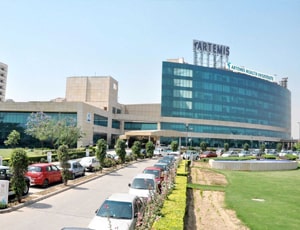
Artemis Health Institute
Gurgaon, India
Artemis Hospital, established in 2007 in Gurgaon, India, is a 750+ bed, state-of-the-art multi-speciality hospital and the first in Gurgaon accredited by JCI and NABH. A flagship of the Apollo Tyres Group, it offers advanced care across cardiology, oncology, orthopaedics, neurology, and transplant medicine, supported by modern infrastructure and 60+ world-class operating theatres. Its Centres of Excellence span critical areas like heart, cancer, neurosciences, orthopaedics, and women & child care. Guided by values of Service, Compassion, and Integrity, Artemis combines innovation, technology, and affordability, making it a trusted international healthcare destination for comprehensive and compassionate patient care.

Sterling Wockhardt Hospital
Mumbai, India
Sterling Wockhardt Hospital located in Mumbai, India is accredited by NABH. Also listed below are some of the most prominent infrastructural details:
- The bed capacity of Sterling Wockhardt Hospital is 50.
- Critical care and complex cases resolution is done with excellent results.
- Emergency departments with 3 beds capacity and Intensive Care Unit with 10 beds capacity.
- The healthcare delivery focus of the hospital is both on prevention as well curing the conditions.
- Diagnostics are well developed with the latest technological developments.
- Pharmacy, operating rooms, lab services are at par with the best in the country.
- 24/7 ambulance services to cover healthcare requirements in Panvel and Vashi.
- Accommodation, airport transfers, flight bookings and translation services are all available for international patients.

Star Hospitals
Hyderabad, India
Star Hospitals located in Hyderabad, India is accredited by NABH, NABL. Also listed below are some of the most prominent infrastructural details:
- The bed capacity of Star Hospitals, Hyderabad, India is 130.
- The hospital has Intensive Care Units which are upgraded with the latest technologies.
- International patient care services are applied to make the process of medical travel easier for international patients.
- Centres of Excellence across disciplines such as Cardiac Sciences, Renal Sciences, Critical Care, ENT, Spine Surgery etc.
- A radiology centre which has been digitised.
- There are Centers of Excellence for prominent specialties such as cardiac care and neurosciences, there are a total of six.
Our Services to better your experience
Opinion & Option
We submit the most accurate opinion and options from one or more countries for your review
Consult Privately
Consult with a certified specialist privately on our telemedicine platform even before you decide to travel
Logistics
We handle flights, visas, transfers, and accommodation—so you can focus on your health.
Recovery
Our In-house rehabilitation service packages to better your recovery and treatment outcome
Why Choose India for Ischemic Cardiomyopathy Treatment?
- Experienced Cardiac Specialists: India has cardiologists, interventional cardiologists, cardiac surgeons, electrophysiologists, and heart-failure specialists experienced in managing complex cardiovascular conditions.
- Advanced Cardiac Diagnostics: Major cardiac centres may provide echocardiography, cardiac MRI, CT coronary angiography, stress testing, nuclear imaging, and coronary angiography.
- Modern Coronary Interventions: Eligible patients may have access to angioplasty, drug-eluting stents, intravascular imaging, and complex coronary interventions.
- Cardiac Surgery: Specialist centres provide coronary artery bypass surgery for appropriately selected patients with complex or extensive coronary disease.
- Advanced Heart-Failure Care: Patients with severe disease may have access to multidisciplinary heart-failure programmes, ICD/CRT implantation, and selected advanced therapies.
- Multidisciplinary Treatment: Cardiologists, cardiac surgeons, electrophysiologists, intensivists, dietitians, physiotherapists, and rehabilitation specialists can collaborate on complex cases.
- Personalised Care: Treatment can be tailored according to coronary anatomy, heart function, symptoms, arrhythmia risk, age, and associated conditions.
- International Patient Support: Many major Indian hospitals provide international patient services, including appointment coordination, treatment planning, accommodation assistance, and follow-up support.